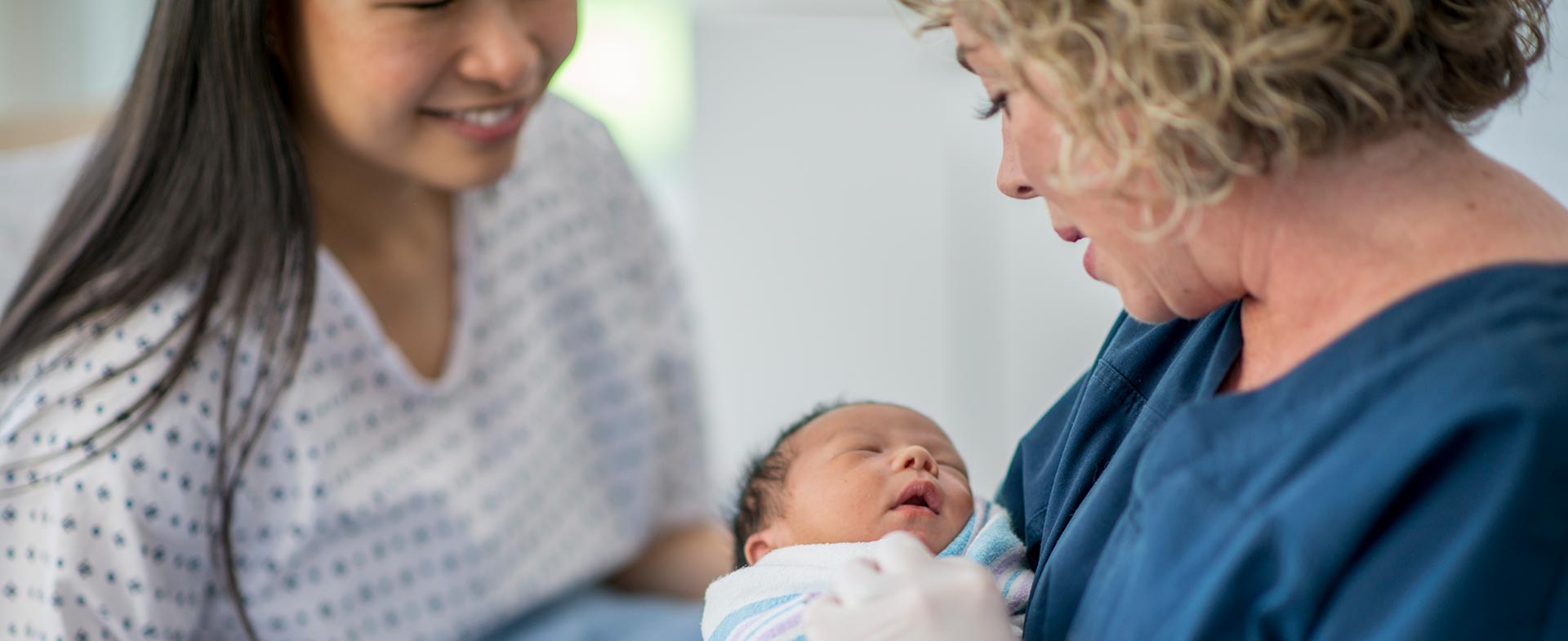

Many people think midwives only help moms-to-be birth their babies at home without medication or medical intervention. While that may have been an accurate definition of the term in the past, today's certified nurse-midwives (CNMs) are skilled professionals whose duties extend far beyond helping women give birth, says Julie Fuller, CNM, a certified nurse-midwife at Henry Ford Health.
Yet the midwifery field is still widely misunderstood. People often don't understand which services certified nurse-midwives are trained to provide or even how they get paid. "There are many types of midwives but certified nurse midwives have extensive nursing backgrounds and can care for women at all stages - not just pregnancy," Fuller says.
The Truth About Nurse-Midwives
Here, Fuller explains the truth behind six common myths about certified nurse-midwives.
1. Myth: Midwives have no formal education.
All certified nurse-midwives (CNMs) in the United States hold a master's degree in nursing with a specialty in midwifery. In Michigan, it is required to hold these credentials to legally practice. CNMs must pass a national certification exam to use the title of certified nurse-midwife. CNMs are also required to complete extensive continuing education to be eligible for license renewal. This ensures their knowledge is up to date.
2. Myth: Midwives don’t take insurance.
Most CNMs accept insurance through their place of employment as part of a hospital practice or private group of physicians. As with any medical service, it's a good idea to contact your insurer to confirm coverage and determine if a referral is required.
3. Myth: Midwives only care for pregnant and postpartum women.
In fact, CNMs are qualified to care for women throughout their lives. "The term midwife means 'with women,'" Fuller says. "As midwives, we're trained to address any issues that affect women." That includes providing screenings, vaccinations, contraceptives, treatment for sexually transmitted infections and hormone replacement therapy (HRT).

4. Myth: Midwives don’t prescribe medication.
CNMs are licensed to prescribe medications ranging from birth control to HRT and everything in between. During labor, midwives can provide pain medications and work with anesthesia if you want an epidural. "At the same time, midwives provide pregnant women adequate support so they may require fewer medical interventions during the birthing process," Fuller says. During labor and delivery, for example, they'll help patients manage pain with positioning, relaxation techniques and other strategies. But in cases where a mom-to-be wants medication, a CNM will prescribe it.
5. Myth: Midwives only provide care for home births.
“The term midwife still has the connotation of a lady in the community who carries incense, garlic, and herbs and catches babies at home,” Fuller says. But that’s a far stretch from reality. In fact, the vast majority of deliveries attended by certified nurse-midwives occur in a hospital. Using a CNM helps ensure a supportive and home-like birth experience with the security of hospital resources.
6. Myth: Midwives and doulas are the same thing.
Doulas are trained to provide physical, emotional and educational support for pregnant, birthing and postpartum women. They do not perform medical assessments, exams or deliver medical care. The role of certified nurse-midwives includes ensuring the safety of both mom and baby throughout their pregnancy, labor, birth and postpartum periods.
Partnering with a midwife doesn’t mean cutting doctors and nurses out of the equation. "Instead, our CNMs work with many members of the healthcare team to ensure all patients, even those who are high risk, get the care they need," Fuller says. "This type of collaborative care between physicians and midwives offers the best of both worlds - advanced obstetrics care coupled with hands-on support."
Midwives are also uniquely suited to provide women with needed resources like lactation support, postpartum depression screening and treatment options during menopause. Even if you're not pregnant, partnering with a midwife for your gynecological care allows you to start forming a relationship with a trusted provider who can care for you throughout your life.
Reviewed by Julie Fuller, CNM, a certified nurse-midwife who sees patients at Henry Ford Women's Health - Cascade Ridge.