
Less sunlight, shorter days and cold, gloomy weather can affect anyone’s state of mind. You might feel more tired, less focused and like you’re perpetually in a bad mood.
The winter blues, or its more serious counterpart, seasonal affective disorder (SAD), are common causes of low mood during the winter months. And while diet alone can’t cure seasonal sadness, the right foods can help improve your mood.
“When you eat healthier, you feel better, you have more energy, even your mind feels clearer,” says Ashlee Carnahan, MS, RDN, CLC, CPT, a registered dietitian at Henry Ford Health. Here, she explains how you can harness the power of your diet to feel better this winter.
What Causes The Winter Blues?
If you feel a bit lethargic and grumpy as soon as daylight savings time ends, you’re not alone. An estimated 10% of the population experiences true seasonal affective disorder, and many more feel some milder symptoms.
The depression that occurs seasonally can affect not just your mood, but also your productivity, energy levels, physical activity, appetite and food choices.
Shorter days with less exposure to sunlight are the main cause of winter depression. Less daylight can affect the production of serotonin and melatonin—hormones that affect both mood and sleep.
Those changes, combined with less activity as you hibernate instead of playing outdoors, can create some seasonal depression and low mood.
The Food And Mood Connection
When planning your meals or grabbing snacks, you’re probably thinking only about what tastes good and will fuel your body. But the food you eat can also have a big impact on your mood, your energy and how you feel overall.
Research has found that healthy eating patterns (such as the Mediterranean diet) that include lots of fruits, vegetables, nuts, legumes and lean proteins can lower the risk of depression. On the flipside, diets high in refined carbohydrates and highly processed foods can have a negative effect on mental health.
“It’s also true that when you do indulge in less healthy foods, you tend to get down on yourself,” says Carnahan. “It’s okay to treat yourself and learn the right balance. Food shaming and negativity can impact your mood.”
Foods That Can Boost Your Mood

A diet rich in fruits and vegetables may be great for your mental state, but fresh, yummy produce can be harder to come by in winter months. “Most of us don’t get enough fruits and vegetables—even in the summer months,” says Carnahan. “And sometimes they are more expensive and less tasty during the winter.”
One solution: frozen, or even canned, fruits and vegetables. “They are just as nutritious as fresh, readily available all year round and often cheaper too,” she says.
If you choose canned vegetables, be sure to drain and rinse them to reduce sodium content. And always look for canned fruit with no added sugar. Top your morning oatmeal with a medley of frozen berries. Toss handfuls of frozen spinach into any casserole or soup. Blend a can of pumpkin into a sauce or smoothie.
There are also plenty of healthy foods that are in season all winter long and provide important mood-boosting nutrients, including:
- Eggs: Egg yolks are a great source of vitamin D, a nutrient that’s in shorter supply during the winter (our bodies make it in response to sun exposure).
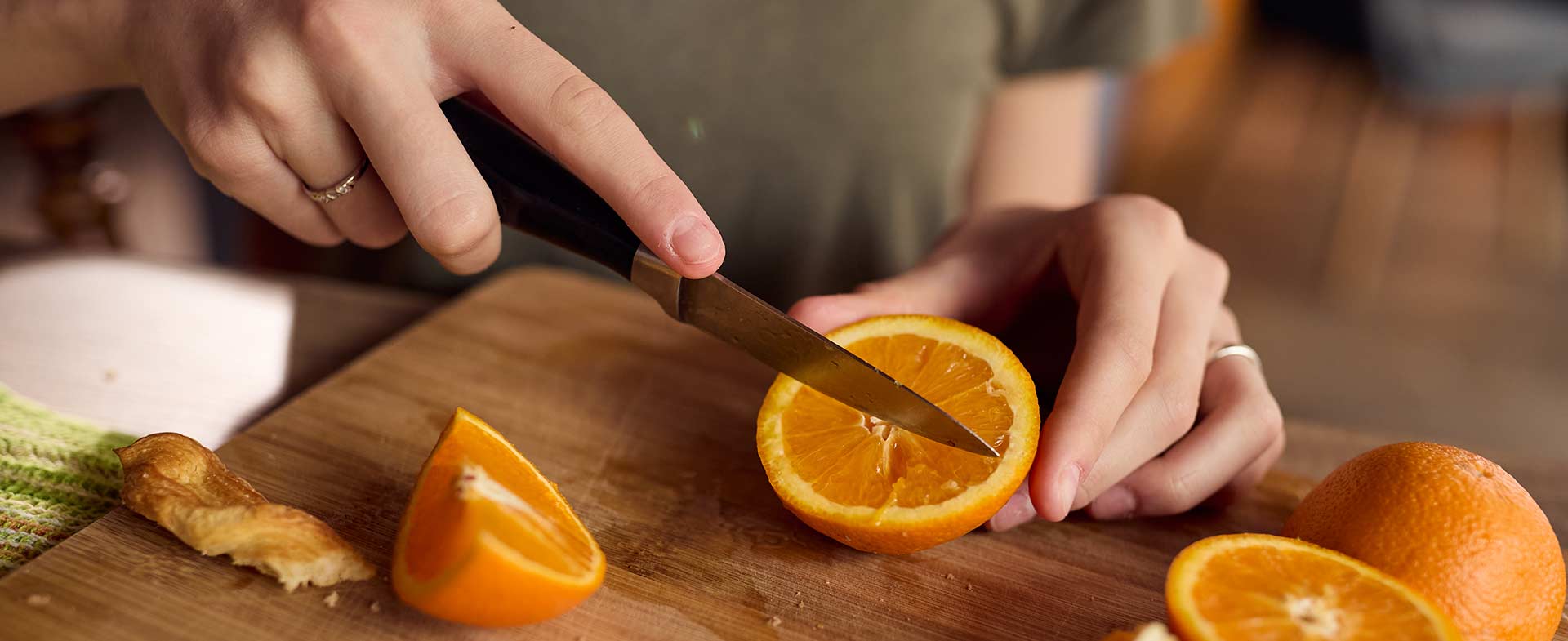
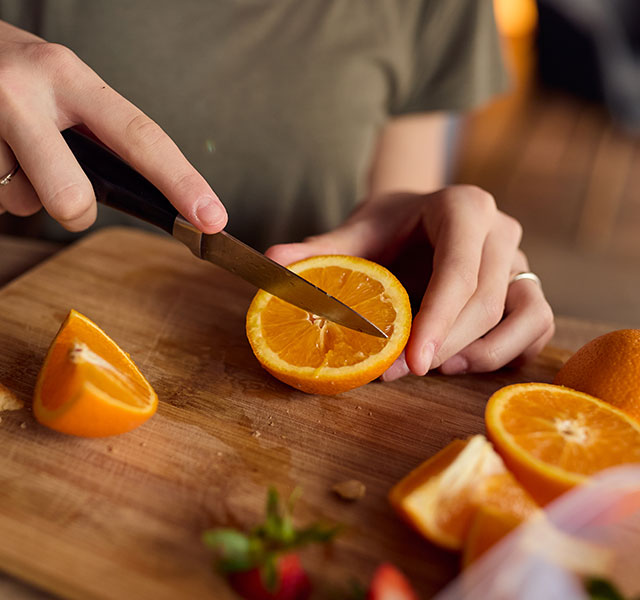
- Oranges: Biting into an orange not only feels like a taste of sunshine, but it also provides your body with a healthy dose of vitamin C.
- Pumpkin: Skip the sugary pumpkin spice lattes in favor of real pumpkin—a vegetable that’s a great source of mood-regulating magnesium.
- Salmon: Omega-3 fatty acids (found in fatty fish, such as salmon) are important for keeping your brain healthy.
- Sweet potatoes: In addition to satisfying a carb craving, sweet potatoes pack high levels of antioxidants, including vitamin A and beta carotene.
- Tea: A warming cup of green tea on a cold day not only tastes great, it delivers a healthy dose of antioxidants and polyphenols (naturally occurring substances with antioxidant properties).
- Walnuts: Like salmon, walnuts give your brain a boost of omega-3 fatty acids.
Don’t give up healthy eating just because it’s winter. Your body, and your brain, will thank you.
Reviewed by Ashlee Carnahan, MS, RD, CLC, CPT, manager of Nutrition and Education Services and director of the dietetic internship at Henry Ford Health. Learn more about Ashlee.

