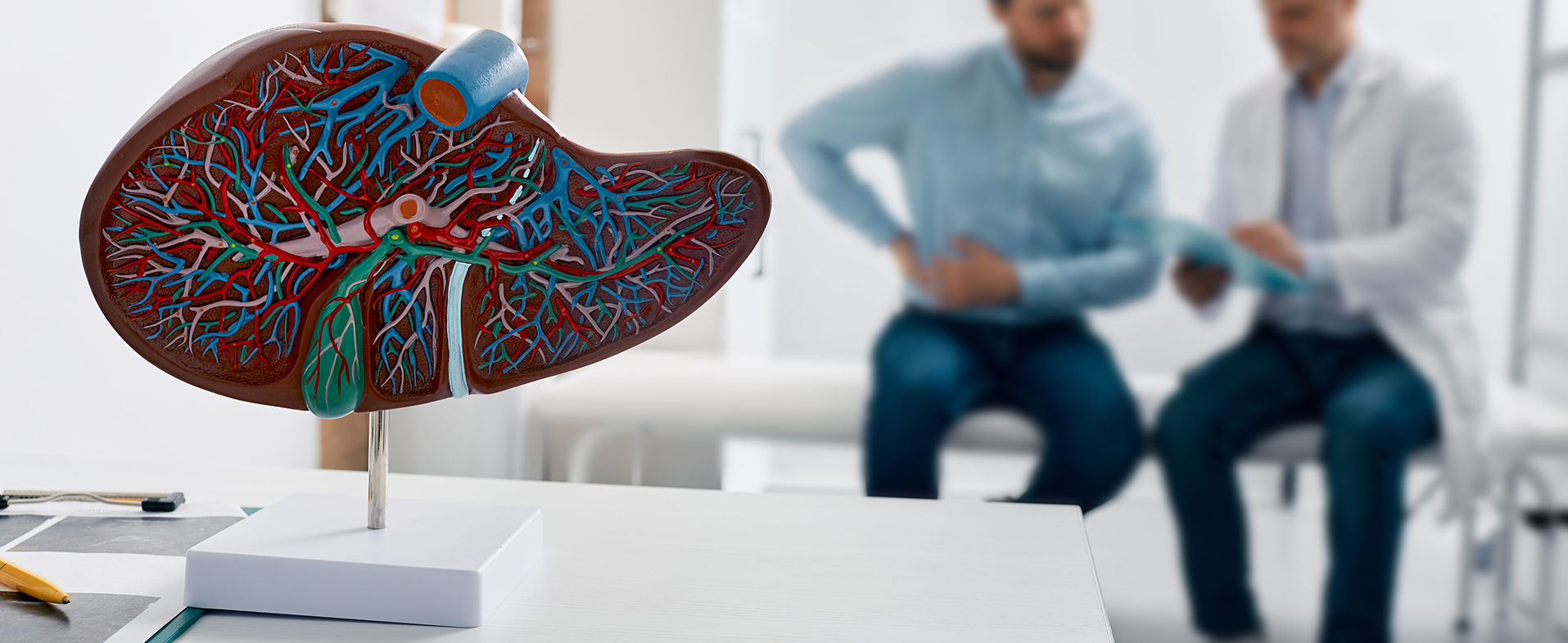
There are a few standard treatment options for liver cancer, depending upon the type and stage. For some cancers contained to the liver, surgery, transplant and embolization – a procedure that blocks blood supply to the tumor – are the main options, sometimes used with systemic therapies like chemotherapy and immunotherapy. For cancer that has spread outside of the liver, chemotherapy, targeted therapy and immunotherapy are usually used.
But not everyone is a candidate for every standard treatment - as it depends upon factors like their health condition, where their tumor(s) are located and how big they are.
New treatments, however, are making waves for cancer that is contained to the liver, along with liver cancer that has spread outside of the liver – and they’re promising especially for those who might otherwise have limited options.
“These advanced therapies are non-invasive or minimally invasive, meaning they don’t require a big surgery,” says Maria Diab, M.D., a medical oncologist at Henry Ford Health. “And while they might not completely cure someone’s cancer, they might work so well that patients are now eligible to receive surgery, transplant or other treatments they weren’t able to receive before.”
Here, Dr. Diab shares three advances in liver cancer treatment.
Histotripsy
Approved by the Food and Drug Administration (FDA) in 2023, histotripsy uses focused ultrasound energy to create a ‘bubble cloud’ that mechanically destroys and liquifies targeted liver tumors. It’s a non-invasive procedure, so there’s no surgery involved. It takes about 10 to 50 minutes to treat each tumor. Both primary and metastatic liver tumors can be treated with histotripsy.
“So far, the research on histotripsy has been promising,” says Dr. Diab. “It’s been found to control cancer well in the areas that are being treated. But research also shows histotripsy can stimulate the immune system to go after cancer in other areas of the body that haven’t been treated.
“This is because when histotripsy disrupts the tumors, they release some cancer markers – and this makes the immune system recognize them as invaders. Histotripsy might be groundbreaking because it could enhance the effects of systemic therapies like immunotherapy and chemotherapy.”
Hepatic arterial infusion (HAI) therapy
Hepatic arterial infusion (HAI) therapy is for those with colorectal cancer that has spread to the liver, along with those who have a rare type of bile duct cancer called intrahepatic cholangiocarcinoma.
It’s a minimally invasive surgery (meaning very small incisions are made) that delivers chemotherapy directly into liver tumors via a hockey puck-sized pump. Your surgeon will insert the pump into your abdomen and hook it up to your hepatic artery, which usually supplies liver tumors with blood. This allows chemotherapy to reach tumor cells without destroying healthy cells. Every two weeks, the pump is refilled. How long you use the pump is determined by your condition and how the tumor responds to treatment.

Liver Cancer Treatment at Henry Ford
“Because HAI confines chemotherapy to the liver – instead of circulating throughout the whole body like traditional chemotherapy – it can deliver up to 400 times more chemotherapy while minimizing typical chemotherapy side effects,” says Dr. Diab.
HAI can improve disease control, prolong survival and make someone eligible for transplant. It can also shrink tumors down to a size that make them able to be surgically removed.
Radiofrequency ablation (RFA)
Radiofrequency ablation (RFA) is a minimally invasive procedure that uses high heat to get rid of liver tumors that can’t be operated on – whether because of their location, there are too many small tumors to surgically remove or it’s just a small tumor that needs to be treated. It works best on tumors no larger than a little over an inch long.
RFA destroys tumors using high-energy radio waves that are delivered into the tumor using what’s called a thin needle electrode.
Your doctor will use a CT scan, ultrasound or MRI to determine where the needle should be placed in your liver, and they’ll place it either directly into the skin or via a small incision. Since radiofrequency ablation is a minimally invasive (or sometimes non-invasive) procedure, it means less downtime and recovery afterward.
“RFA shows promising results," says Dr. Diab. "In fact, those who have RFA may have as great a benefit as those who had surgery to remove small tumors."
Reviewed by Maria Diab, M.D., a medical oncologist who specializes in gastrointestinal cancers at Henry Ford Cancer - Detroit and Henry Ford Medical Center - Columbus.