
If you’ve scrolled wellness feeds lately, you’ve probably seen “longevity tests” promising insights into how well you’re aging. While some require high-tech (and pricey) gadgets, many meaningful longevity indicators are surprisingly low-tech—and you can do them at home.
Linda Holland, D.C., a chiropractor at Henry Ford Health, explains these at-home assessments and how to safely improve your scores over time.
The One-Legged Balance Test
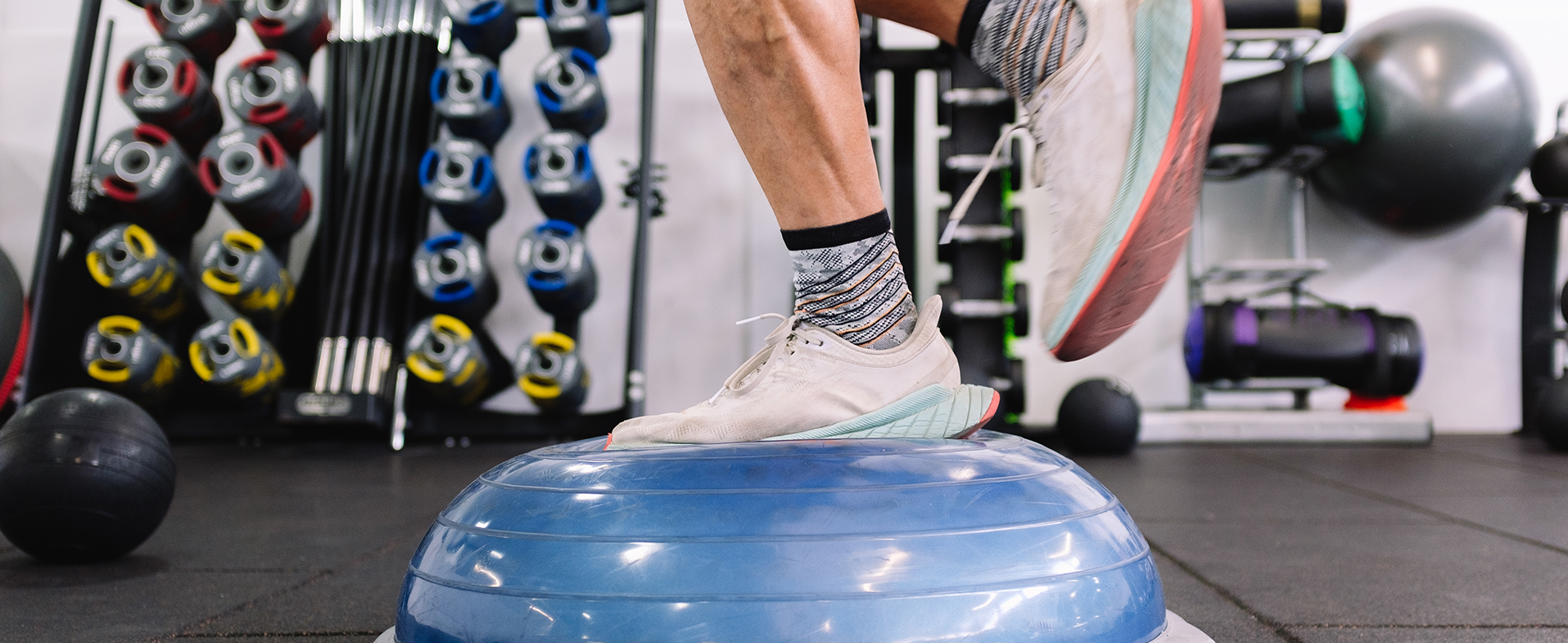
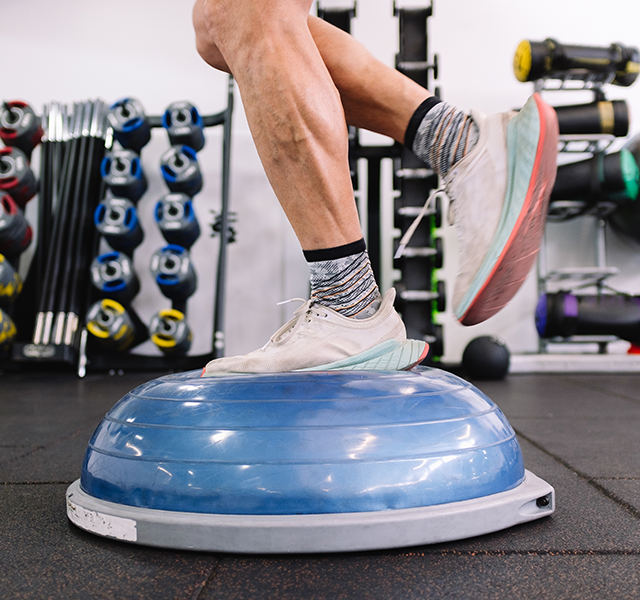
Can you stand on one foot for 10 seconds without wobbling or grabbing onto something? This test evaluates your proprioception, which is your body’s ability to sense its position in space.
“Proprioception is connected with balance, which can influence your fall risk,” Dr. Holland explains. “Falls are a leading cause of injury and loss of independence in older adults. The ability to maintain single-leg balance requires coordination between your visual system, inner ear, muscles and nervous system.”
If you struggle with this test, don’t stress. You can improve your balance at any age. Start by practicing near a wall, countertop or sturdy chair for safety. Gradually increase your time. Consider working with a physical therapist or chiropractor to determine whether the issue is muscular or neurological.
Chair Rise Test
Also known as the sit-to-stand test, this measures how many times you can get up from a chair in 30 seconds. To perform this test, you cross your arms over your chest because you can’t use them for assistance.
The number of times you should be able to do this depends on your age and gender. For example, a 60-year-old male should be able to sit and rise 14 or more times, and a female 12 or more times. That number decreases as you get older.
“The chair rise test measures lower body strength and balance,” Dr. Holland says. “Improving your score translates to easier, safer daily living. Work on it a little each day, and over time, you will likely see your score improve.”
The Sitting-Rising Test
Can you get down to the floor and back up again without using your hands or knees for support? If so, you can pass the sitting-rising test (SRT). Your ability to get up and down independently is a predictor of longevity because it requires multiple physical capabilities working in harmony.
“Getting up from the floor measures muscle tone, coordination and flexibility all at once,” Dr. Holland notes. “The test reveals your core strength, leg power, balance and joint flexibility, which are essential for healthy aging.”
If you can’t “pass” this test right now, start by working on the individual components. “Try sitting on the floor and using a sturdy table for support,” says Dr. Holland. “Once you can do that, try getting up with the help of just one arm or knee instead of two. Gradually work your way down until you don’t need your arms or knees at all.”
It’s also helpful to work on leg strength and hip flexibility through physical activity. Talk with a licensed physical therapist or trainer about ways to improve your muscle mass and mobility.

Henry Ford Center for Integrative Medicine
Grip Strength and Hand Speed
Grip strength has emerged as a reliable predictor of overall health and longevity. “Try opening and closing your hand rapidly,” says Dr. Holland. “Doing this 20 times in 10 seconds is the ideal benchmark.”
Weak grip strength has been associated with increased risk of heart disease, disability and mortality. Fortunately, you can improve your grip strength through timed drills (like squeezing hand grippers) and resistance training. “Squeezing a stress ball, performing a farmer carry with dumbbells and wringing a towel are activities that can strengthen your hand and forearm muscles,” says Dr. Holland.
Your ‘Why’ Matters for Longevity
While these tests provide valuable data, remember that longevity isn’t purely physical. “We all need to have a sense of purpose,” Dr. Holland says. “Connecting with others and having a community is vitally important for your health.
”In other words, think about why you want to live longer. Create a goal, whether it’s to contribute to society, create memories with your loved ones or pursue your passion. Keep this goal in mind when you work on your health and longevity.
Try to get out and connect with others. Research shows that people with social connections live longer, healthier lives.
Small Steps Can Lead to Big Impact
If these tests reveal areas for improvement, don’t criticize yourself. Simply start where you are. “This is about progress, not perfection,” Dr. Holland reminds us. “Small changes can add up over time.”
Consider working with healthcare professionals to create a safe, progressive program. Tools like wobble cushions, stability balls and balance boards can help challenge your proprioception in controlled ways. Measure your progress monthly, not daily. You’re building habits that will serve you for decades.
Remember, these tests aren’t verdicts—they’re invitations. Whether you’re 45 or 85, improvement is possible. “Longevity isn’t passive,” Dr. Holland says. “It’s an active pursuit. The difference between a short health span and a long health span is the willingness to measure your health, adapt and correct areas that need it. And you can start today.”
Reviewed by Linda Holland, D.C., doctor of chiropractic medicine at Henry Ford Center for Athletic Medicine - Detroit and Henry Ford Medical Center - Ford Road.

