.svg?iar=0&hash=F6049510E33E4E6D8196C26CCC0A64A4)

/hfh-logo-main--white.svg?iar=0&hash=ED491CBFADFB7670FAE94559C98D7798)
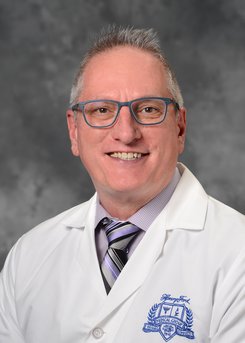
Howard Crawford, PhD

Specialties: Research
/hfh-logo-main--white.svg?iar=0&w=300&hash=6384A2E70E92039C36CA5CCBA53F8964)
Board Certification and Education
- University of Texas Southwestern Medical School, TX, 1994
About Me
Biographical Statement
Dr. Crawford is a cancer biologist with more than two decades of experience studying the cellular and molecular mechanisms that drive pancreatic cancer. His background combines rigorous basic science training with leadership roles in large translational research programs focused on high-risk patients and tumor biology. He has recruited and leads a team of young scientists focusing on cellular plasticity, tumor/stroma interactions, and racial disparities in pancreatic cancer. A national and international leader in the pancreatic cancer research field, Dr. Crawford has been consistently funded by the National Cancer Institute, the Department of Defense and the Department of Veterans Affairs.
Contact: hcrawfo1@hfhs.org
Title
Scientific Director, Henry Ford Pancreatic Cancer Center
Research Interests
The Crawford laboratory's research centers on epithelial cell plasticity throughout oncogenesis and tumor progression and how this affects communication with the tumor microenvironment. It explores the signaling networks that control cell plasticity, highlighting pathways that support therapy resistance and immune evasion. As scientific director of the center, Dr. Crawford helps lead multi-institutional efforts and clinical–research collaborations to translate these mechanistic insights into biomarkers and immunomodulatory treatment strategies.
Most recent work:
Tuft cells transdifferentiate to neural-like progenitor cells in the progression of pancreatic cancer
Pancreatic ductal adenocarcinoma (PDA) is partly initiated through the transdifferentiation of acinar cells to metaplasia, which progresses to neoplasia and cancer. Tuft cells (TCs) are chemosensory cells not found in the normal pancreas but arise in cancer precursor lesions and diminish during progression to carcinoma. These metaplastic TCs (mTCs) suppress tumor progression through communication with the tumor microenvironment, but their fate during progression is unknown. To determine the fate of mTCs during PDA progression, the team created a dual recombinase lineage trace model, wherein a pancreas-specific FlpO was used to induce tumorigenesis, while a tuft-cell specific Pou2f3CreERT/+ driver was used to induce expression of a tdTomato reporter. They found that mTCs in carcinoma transdifferentiate into neural-like progenitor cells (NRPs), a cell type associated with poor survival in patients. Using conditional knockout and overexpression systems, they found that Myc activity in mTCs is necessary and sufficient to induce this tuft-to-neuroendocrine transition (TNT).
ADAM17-dependent autocrine and paracrine signaling promotes pancreatic premalignant progression
A Disintegrin and Metalloproteinase 17 (ADAM17) is a membrane-bound sheddase that regulates the release of multiple signaling molecules, including inflammatory mediators and epidermal growth factor receptor (EGFR) ligands. Ligand-driven EGFR activation is essential for pancreatic acinar cell transdifferentiation into metaplastic ducts, which progress to neoplasia in the presence of oncogenic KrasG12D. The aim of this study was to understand how ADAM17 in the tumor and myeloid cells contribute to the initiation and progression of pancreatic tumors.
The study found that KRASG12D-driven tumorigenesis requires both autocrine and paracrine signaling regulated by ADAM17. Beyond activating EGFR to drive acinar cell transdifferentiation, ADAM17 also promotes neoplastic progression by modulating additional pro-tumor signaling that shapes the fibroinflammatory microenvironment. These findings highlight a pivotal role for ADAM17 in orchestrating epithelial plasticity, cellular signaling, and stromal remodeling during pancreatic tumorigenesis.
Videos and Articles
-
Videos
-
Blog Posts
Locations

Hospital Privileges
- Henry Ford Hospital