.svg?iar=0&hash=F6049510E33E4E6D8196C26CCC0A64A4)

/hfh-logo-main--white.svg?iar=0&hash=ED491CBFADFB7670FAE94559C98D7798)

CT - Guided Linear Accelerator
Adaptive radiation therapy is the newest cancer treatment, designed to provide personalized cancer care quickly, safely, accurately, and comfortably.
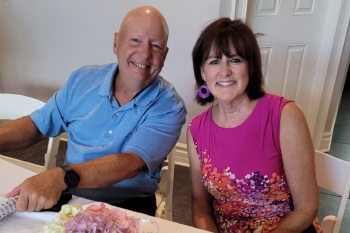 “I am amazed how medical technology continually improves to keep us living longer, healthier lives,” says Woodhaven resident and avid golfer Ray Slumpff. When he was diagnosed with prostate cancer, Ray chose a highly advanced treatment called adaptive radiation therapy over conventional radiation therapy or prostate surgery.
Traditional radiation therapy uses a machine called a linear accelerator to deliver targeted radiation beams that damage cancer cell DNA. Patients typically receive 20 to 40 treatments over the course of five to eight weeks.
Adaptive radiation therapy advances the technology by using artificial intelligence and enhanced imaging. During a treatment session, the clinician is able to make quick changes to the angle and intensity of the radiation beam based on ongoing changes in the patient’s body or tumor. These continuous, real-time adjustments ensure the beam remains precisely targeted to the cancer itself—maximizing treatment accuracy and minimizing exposure to healthy surrounding tissue. The technology has been effective in treating certain cancers, including cancers of the prostate, lung, brain and breast.
Because of the high intensity of the radiation dose it delivers, adaptive radiation therapy improves the overall length of treatment and may lower the risk of some side effects.
Ray met with radiation oncologist Aharon Feldman, M.D., to map the treatment area and develop a treatment plan. Because surgery wasn’t necessary, they discussed both conventional and adaptive radiation therapy options.
“I did not want to commit to the long course of treatment conventional radiation therapy requires,” Ray said. “So I chose to have adaptive radiation therapy at Henry Ford West Bloomfield Hospital. Even though it meant a 30- to 40-minute drive each way, being able to complete my treatment in just five sessions was well worth the travel.”
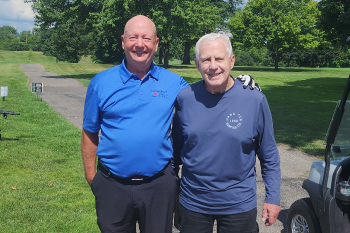 Looking back on his treatment experience, Ray said what stands out most is, “The extreme kindness of the Henry Ford team, especially the radiation techs. For example, I mentioned that the music played during my first treatment session felt a bit jarring to me. The techs asked me to suggest music that would be better suited for relaxation. I provided the names of several of my favorite smooth jazz artists. For my remaining sessions, they played the music I suggested, which made a wonderful difference for me.”
Now fully recovered, Ray enjoys walking with his wife and playing golf. He especially likes taking short golf trips, where he plays 99 holes in four days. “I rarely even think about cancer now,” Ray said. “I just make sure to get my required periodic follow-up tests, and they have all been good.”
Ray readily recommends adaptive radiation therapy to others, including a fellow golfer he met on a course in Florida. “When the guy mentioned that he’d recently been diagnosed with prostate cancer, I told him about my experience at Henry Ford Health. He decided to contact Dr. Feldman and has since completed treatment with good results,” Ray said.
Adaptive radiation therapy is now available at Henry Ford Cancer – Brownstown. “My treatment ended before I could take advantage of this closer location, but I am glad for my Downriver neighbors,” Ray said. “Prostate cancer patients often are older adults who may face challenges with extended travel for treatment. The increased accessibility of care closer to home allows them to consider adaptive radiation therapy as a viable treatment option.”
Ray’s treatment process (below) reflects approximately what patients receiving adaptive radiation therapy can expect.
We use cookies to improve your website experience. By using this site, you agree to our Terms of Use. Read our Internet Privacy Statement to learn what information we collect and how we use it.