.svg?iar=0&hash=F6049510E33E4E6D8196C26CCC0A64A4)
/hfh-logo-main--white.svg?iar=0&hash=ED491CBFADFB7670FAE94559C98D7798)
Five Founders, Five Paths to Conquer
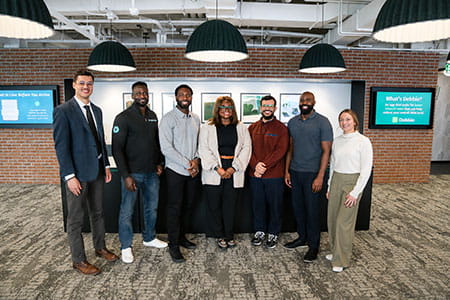
Different roads, same mission – improved health for our communities
The Detroit Area Healthcare Accelerator is a partnership between Henry Ford Innovations and the MSU Research Foundation and a centerpiece of the Henry Ford + MSU Innovation Hub. The rigorous, 10-week Conquer program supports early stage health care technology companies.
This snapshot of the spring 2026 cohort will impress and leave you hopeful for what can be achieved to make the world a healthier place.
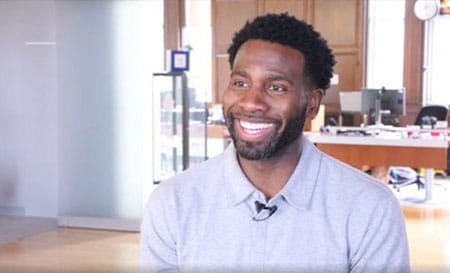 Barima Opong-Owusu, Ankra Health
A credit score for your health
In a twist of irony, clinical pharmacist Barima Opong-Owusu, PharmD, created Ankra Health to help people rely less on medication and more on lifestyle choices to achieve optimal health.
His AI-enabled health platform helps people better understand and improve their metabolic health through data-driven insights. The platform combines biomarkers, wearable data, lab work, nutrition and lifestyle metrics to create what he calls “a credit score for your health.”
“We want to simplify health data and make it actionable,” he said. “Diet, exercise, sleep, lifestyle –
all of those things matter. But most people don’t have tools that help them connect the dots.”
From pharmacist to founder
Barima spent years working as a pharmacist in a hospital, but he also had entrepreneurial aspirations. Investing in rental properties filled the gap for awhile.
“But when I really sat down and asked myself what would give me purpose long term, healthcare was always at the center of it,” he said.
Barima’s entrepreneurial path accelerated when he attended a healthcare technology event at TechTown Detroit where he learned about the Conquer program and decided to apply. Conquer gave Barima access to leaders and clinicians at Henry Ford as well as startup mentors, and insight into venture capital requirements. But perhaps most importantly, he says, the program brought structure and accountability to the chaotic nature of building a startup.
“It forces you to be strategic,” he said. “You’re setting milestones every week instead of just grabbing at straws.”
Like many first-time founders, Barima admitted he entered the process feeling uncertain about how polished he needed to be.
“You think you need to have everything figured out,” he said. “But you really don’t.” “The goal is discovery,” he said. “They help you figure out your market, your customers, your strategy. You don’t need all the answers on day one.”
Better health for all communities
During the pandemic, Barima witnessed firsthand at work and in his personal life the fact that underserved communities were suffering disproportionately because of uncontrolled comorbid conditions.
“It was eye-opening,” he said. “People with diabetes, hypertension and other chronic conditions were at so much greater risk. It made me realize how critical prevention really is…A lot of personalized wellness and precision medicine is geared toward affluent communities. The people who often need these tools the most don’t always have access to them.”
Barima’s business model calls for selling the app to insurers and employers, who would then provide it to patients and employees. It’s a way for insurers and employers to save money treating preventable disease and most importantly a path to empower patients to take control of their health.
“We’re trying to create access,” he said. “People deserve information and tools that help them take ownership of their health.”
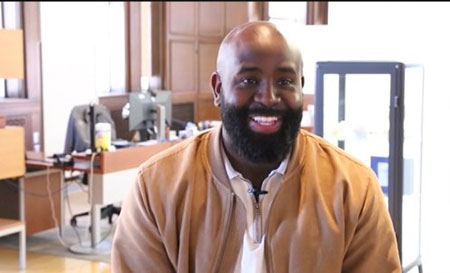 Madala Mathurin, Kavari Health
Stemming the tide of nursing turnover
From his beginnings at Apple and Rocket Homes, Madala Mathurin is now channeling his technical expertise to tackle one of healthcare’s most urgent and enduring workforce challenges.
Nursing turnover is a perennial issue for health care systems and 73% of hospitals are looking to reduce their reliance on agency and travel nurses. It takes up to 90 days to fill a vacant position and annually hospitals are spending anywhere from $5 million to $10 million as a result of nursing turnover. The potential cost to patient care and the staff left to pick up extra shifts is another issue entirely.
Using a combination of qualitative and quantitative data, the platform helps healthcare systems identify retention risks and improve staffing stability.
“We help hospitals save money and time by predicting when nurses are going to churn,” Madala said.
A tech expert turns his mind to business
Before entering healthcare entrepreneurship, Madala built his career in technology. He had his start at an Apple store before becoming an iOS engineer. As just the second iOS engineer at Rocket Homes he helped scale the company’s mobile application during its early growth phase. The fast-paced startup environment sparked his entrepreneurial ambitions.
“I saw how a small team could move quickly and build meaningful products,” he said. “That was my introduction to building a tech company.”
It was a deeply personal experience that sparked his idea to focus on healthcare.
“My mother had a near-death experience at the ER,” he said. “A nurse was able to get my mom in the right place at the right time to save her life, and then she quit the next day. I was left wondering how someone so good could leave and what circumstances would cause her to depart. And lastly, how many more lives she could have saved."
Madala applied to Conquer after months of networking and relationship-building in Detroit’s startup landscape. He credits the program with helping him connect directly with healthcare leaders, university partners and hospital executives.
“There are a lot of unsaid wins that happen when you’re in an environment like this,” he said. “It compresses time and helps you get connected to the right people.”
Looking ahead, Madala hopes to expand the company across hospitals throughout the Midwest while helping reduce nurse fatigue and improve patient care.
“There’s a world where patients suffer less because nurse employment rates are healthier,” he said. “I haven’t given up on that dream yet.”
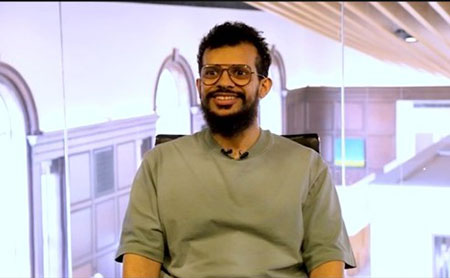 Suhaib Hashem, PhD, Luminur
Improving patient outcomes and staff workflows in the ER
Suhaib Hashem, PhD, is a biomedical engineer. And like most engineers, he is going to try his best to figure out a tangible solution to a problem and put that solution into practice.
Suhaib studied biomedical engineering at the University of Michigan, where he was already thinking about how to bring medicine and engineering together to diagnose and treat disease. His doctoral research at the University of Southern California focused on dementia. While he loved the complexity of dementia research, the disease lacked a definitive clinical marker that presented an engineered solution.
“My thesis has always been that medicine hasn’t fully caught up with modern engineering,” Suhaib said. “Over the next decade, bringing conventional engineering techniques into healthcare is going to transform medicine.”
He shifted his focus to pulmonary embolisms, where the problem is clear – there either is a blood clot present or there isn’t. That clarity, combined with advances in engineering and data modeling, created an opportunity.
Less than a year after completing his doctorate he founded Luminur, which focuses on reducing unnecessary CT imaging in emergency rooms for patients suspected of having pulmonary embolisms.
“I wanted to see the whole thing through,” Suhaib said. “Not just the research side. I wanted to see an idea go from conception all the way into clinical practice.”
Physicians often rely on CT scans to confirm whether a clot is present but more than 90% of those scans come back negative. The goal with Luminur is to reduce radiation exposure due to unnecessary CT scans, shorten patient wait times and improve emergency department workflows.
“There really isn’t a good way to know if the disease is there outside of imaging,” he explained. “So we’re developing methods to safely rule patients out before they’re exposed to unnecessary radiation.”
A strategic decision to return to Michigan
While California offered prestige and access to capital, it’s also extremely competitive. Suhaib said the Midwest, and Detroit in particular, are poised to become the next major healthcare innovation hub.
“The biggest barrier in healthcare startups isn’t necessarily funding,” he said. “It’s access to hospitals, physicians and clinical data.”
And he found all of that at Henry Ford. When he arrived back in Michigan, he happened to connect with an old acquaintance, Dr, Khaldoon Alaswad in the Henry Ford Hospital cath lab, who pointed him to HFI where he was encouraged to apply for the Conquer program.
“The access you get through Conquer is incredible,” he said. “You meet people working on fascinating projects, and opportunities appear from conversations you weren’t expecting.”
Suhaib collaborated with Henry Ford leaders and clinicians who embraced his idea. For aspiring entrepreneurs, Suhaib’s advice is to simply keep moving forward.
“Momentum is everything,” he said. “The biggest killer of any entrepreneurial idea is standing still.”
He encourages innovators to apply pressure to themselves through accelerators, pitch competitions and innovation programs, even if their ideas still feel unfinished.
“Your first idea probably won’t be the final one,” he said. “You’ll pivot. Everyone pivots. But you have to start moving.”
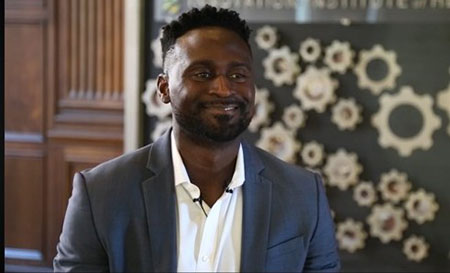 Tosan Ugbeye, Scopemed
Reshaping a century-old approach to oxygen delivery
Tosan Ugbeye has lived in three countries on two continents and sampled several careers. It took an off-chance observation in an OR during COVID and what he calls his latent entrepreneurial spirit to bring Scopemed to life.
“The first 20 years of my life I spent in Nigeria,” said Tosan, a certified anesthesiologist assistant. “Growing up in Nigeria was turbulent. You know, it has a way of shaping you, making you tough, making you work hard, making you realize, ‘I’m the lucky one to be alive and I can’t take things for granted.’”
His family moved to Windsor, Ontario in 2004. Tosan, who graduated high school at 16 in Nigeria, would go to university there. His first thought was dentistry. His mom encouraged him to become a doctor like his father. He started on that path but decided settling on a single type of medicine wasn’t right for him. Anesthesia was appealing because he was able to work with all types of patients within many medical specialties.
Solving a century-old problem
At the height of the COVID-19 pandemic healthcare systems were scrambling to improve respiratory care and protect clinicians. And, as providers experimented with improvised respiratory solutions, Tosan noticed that one of the most commonly used devices in anesthesia had remained largely unchanged for decades.
"That mask would come into the operating room, serve one purpose, and then get thrown away," he said. "I kept thinking it could do so much more."
That realization became the foundation of Scopemed.
Many oxygen delivery systems still rely on design principles that date back to World War I. Sedation complications that require airway interventions during endoscopy procedures are more common than you would think. To revive the patient, the procedure is stopped, the scope is removed, and the mask is replaced with a different device capable of breathing support. Scopemed’s O2rizon™ delivers on-demand resuscitation. Its non-invasive oxygen delivery solutions prevent unnecessary intubations during critical and procedural care. A positive pressure component allows for early intervention without stopping the procedure, leading to safer outcomes for patients.
The technology combines functions that traditionally require several different respiratory devices into a modular platform.
"We're creating hands-free technology for procedural sedation," Tosan said. "It's about providing better care, improving workflow and reducing unnecessary interventions."
Always an entrepreneur at heart
Although healthcare became his profession, entrepreneurship was always in the background. Tosan’s mother was an entrepreneur, constantly launching small ventures and businesses throughout his childhood. Yet it wasn't until arriving in North America that Tosan was exposed to startup culture and the assumption that someone could build a company around a single idea. He continued working while pursuing an MBA at Cleveland State University and immersing himself in entrepreneurship programs, incubators and innovation networks throughout Ohio.
Working alongside Scopemed co-founder and chief technology officer, Shawn Iravanchy, PhD, things began to move along. Tosan received his master’s degree in anesthesia from Case Western University and it was there he met HFI’s Joe Jankowski, PhD. He recommended that Tosan apply for the Conquer program and he is happy that he did.
“It’s 10 weeks of intense programmatic learning and socialization with previous founders where you can learn from their experience as well,” he said. “There's nothing like being able to be in a place where they can bring out an aggregate of multiple clinicians, multi-disciplinary, multi-functional, and with them innovation is a mindset. There are a lot of clinicians that really don't even know how products get there. But these clinicians have a mind towards innovation.”
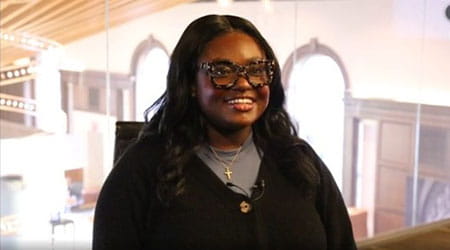 Merlinda-Loraine Sewavi, MS, Syntheia Labs
Giving drug companies a faster way to develop safe, effective treatments
At 26 years old, Merlinda-Loraine Sewavi has already worked at some of the nation's most advanced scientific institutions. She has engineered cardiac tissues at Michigan State University, trained in cutting-edge genomic technologies at Lawrence Livermore National Laboratory and helped launch a pioneering biofabrication initiative at Stanford University aimed at one day bioprinting transplantable human hearts.
Still, for Merlinda, the path to entrepreneurship wasn't part of the original plan.
"I was trained to become an MD-PhD," she says. "I thought I would spend my life as a physician-scientist.”
When she witnessed stem-cell-derived heart tissue beating in a laboratory for the first time, “it changed my brain chemistry," she said. "I knew I could do this forever."
Today, Merlinda is co-founder and CEO of Syntheia Labs, a biotechnology startup developing advanced human cardiac tissue models designed to help pharmaceutical companies identify dangerous drug side effects years earlier than traditional methods allow.
An expensive problem hidden in drug development
Many promising therapies survive years of development and consume hundreds of millions of dollars before failing in clinical trials. One of the most common reasons is cardiotoxicity, which is the unexpected harmful effects on the heart that emerge only after extensive testing.
"Companies can spend years developing a drug only to discover later that it causes serious cardiac issues," Merlinda said. "By then, significant time, capital, and patient opportunity have already been lost."
Syntheia Labs aims to address that problem upstream. Using laboratory-grown human heart tissues derived from stem cells, the company exposes drug candidates to highly specialized cardiac models and analyzes their effects at the cellular level. The result is rather than waiting years for clinical trial data to reveal problems, pharmaceutical companies could gain critical insights in a matter of weeks.
"If we can identify cardiac toxicity before a drug enters expensive later-stage trials, we can save years of work and potentially hundreds of millions of dollars,” she said.
From Michigan to Silicon Valley and back again
Merlinda’s journey spans multiple disciplines, institutions and even states. A Michigan State University graduate with degrees in microbiology, human biology and chemical biology, she spent time immersed in academic research. Her early work focused on tissue engineering and stem-cell biology, earning scholarships and research opportunities that laid the groundwork for her future career.
At Stanford, she joined a landmark federally funded initiative exploring the possibility of bioprinting functional human hearts. Working on the biological engineering team, she helped develop scalable manufacturing processes for stem-cell-derived cardiac tissues.
"In Silicon Valley, I learned what it means to build," she said. "I realized that if I wanted to advance this science as far as possible, entrepreneurship could be the vehicle."
As she evaluated where to launch a company, an unexpected opportunity appeared. She saw a LinkedIn post about the Conquer Accelerator while she was still in California and decided to apply.
Learning new ways to communicate her vision
"When I entered the accelerator, I thought I understood the science and could build the business around it," Merlinda says. "I got humbled immediately."
The process forced Merlinda to evolve her business model, rework pitches and rethink how she communicates her vision.
"I learned that people don't need to be overwhelmed by expertise," she says. "They need to understand how the solution helps them. As scientists, we're trained to explain everything. Physicians and healthcare leaders need concise, practical answers. Learning that language changed how I communicate."
The shift has strengthened both the company and its founder.