.svg?iar=0&hash=F6049510E33E4E6D8196C26CCC0A64A4)

/hfh-logo-main--white.svg?iar=0&hash=ED491CBFADFB7670FAE94559C98D7798)
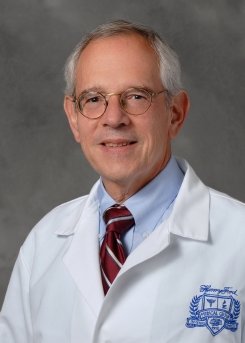
Michael Chopp, PhD

Specialties: Research
Services: Cancer Research
/hfh-logo-main--white.svg?iar=0&w=300&hash=6384A2E70E92039C36CA5CCBA53F8964)
Board Certification and Education
- New York University School of Medicine, Physics, NY, 1975
About Me
Biographical Statement
Dr. Chopp has led the Neurology Research Laboratory within the Henry Ford Department of Neurology since 1983. He received his Master of Science and doctoral degrees in mathematical and solid-state physics from New York University.
A prolific writer, teacher and award-winning researcher, Dr. Chopp has more than 1,000 publications, including more than 50 book chapters (H index=173, >110,000 citations), and he has delivered more than 500 plenary lectures and invited presentations. Dr. Chopp has chaired National Institutes of Health (NIH) study sections and has served as a consultant to government agencies, the NIH, and the pharmaceutical industry. Among his numerous awards are: American Heart Association-Thomas Willis Award, World Stroke Organization Lecture of Excellence, Barbro B. Johansson Award and Best Neuroscientist World Rankings-#59, US ranking #38.
Titles
- Section Head - Research, Department of Neurology, and the Zoltan J. Kovacs Chair in Neuroscience Research at Henry Ford Health
- Distinguished Professor of Physics, Oakland University; Professor of Physiology, Michigan State University.
Research Interests
Dr. Chopp and his team have pioneered and developed a platform biologic-nanoparticle technology that may have a transformative role in the diagnosis and treatment of disease, including stroke, traumatic brain injury, dementia, peripheral neuropathy, neurodegenerative diseases, and many forms of cancer. This technology is based on findings that small extracellular vesicles (sEVs-), which are generated by nearly all cells, mediate intercellular communication. The cells "talk to each other" by exchanging these sEVs. The sEVs contain proteins and genetic instructions, which, when internalized by recipient cells, regulate the cell`s function.
By harvesting the sEVs from select populations of cells, Dr. Chopp and his team have developed novel ways to engineer the molecular content of the sEVs and to substantially amplify the therapeutic benefit of naïve sEVs. The team is using specific populations of cells and means to treat and harvest these cells to generate sEVs that can be readily scaled up for clinical application, with the cells and their sEVs being highly consistent and reproducible. Adding to the potential efficacy is the ability of the sEVs to cross the blood-brain barrier, making them especially useful in treating brain cancers and neurological conditions.
Other areas of interest:
- Treatment of brain, ovarian, prostate, liver, and breast cancers
- Cellular and molecular biology of ischemic cell injury
- Pathophysiology of stroke, traumatic brain injury, vascular dementia, peripheral neuropathy, multiple sclerosis, and cancers
- Combination thrombolytic and neuro and vascular protective therapies for stroke
- Mechanisms of neuroprotection and neurovascular restoration
- Cell-based and pharmacological neurorestorative therapies for stroke, traumatic brain injury, and neurodegenerative disease
- Molecular and cellular mechanisms underlying neurovascular remodeling and the induction of brain plasticity leading to functional and behavioral recovery after neural injury
- Systemic responses and interorgan communication post stroke and neural injury, including gut-brain interactions
- Magnetic resonance imaging
Awards and Honors
- Distinguished Scientist Award, Henry Ford Medical Group—Board of Governors, 2005
- American Heart Association—Top Ten Research Advances of 2001
- Treatment of Stroke with Bone Marrow Stromal Cells
- 272 Plenary Lectures/Invited Presentations
Videos and Articles
-
Videos
-
Blog Posts
Locations

Hospital Privileges
- Henry Ford Hospital