.svg?iar=0&hash=F6049510E33E4E6D8196C26CCC0A64A4)

/hfh-logo-main--white.svg?iar=0&hash=ED491CBFADFB7670FAE94559C98D7798)
Multisport Athlete Finds the Right Sports Medicine Team to Manage Injuries and Protect Her Future
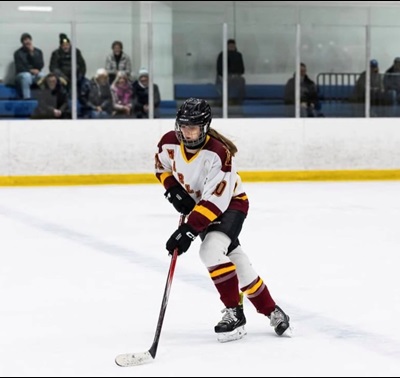
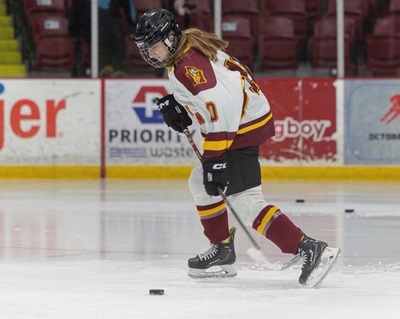
From the time she could lace up skates, Sophia Kallabat was drawn to the ice. The Grosse Pointe Woods resident began skating and playing hockey at just four years old and added swimming a year later. After watching her brother play hockey, Sophia quickly decided figure skating was not for her—the speed, strategy and physicality of ice hockey captured her attention.
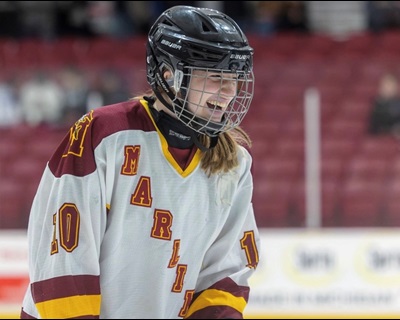
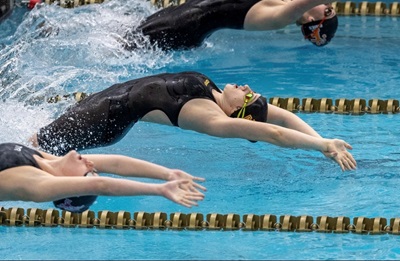
That early passion translated into years of hard work and success. At Mercy High School in Farmington Hills, Sophia has excelled in both sports, culminating in a standout achievement as part of the 2025 MHSAA Division 2 State Championship team for swimming and diving.
When injuries become part of the game
Like many high-performing athletes, Sophia encountered setbacks along the way. The physical demands of year-round training led to several injuries, including a shoulder injury she attributed to the repetitive motion required in swimming. While injuries are often considered an unavoidable part of competitive sports, Sophia’s experiences signaled that something more complex might be at play.
On-site athletic training makes a critical difference
Fortunately, Sophia had immediate access to expert support. Henry Ford Health provides certified athletic trainers at more than 30 high schools across Metro Detroit, including Mercy High School. These professionals work closely with student-athletes to prevent injuries, recognize problems early and coordinate appropriate care. After observing Sophia’s shoulder issues, Henry Ford Health and Mercy High School athletic trainer Marnie Hawes recommended Sophia be evaluated by Patricia Kolowich, M.D. Henry Ford sports medicine and orthopedic surgeon and team doctor for the Detroit Red Wings.
“Shortly after my shoulder injury, I was already in physical therapy when something unexpected happened,” Sophia recalls. “I was just walking at a social event with my friend, and my patella—my kneecap—dislocated.”
Her mother Victoria notes that Sophia had always been very flexible, but during the evaluation, Dr. Kolowich connected the dots between Sophia’s injury history and her joint instability.
A diagnosis that explained everything
Dr. Kolowich diagnosed Sophia with hypermobile Ehlers-Danlos syndrome (hEDS), a connective tissue disorder that causes joints to be overly flexible and more prone to injury. The diagnosis provided long-awaited answers—but also introduced difficult decisions about treatment and sports participation.
She explains that Sophia’s injuries weren’t isolated events—they were connected. “Her joints were too loose, which made them unstable and more likely to dislocate, even during everyday activities.”
Imaging later revealed damage to the ligament that stabilizes the kneecap. Despite physical therapy, Sophia continued to experience instability. “Because of the severity of her knee injury and the underlying connective tissue condition, physical therapy alone wasn’t enough,” says Dr. Kolowich. “Surgery offered the best chance to stabilize her knee and protect her long-term mobility.”
Victoria acknowledges that learning Sophia would need surgery—and would miss her freshman year of sports—was challenging. Still, she is grateful the underlying condition was identified.
“We are so appreciative of Dr. Kolowich,” Victoria says. “She was the first doctor who really looked at the whole picture of Sophia’s medical and injury history and recognized that her condition was contributing to her injuries. This could have gone undetected for years. Finding this out was a really big deal for us.”
A team approach to recovery and prevention
Throughout her recovery, Sophia continued to rely on the consistent presence of her athletic trainer at school. She credits Marnie Hawes with helping her—and many of her teammates—navigate the physical and mental challenges of injury.
“It’s so comforting to have Marnie available as a resource,” Sophia says. “If something happens, she’s right there to guide us—whether it’s showing us specific exercises to prevent injury or helping us figure out next steps if we need care. She always goes out of her way to help, and it means a lot.”
Overcoming setbacks and earning recognition
After recovering from knee surgery, Sophia faced additional challenges, including two concussions—one from hockey and another from a car accident. Once again, she worked closely with her care team and athletic trainer to ensure a safe and structured return to play. This includes following the Michigan High School Athletic Association (MHSAA) as well as school and Henry Ford Health policies and protocols to return to sport after a diagnosed concussion.
Marnie explains it can be frustrating for athletes to be "held back" once they feel back to normal.
“Making sure that an athlete knows why it is important to follow our concussion policies helps ensure that they are also focused on their health, as well as their long-term success in sports,” she says.
Sophia was determined to do the right thing to get back in the pool and also do well in her classes. “She has always shown great resilience with her injuries, but going through the concussion protocol takes a different kind of resilience as it is a brain injury that often has cognitive and emotional components to work through.”
Not only was Sophia able to get back to her regularly scheduled programming in the classroom and in the pool, her team went on to win the Division II Swimming and Diving State Championship. “She may have been sidelined for a bit due to concussion, but she was focused on doing what she needed to do in order to safely return to doing what she loves,” Marnie states.
Looking ahead: Inspired by care
Sophia’s experiences as a patient have shaped her future goals as much as her time on the ice and in the pool. She now hopes to pursue a career in medicine.
“Since fifth grade, I’ve wanted to be a cardiologist,” Sophia says. “I had a memorable experience with a doctor who helped me and made me feel safe and comfortable. Ever since then, I’ve felt like that’s what I want to do with my life.”
Dr. Kolowich has observed that early, meaningful interactions with physicians often inspire individuals including athletes to enter the medical profession.
“Athletes develop discipline, resilience and accountability—qualities that translate well into medicine,” she says. “Sophia has shown maturity and determination throughout her care, and I’m confident she’ll carry those strengths into whatever path she chooses.”