.svg?iar=0&hash=F6049510E33E4E6D8196C26CCC0A64A4)

/hfh-logo-main--white.svg?iar=0&hash=ED491CBFADFB7670FAE94559C98D7798)
Related News



Henry Ford Health First in Michigan to Offer ‘Next Generation’ PET Imaging Agent for Heart Disease Detection
December
19,
2025
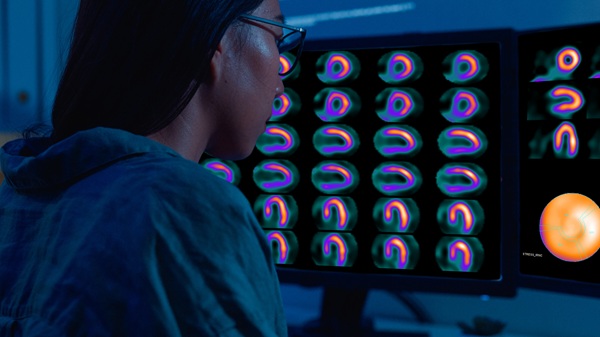
Henry Ford Health is the first health system in Michigan to offer a newly approved radioactive PET imaging agent that offers the potential to significantly enhance clinicians’ ability to detect coronary artery disease.
The agent, called Flyrcado™ (flurpiridaz F 18), was approved by the US Food and Drug Administration in late 2024 for use in positron emission tomography (PET) scans of the heart. The drug is injected into patients and helps highlight areas of reduced blood flow, allowing cardiologists to see blockages or damage with greater clarity than non-PET agents.
Dr. Karthikeyan Ananthasubramaniam (Karthik Ananth) a cardiologist and director of Nuclear Cardiology and the Cardiac PET Program at Henry Ford Health, said the technology marks a long-awaited leap forward in cardiac imaging.
“There’s long been a need for advancements in PET imaging,” Dr. Ananth said. “Flyrcado offers the potential for high-quality, highly sensitive images for detecting coronary artery disease, including moderate cases.”
Henry Ford Health began using Flyrcado on Sept. 10 at Henry Ford Hospital in Detroit for patients undergoing stress tests to screen for coronary artery disease. The health system has long used a Rubidium-based isotope for PET imaging at its West Bloomfield hospital, but Flyrcado represents the next generation.
Dr. Ananth said the new isotope offers three major advantages: it is designed to provide high-quality images and improved sensitivity over non-PET agents for detecting coronary disease, and it could make exercise-based PET scans possible for the first time.
“Flyrcado is designed to support high-quality cardiac PET imaging,” Dr. Ananth said. “Its characteristics may help provide clear images that assist clinicians in evaluating coronary artery disease with confidence.”
Flyrcado represents a new generation of PET agents because unlike traditional PET chemical stress tests, which use medication to simulate exercise, Flyrcado allows doctors to capture images during actual exercise — a more physiologic way to assess symptoms that provides valuable information not possible with chemical stress testing.
“If a patient says they’re short of breath when they’re walking, you can now put them on a treadmill, see how they’re doing, inject the F-18 Flyrcado, and see exactly what they’re feeling when they’re exercising,” Dr. Ananth said. “That has never been possible with Rubidium-82 PET given its ultra short half-life compared to Flyrcado, which has a longer half-life enabling imaging after exercise.”
The new tracer also brings practical benefits for hospitals, since it can be ordered as needed rather than under a standing contract, reducing costs and waste.
Dr. Ananth said PET imaging is already considered the most accurate non-invasive method for assessing coronary artery disease.
“PET imaging is widely regarded as a highly accurate method for assessing coronary artery disease,” he said. “With the addition of Flyrcado, we’re excited to offer an advanced option that supports high-quality imaging and may enhance diagnostic confidence for our patients.”
Henry Ford Health plans to expand its use of Flyrcado in the months ahead with the goal of offering exercise-based PET testing as the PET program continues to evolve.
###
MEDIA CONTACT: mediarelations@hfhs.org.