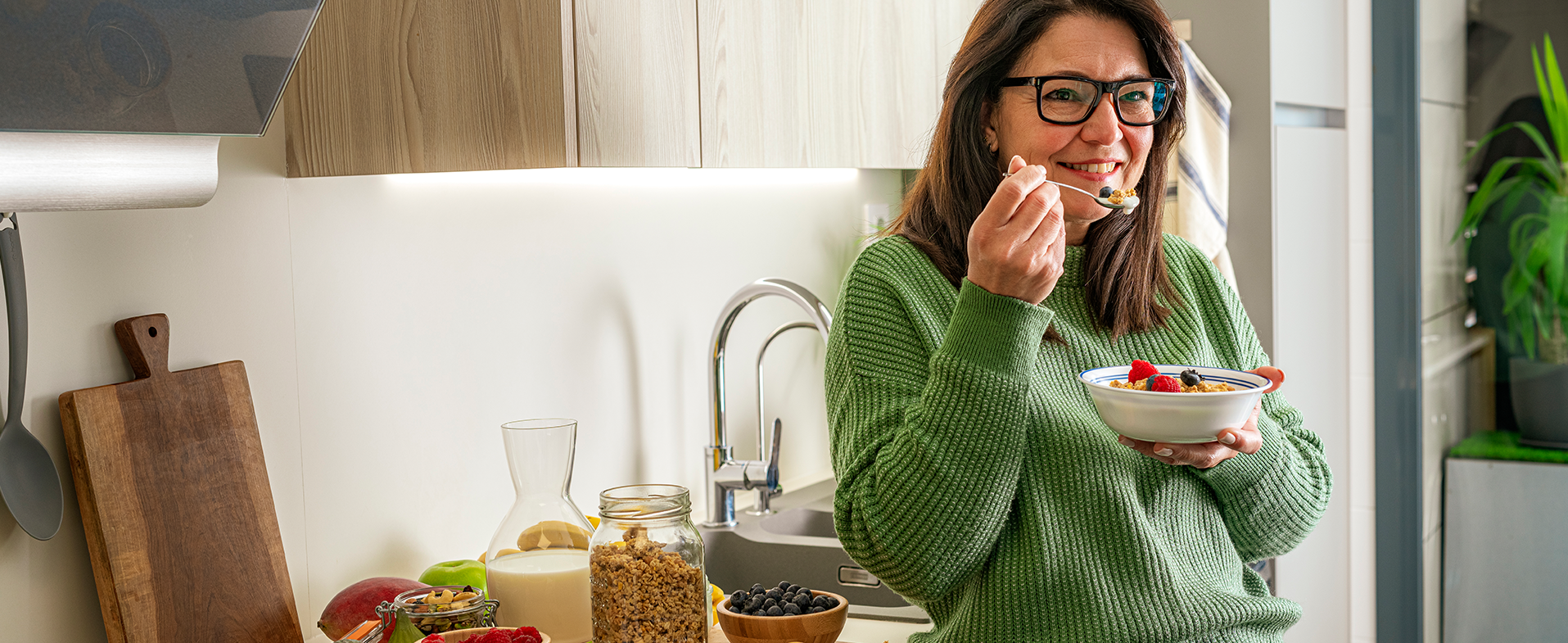

When you have diabetes, what you eat is important—but when you eat also matters. The right meal timing can help you keep your blood sugar levels stable throughout the day.
Sarah Pollack, RDN, CDCES, is a registered dietitian nutritionist and certified diabetes care and education specialist at Henry Ford Health. She explains how timing meals can work to your advantage when you’re managing diabetes.
How Irregular Meals Affect Diabetes
If you skip meals or wait too long between eating, several things happen. First, you may feel “hangry,” or extremely hungry, which makes it harder to choose healthy options. “It’s easy to grab the first thing we see when we’re hungry, like processed convenience foods,” Pollack explains. “We’re less likely to take the time to cook something or cut up fresh fruit or veggies.”
Second, being overly hungry can lead to overeating. “When we’re hungry, we tend to eat faster, which can make us eat more calories before we realize we’re full,” explains Pollack. “You may experience a higher blood sugar spike after these larger meals and find it harder to manage your weight.”
Finally, if you go too many hours without food, blood sugar levels can drop between meals. “The goal with diabetes is to keep blood sugar levels from dropping and spiking too much,” says Pollack. “To do this, we need to be eating at regular intervals.”
Creating a Diabetes Meal Schedule
The basic guideline for most people with diabetes is to eat a balanced meal every four to five hours. This timing helps you feel satisfied while preventing the “hangry” feeling that can lead to less-than-ideal food choices.
“If your meals need to be more than five hours apart, consider a healthy snack midway through,” Pollack says. For example, if lunch is at noon and dinner isn’t until 7 p.m., a small snack around 3 or 4 p.m. can help bridge the gap.
But snacks should be balanced, ideally combining healthy carbs, protein and a small amount of fat. Think of options like:
- Hard-boiled egg with fruit
- Handful of nuts or seeds with yogurt
- String cheese with a few whole-grain crackers
- Vegetables and hummus
Can I Skip Breakfast If I Have Diabetes?
Many people don’t feel hungry in the morning, so they skip breakfast. But going several hours without food can set you up for problems later in the day.
“With our busy lifestyles, many people run out the door with a coffee and might even work through lunch,” Pollack says. “Then they have a big dinner and keep snacking until bedtime. This irregular schedule doesn’t provide an even intake throughout the day.”
If you’re not a breakfast person, you don’t need a huge meal—just something within a couple of hours of waking up. A slice of toast with peanut butter, a banana with a hard-boiled egg or cottage cheese, or some yogurt with berries can be enough to get you started.

Breakfast is especially important if you take diabetes medications that require food. “Skipping breakfast while taking diabetes medications can lead to stomach upset or low blood sugar levels,” says Pollack. “Always follow your provider’s guidance about taking medications with or without food.”
Building Balanced Meals for Diabetes
If you find that you’re too hungry to go five hours between meals, consider whether you’ve got the right nutrients on your plate. “A balanced meal can help you feel fuller, longer, without eating more calories than you need,” says Pollack. “If you eat a meal too high in processed carbohydrates, you might feel hungry an hour or two later.”
The Diabetes Plate method from the American Diabetes Association can serve as a visual guide to help you build your meals, no calorie counting required. This method is flexible and helps prevent blood sugar swings and hunger pangs:
- Fill half your plate with non-starchy vegetables, such as broccoli, spinach, bell peppers, zucchini, tomatoes or carrots. These options are low in calories and carbs, but high in fiber, vitamins and minerals.
- Fill a quarter of your plate with lean protein, such as chicken breast, fish, turkey, tofu, eggs or legumes. These foods are slower to digest, which can prevent rapid glucose spikes and help you feel full longer.
- Fill the last quarter of your plate with high-fiber carbohydrates, such as sweet potato, quinoa, whole-grain pasta or fruit. Like protein, these options digest more slowly and don’t cause a big rise and fall in your blood sugar.
- Stay hydrated with water or non-sweetened drinks. “Dehydration can affect your blood sugar levels,” Pollack explains.
Finding What Works for You
Meal timing with diabetes looks a little different for everyone. Your ideal schedule depends on your medications, activity level, work schedule and health goals.
“Life happens, and it’s OK if you don’t eat at the exact same time every day,” Pollack says. “Your plan can be healthy while still being flexible. Don’t try to stick to a highly restrictive plan, because that can be frustrating. Just keep an eye on your overall diet and keep working towards good blood sugar control.”
And if you’re not sure where to start, consider seeing a registered dietitian or certified diabetes educator. These professionals can help you develop a meal timing strategy that fits your life while keeping your blood sugar in check.
Reviewed by Sarah Pollack, RDN, CDCES, a registered dietitian nutritionist and certified diabetes care and education specialist at Henry Ford Health.