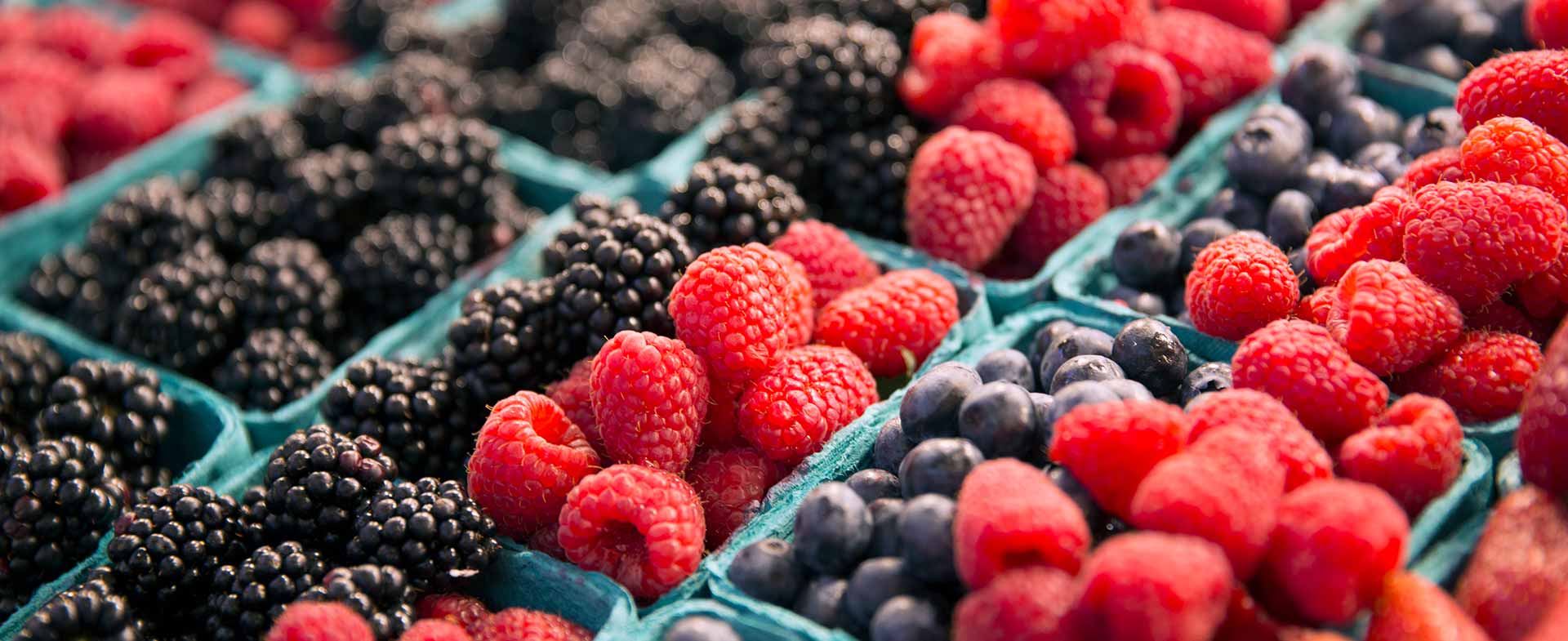
Black, blue, purple, red—whatever color, berries are as good for your health as they are pleasing to your eyes.
Many people know that berries are a great source of antioxidants, natural plant-based compounds that protect cells from damage. But they might not realize that berries are also chock-full of fiber. “Berries have so many good things stuffed into a small package,” says Lindsey Battistelli, MS, RDN, a registered dietitian nutritionist at Henry Ford Health.
Battistelli shares why berries deserve a closer look as a source of healthy fiber—and how to add them into your diet.
Health Benefits of Fiber
Fiber is a naturally occurring plant material that’s important for digestive health. “The goal for fiber is a daily intake of about 25 to 35 grams per day,” Battistelli says. “But most of us don’t get nearly enough fiber.”
There are two types of dietary fiber, each important in its own way:
- Soluble fiber slows down digestion, which regulates blood sugar levels and helps you stay full longer after eating. It can also help lower cholesterol.
- Insoluble fiber adds bulk to the stool, which can help prevent constipation.
Berries are special because they’re a great source of both soluble and insoluble fiber. Plus, they have a lot of other things going for them. They contain all those antioxidants (which can reduce the risk of cancer and heart disease) as well as a variety of vitamins and minerals.
Berry Breakdown: How Much Fiber?
Raspberries and blackberries are among the most fiber-rich berries, thanks to all their seeds. They’re relatively low in sugar, too. But other types of berries are also healthy choices, Battistelli says.
Here’s how much fiber you can expect from 1 cup of fresh or frozen berries:
- Raspberries: 8 grams
- Loganberries: 7.8 grams
- Blackberries: 7.6 grams
- Boysenberries: 7.0 grams
- Gooseberries: 6.5 grams
- Blueberries (wild): 6.2 grams
- Blueberries (farm-grown): 3.6 grams
- Strawberries: 3 grams
Berry Good: Recipes and Tips

Battistelli offers these tips to help you get your money’s worth from the berry patch.
- Store smartly: Berries can spoil more quickly when they’re damp, so wait to wash them until right before you plan to use them. To store, spread them flat on a paper towel in the fridge. “Berries can be delicate, and they’ll last longer if they’re not all piled on top of one another,” Battistelli says.
- Frosty is fine: Frozen berries are often cheaper than the ones you find in the produce aisle. But they contain just as much fiber, so don’t hesitate to reach for frozen fruit. They won’t be as firm as fresh berries, but they’ll still be perfect for adding to smoothies or oatmeal.
- Stock up in summer: Berries are often more affordable—and can be even tastier—when you buy them in season from local growers. Stock up during the harvest season and freeze extras to use later.
- Keep them handy: Get in the habit of adding some berries to foods you’re eating anyway. Add a scoop of raspberries to your smoothie or slice some strawberries into a summer salad.
- Swap for jam: Try mashed berries instead of jam or jelly on toast or in a peanut butter sandwich, Battistelli suggests. You’ll get all the health benefits of the fruit without the added sugar.
Need more inspiration? Try this fiber-rich, versatile recipe courtesy of Battistelli:
Berry and chia seed compote
Ingredients:
- 3 cups of berries, fresh or frozen
- 3 Tbsp fresh orange juice
- 1 Tbsp chia seeds
Directions:
- Warm berries and juice in a saucepan over medium heat, stirring and mashing them as they become soft and bubbly.
- Remove from heat and stir in chia seeds.
- Serve a spoonful however you choose: mixed into oatmeal, blended into smoothies, stirred into Greek yogurt or spread on toast.
- Store in an airtight container in the fridge for 5 to 7 days or in the freezer for up to 6 months.
Reviewed by Lindsey Battistelli, MS, RDN, registered dietitian at Henry Ford Health.