
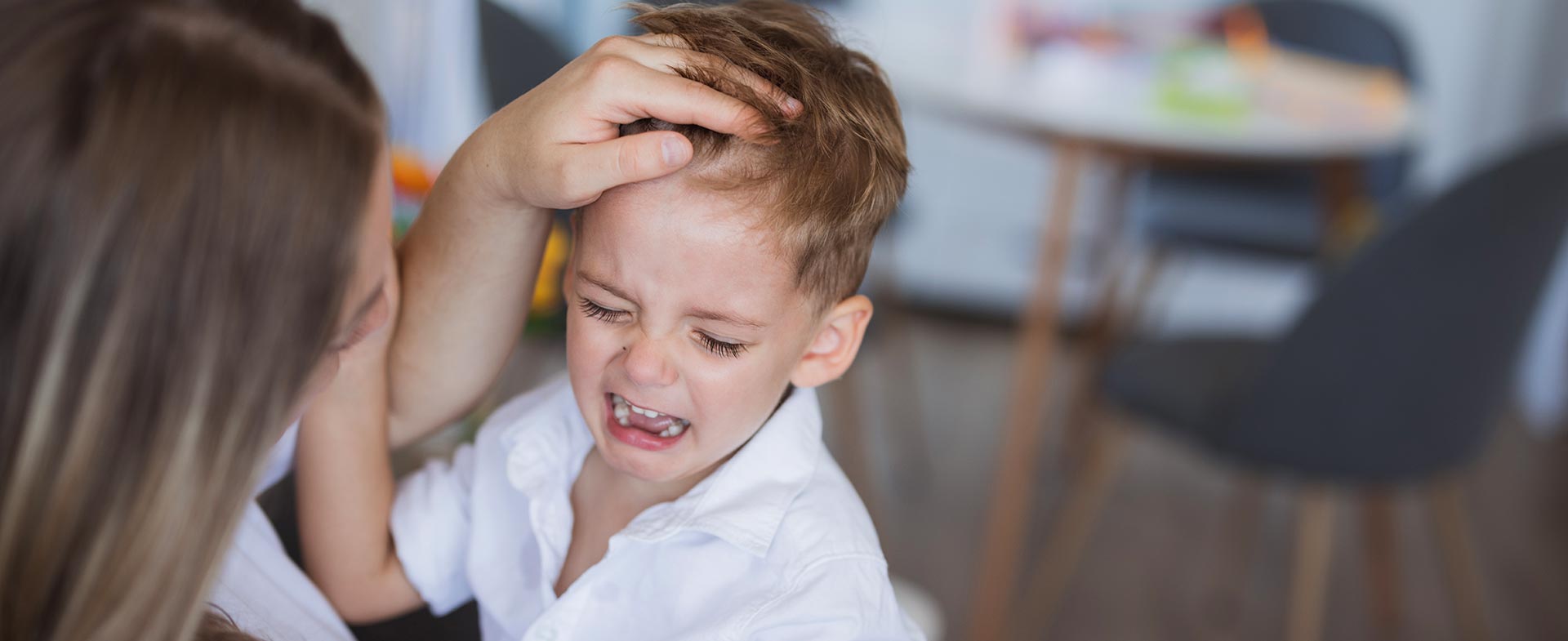
A baby’s first steps are an exciting milestone. But once toddlers are on the move, trips, tumbles and bumped heads become common occurrences.
“Toddlers are curious and adventurous, but also clumsy. They’re still learning how to walk,” says Shalini Sethi, M.D., a pediatrician at Henry Ford Health. Plus, baby heads are oversized in proportion to baby bodies. That makes little ones top-heavy and more likely to tumble headfirst when they fall.
“Fortunately, most toddler head bumps are not serious—but some of them can be,” Dr. Sethi says. She explains how to prevent toddler head injuries, how caregivers can manage bumped heads at home—and when they should seek medical care.
Head Injury Red Flags and Serious Symptoms
Toddler head bumps often look worse than they are. A lump or “goose egg” on the forehead is common and not necessarily a sign of a serious injury. Yet serious head injuries can occur in babies and toddlers.
When a toddler hits their head, caregivers should assess for these signs of serious injury:
- Loss of consciousness (passing out)
- Difficulty walking or being clumsier than usual
- Excessive sleepiness or weakness
- Seizures or jerky movements
- Slurred speech
- Uncontrolled bleeding
- Blood or fluid from the nose or ears
- One pupil larger than the other
- Delayed vomiting (vomiting more than once, several hours after the injury)
“These are the red flags that indicate you should call 911 or go to the ER,” Dr. Sethi says.
Treating Toddler Head Bumps
Luckily, those serious injuries aren’t very common. More often, a toddler takes a tumble or collides headfirst with the furniture without causing serious harm. What then?
Once you’ve ruled out the red flags that would send you to the ER, Dr. Sethi recommends taking these steps.
- Be a comfort: Getting hurt can be scary and upsetting. A hug and gentle words can reassure your little one and help them calm down.
- Take a close look: Assess for any visible injuries. Are there any cuts or scrapes that need attention?
- Call the doctor: Dr. Sethi recommends calling the pediatrician to check in if your child has taken a fall or bumped their head. “This is especially important for younger toddlers who can’t yet speak well enough to describe their symptoms or tell us how they’re feeling,” she says.
- Treat the injury: An ice pack can help reduce swelling and ease pain. Just make sure to wrap the ice pack in a towel or washcloth. “Don’t ever apply ice directly against the skin,” Dr. Sethi says.
- Consider meds: If the bump seems painful, children’s acetaminophen (Tylenol) might help relieve discomfort. But talk to your pediatrician first.
- Keep watch: Adults should keep a close eye on their toddler over the next 24 to 48 hours, Dr. Sethi says. “It’s generally safe to allow a toddler to sleep after a minor head bump, provided they’re acting normally and you’ve observed them for at least an hour or two post-injury,” she adds. She recommends checking on them periodically during the night to ensure they’re responding normally. Call or visit your pediatrician if you notice any new symptoms or changes in your child’s behavior.
Signs of Concussion in Toddlers

Need A Pediatrician?
Concussions occur when the brain moves back and forth quickly inside the head, bumping against the inside of the skull. “Concussions aren’t life-threatening, but they can cause both short-term and long-term effects,” Dr. Sethi says.
She recommends seeing your pediatrician if you notice these signs of concussion in the hours and days following a head bump:
- Excessive crankiness or irritability
- Sleeping more or less than usual
- Loss of appetite
- Clumsiness or balance problems
- Sensitivity to light or noise
- Delayed vomiting
Babyproofing Basics: Preventing Toddler Head Injuries
You can’t wrap your baby in bubble wrap, but there are a lot of things you can do to prevent your child from taking a spill or bonking their head. “Toddlers are energetic and curious, making them prone to bumps and scrapes,” Dr. Sethi says. “These are steps I recommend to babyproof (and toddler-proof) your house.”
- Secure furniture: Use straps and brackets to affix bookshelves, TVs, dressers and other heavy items to the wall to prevent them from tipping onto a child.
- Use smart storage: Don’t stow toys or remotes on top of tall furniture. Toddlers are observant and creative and might be tempted to climb to get at them.
- Cover corners: Use corner guards or edge bumpers on tables, countertops and other furniture to avoid a collision with a sharp edge.
- Don’t take a trip: Tape down cords and cables and put away throw rugs that have a tendency to slide. “It’s easy for toddlers to trip, so keep your home clear of these tripping hazards,” Dr. Sethi says.
- Close the gate: Baby gates are great for keeping toddlers out of unsafe spaces. Put one at the top and bottom of the stairs to avoid a fall.
- Adults should supervise: “Toddlers can get into trouble quickly. They shouldn’t be left on their own or left with an older child who might get distracted,” she adds. And always keep one hand on a baby while they’re on the changing table, she adds—a lot of head bumps are caused by a squirmy toddler rolling off the table during a diaper change.
- Gear up: If your toddler is trying activities like riding a balance bike, use a helmet. And always use an age-appropriate car seat when in the car.
- Create safe spaces: Use non-slip mats in the tub and clear play areas of clutter and heavy objects that could fall. When toddlers are learning to walk, let them practice on even surfaces (like a carpeted room) rather than uneven terrain (like a hilly yard).
- Model safe behaviors: Toddlers tend to move full speed ahead. But parents can teach them to stop and look around before running or climbing.
Toddlers can seem like mini-tornadoes. But by taking some basic precautions, you can help keep your tiny whirlwind safe while they explore the world.
Reviewed by Shalini Sethi, M.D., a pediatrician at Henry Ford Medical Center – Beck Road in Plymouth.

