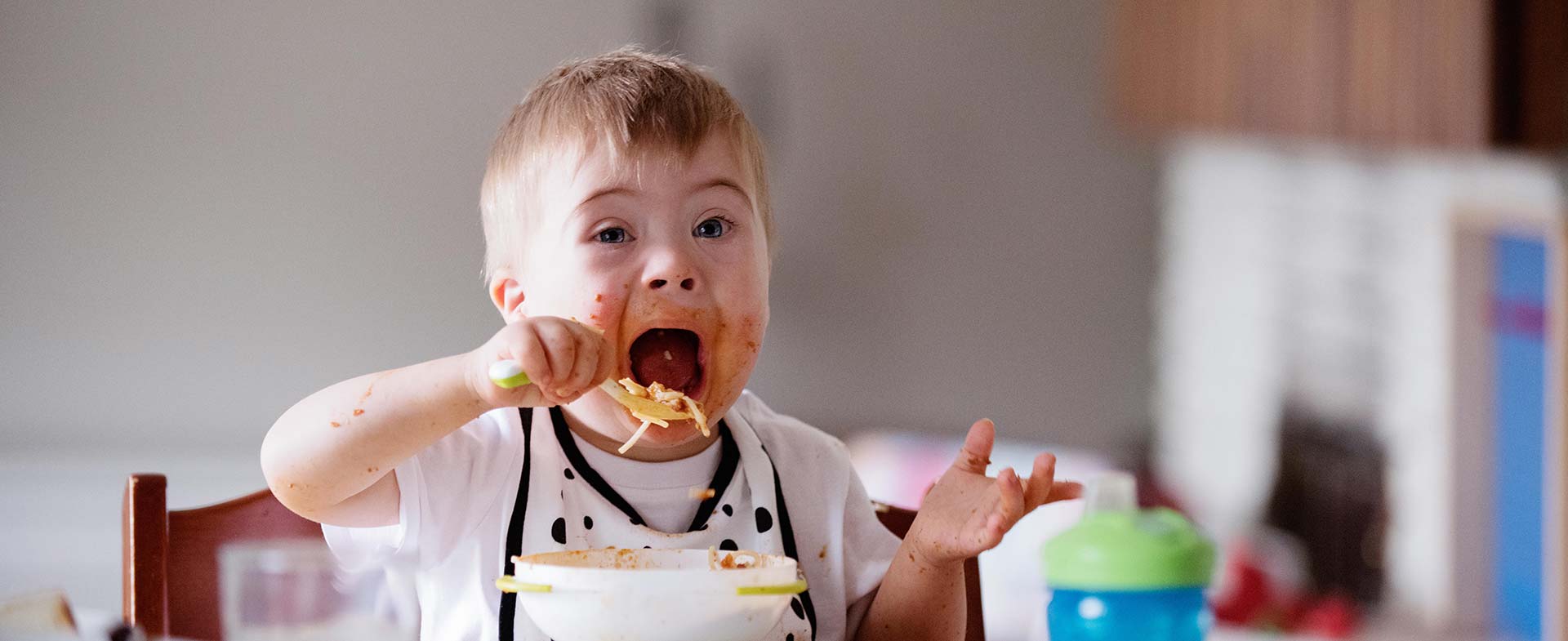
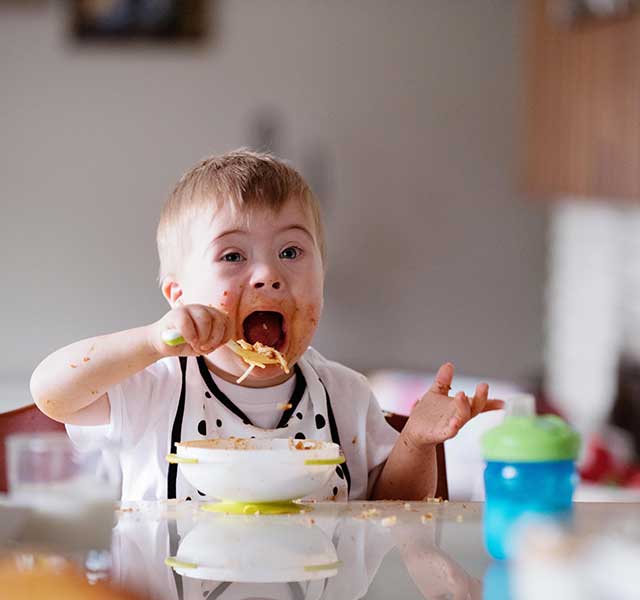
For many families, feeding a child with Down syndrome can bring unique challenges. Some babies struggle with breastfeeding or drinking from a bottle. Toddlers and older children can experience difficulties with chewing, sensitivity to food textures and issues such as constipation or celiac disease. For families navigating mealtimes with their child, it can be a lot.
“Not everyone with Down syndrome is affected in the same way, but feeding challenges are fairly common,” says Seth Iskowitz, M.D., a pediatric gastroenterologist at Henry Ford Health.
By knowing what to look for, you can ensure your child is getting good nutrition to fuel their body. “Resources are available to help families address feeding challenges,” Dr. Iskowitz says. Here’s what to know.
Swallowing Problems in Babies With Down Syndrome
Babies and kids with Down syndrome often have a unique facial anatomy, including a small mouth and jaw and a large tongue, which can interfere with feeding. “Those facial features might create some challenges when breastfeeding or drinking from a bottle, for example,” Dr. Iskowitz says.
Kids with Down syndrome also tend to have lower muscle tone than those without the condition. Lower muscle tone in the face and jaw can cause difficulty with swallowing and chewing. In babies, this difficulty can lead to milk pooling in the side of the mouth and not making it into the stomach. Sometimes, babies can aspirate milk or formula into their airways, which can lead to complications like pneumonia.
Fortunately, feeding specialists have a variety of tricks and tools to help make sure babies get the nutrition they need to grow, including:
- Carefully choosing the best bottle type and nipple size
- Position changes to support easier swallowing
- Stimulation of facial muscles to encourage swallowing
- In severe cases, a temporary feeding tube to provide nutrition
While feeding tubes sound extreme, they are usually temporary and can make sure kids get enough to eat while they work on coordinating their swallowing muscles and reflexes. “Getting enough nutrients is really important for brain growth,” Dr. Iskowitz says. “We want to use whatever tools are necessary to make sure babies are getting enough calories.”
Down Syndrome and Weight Gain
Unfortunately, feeding challenges sometimes continue beyond babyhood. “Many kids with Down syndrome have aversions to certain foods or textures,” Dr. Iskowitz says. “In other words, they are often very picky eaters.”
Sometimes, that picky eating can lead to kids being underweight. On the other hand, picky eating can also lead to kids eating too many sweets and processed snacks, which can increase the risk for obesity. What’s more, kids with Down syndrome have an increased risk of thyroid problems, which can also increase the risk of being overweight.
Nutritionists and dietitians can help families find a balance so that the child maintains a healthy weight. But it’s important to know that kids with Down syndrome grow at a different rate than kids without, Dr. Iskowitz notes. That means traditional body mass index (BMI) charts aren’t a helpful tool for assessing weight. “There’s a Down syndrome growth chart doctors should use to make sure these kids are on track and growing at an appropriate rate,” he says.
Digestive Disorders and Down Syndrome
Kids with Down syndrome also have a higher risk of certain disorders that affect the gastrointestinal tract. These include:
- Atresia (underdevelopment of certain parts of the digestive system)
- Celiac disease (an autoimmune disorder in which eating gluten causes an immune reaction that damages the intestine)
- Gastroesophageal reflux disorder, or GERD (a condition that causes stomach acid to flow back into the esophagus)
Because of these increased risks, it’s important to talk to your doctor if your child has symptoms of tummy troubles, such as:
- Abdominal bloating and pain
- Arching the back or crying during or right after feeding
- Constipation
- Diarrhea
- Nausea and vomiting (or excessive spitting up in babies)
- Poor weight gain
- Refusing to eat
Down Syndrome and Constipation
While constipation can be a symptom of other digestive disorders, it can also occur on its own. And unfortunately, constipation is another common challenge for people with Down syndrome. “Down syndrome can cause lower muscle tone in the colon, which slows the passage of stool through the system,” Dr. Iskowitz explains.
To keep things moving, he encourages kids to drink plenty of water and eat fiber-rich foods. “Kiwi, apple, pear and prune are my go-to recommendations for kids with constipation,” he says.
Finding Support for Feeding Challenges

Need At Pediatric Gastroenterologist?
Because Down syndrome can present several unique challenges related to feeding and nutrition, it’s helpful for families to reach out for support, Dr. Iskowitz says. Henry Ford Health and many other hospitals offer multidisciplinary feeding clinics that provide coordinated care for kids who have trouble eating. Those clinics often include a team of experts such as lactation consultants, dietitians and speech therapists with special training in swallowing disorders.
“Because each kid is so different, it’s impossible to make one-size-fits-all recommendations for babies and children with Down syndrome,” he adds. “Experienced pediatricians and providers in multidisciplinary feeding clinics can make specific recommendations to make sure a child has the support they need to get good nutrition.”
Dr. Iskowitz recommends connecting with feeding specialists early so you can get ahead of any problems and prevent things like picky eating or nutritional deficiencies from getting worse. With the right supports, kids with Down syndrome can develop a healthy, happy relationship with food. “It’s important to intervene early so we can make sure kids are getting the nutrition they need to grow and thrive,” he says.
Reviewed by Seth Iskowitz, M.D., a pediatric gastroenterologist who sees patients at Henry Ford Medical Center - Royal Oak.