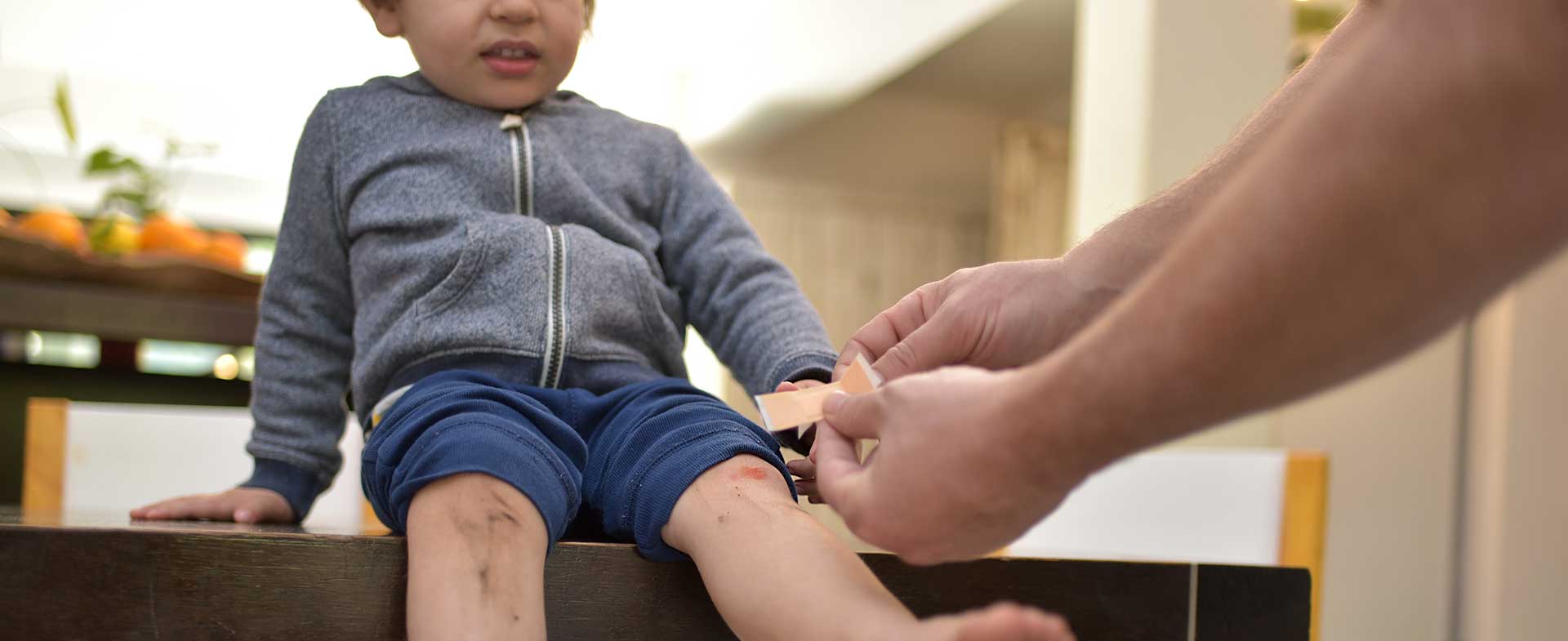
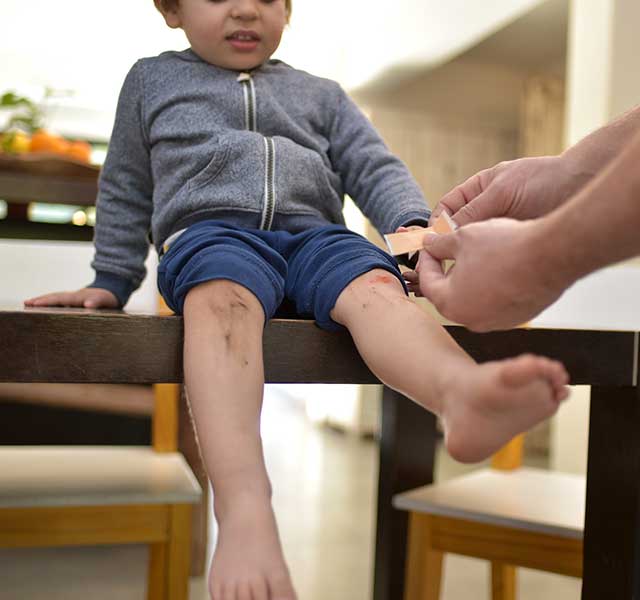
At least one person in your household is likely sporting a bandage or two on any given day. Minor cuts, scrapes and burns are very common occurrences—at home, at school, at work or at play. But not every boo-boo requires professional attention.
“It’s easy to safely treat many minor wounds and injuries at home with basic first aid,” says David White, N.P., a nurse practitioner at Henry Ford Health. “With a few basic first-aid supplies you can keep a wound clean, prevent infection and help it heal.”
At-Home First Aid
The first, and arguably most important, step in caring for a cut or burn at home is cleaning it. But you don’t need any special supplies to effectively clean out most cuts.
“Cleaning can really be just rinsing the wound thoroughly with water,” explains White. “Using hydrogen peroxide or alcohol just causes pain and doesn’t effectively reduce infection rates.” Even soap is optional, but if you use soap, choose a mild, fragrance-free soap that won’t cause irritation.
If a cut is bleeding heavily, try to stop (or at least slow) the bleeding before rinsing it. Hold firm pressure on the wound for several minutes to help stop bleeding.
When bandaging a cut or burn, the key, according to White, is to keep it moist while it heals. “You could use some antibiotic ointment, but you don’t necessarily need it,” he says. “A little Vaseline or Aquaphor is just as effective.”
Every home should have a well-stocked first-aid kit handy. According to the American Red Cross, your kit should hold wound-care essentials including:
- Adhesive bandages
- Adhesive cloth tape
- Antibiotic ointment
- Gauze pads and roller bandages
- Protective gloves
- Tweezers
Keep an Eye Out for Signs of Infection

Same Day Care At Henry Ford
White recommends changing out a bandage daily. “Do it before a shower and you can clean the wound, then re-bandage it afterward,” he says. “After it starts to heal, you can leave it open to the air as long as you aren’t at risk of reopening and re-contaminating it.”
This daily check gives you the opportunity to spot any early signs the cut or burn may be getting infected. Signs to watch out for include:
- Increased pain
- Redness or warmth around the wound
- Cloudy pus
- Swelling or tenderness
When Does a Cut Need Stitches?
Sometimes it can be hard to know if a cut is deep enough or serious enough to warrant a trip to your local urgent care or ER. According to White, types of cuts that might need stitches or other treatment include:
- Cuts or burns in cosmetically sensitive locations, including the ears, around the mouth or eyes
- Deep tissue injury (especially if you can see down to the bone or a tendon)
- Long, deep wounds that are more than an inch or two in length
- Uncontrolled bleeding, even after applying firm pressure for 10 to 15 minutes
“But even if you do need stitches, you don’t necessarily have to race right to the emergency room,” says White. “A wound should be closed within 18 to 24 hours, which may give you time to get less-costly treatment at an urgent care clinic or your primary care doctor.”
Other Wounds That Need Emergency Care
“The need to seek out care also depends on the health of the person who’s injured,” says White. “If someone is immunocompromised, their risk of infection is higher, so even more minor wounds might need professional care.”
Other types of injuries that warrant a trip to an urgent care clinic or emergency room include:
- Bites from a human or animal that break the skin
- Burns to the face or genitals
- Burns to the whole hand or foot
If you cut yourself on something dirty (a rusty nail, for example) or get a lot of dirt in a cut, you may need an updated tetanus shot. But unless the wound itself requires a doctor visit, you can get your tetanus shot at your local pharmacy or from your primary care doctor within a couple days of the injury.
With common sense, a well-stocked first-aid kit and careful attention, you can safely treat most minor wounds at home.
Reviewed by David White, N.P., a nurse practitioner who sees patients at Henry Ford Medical Center-Templin in Wyandotte.