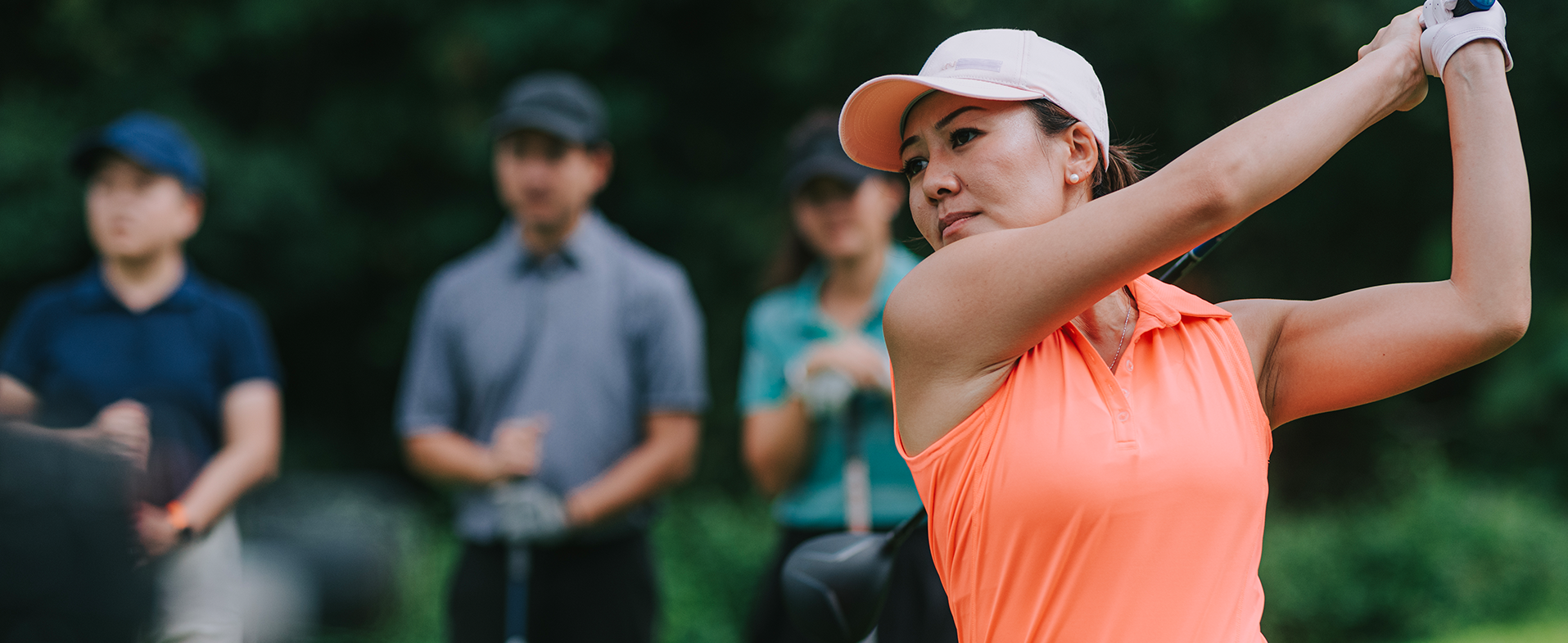
Whether you’re a golfer or tennis player – or you work in manual construction, plumbing or electrical – you are at risk for a condition known as golfer’s elbow.
“With golfer’s elbow, repeated microtrauma due to movements like gripping, grasping, flexing and pronating your wrist and forearm causes inflammation in the tendons that connect the elbow and forearm,” says Lafi Khalil, M.D., an orthopedic surgeon at Henry Ford Health. “When you play golf or tennis – or when you’re constantly turning a screwdriver - you’re making these movements repetitively. The tendons controlling these wrist and hand movements originate at the inner elbow and put stress on those tendons.”
Without treatment, golfer’s elbow (medically known as medial epicondylitis) can eventually turn into a degenerative condition where the tendons become fibrotic and calcified, a process known as angiofibroblastic hyperplasia. It can cause recurrent problems and it's more difficult to treat. Luckily, however, golfer’s elbow can usually be resolved with non-surgical options before it gets to that stage.
Symptoms of Golfer’s Elbow
Golfer’s elbow can cause symptoms like:
- Pain over the bone that’s on the inside of your elbow (called the medial epicondyle).
- Pain or tenderness in the tendons that connect your forearm to your elbow.
- Pain with wrist flexion and pronation, especially when resisted.
- Numbness/tingling in your pinky and fourth finger or shooting pain down your arm.
Treatment for Golfer’s Elbow
Treatment for golfer’s elbow includes:
- Activity modification. Take a break from your sport/activity for around six to 12 weeks. Rest and ice the area.
- Oral anti-inflammatories. NSAIDs like ibuprofen (or sometimes prescription anti-inflammatories) can help reduce pain and inflammation.
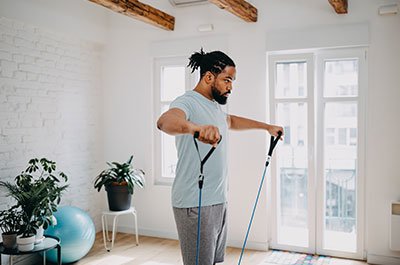
- Physical therapy. Physical therapists will lead you in exercises to relieve pain, strengthen the area and restore your range of motion. They may also do kinesiology taping, which adds support to the area without restricting your motion.
- Bracing. Bracing can help with joint immobilization and force distribution. “If you’re experiencing so much pain that you need to restrict your motion to let things calm down a bit, we’ll recommend bracing,” says Dr. Khalil.
- Extracorporeal shockwave therapy. Extracorporeal shockwave therapy is an ultrasound probe that sends a vibratory shockwave deep into your tissues, stimulating them to repair themselves. “It’s shown to have some promise in treating golfer’s elbow, but the literature isn’t strong enough yet to be conclusive,” says Dr. Khalil.
If these options didn’t resolve the issue, your doctor may suggest an injection with either cortisone (which reduces inflammation) or platelet-rich plasma (which helps the body repair itself). Dr. Khalil says injections should be done under ultrasound guidance to ensure that a nearby nerve, called the ulnar nerve, is not affected. If injections don’t improve symptoms, surgical treatment to remove the damaged tissue is the next step.
Go Where The Pros Go
After surgery, you’ll wear a splint for a few weeks, then begin physical therapy and avoid strenuous activity for around six to 12 weeks. “Most people get back to their normal activities by three months,” Dr. Khalil says.
How To Prevent Golfer’s Elbow from Recurring
For those who work in strenuous manual labor jobs, such as factory and construction, it might be best to move into a role that’s not as physically demanding – such as project management or supervisor roles.
“Some people have worked strenuous jobs their entire careers,” says Dr. Khalil. “If this applies to you, having a conversation at work to change positions may be an appropriate strategy to avoid recurrent injury and surgery. They’re tough conversations but beneficial for your health.”
For athletes, Dr. Khalil says the most important way to prevent golfer’s elbow from recurring is to gradually build your tolerance and endurance over time, maintain a strength program, and allow adequate time for rest and rehabilitation.
“Don’t return to your activity without a slow ramp-up period,” he says. “That means going back to golf with a return-to-golf program, or to tennis with a return-to-tennis program. It’s about finding that sweet spot where you’re able to tolerate your athletic event and not have a recurrence in symptoms but still be able to perform and improve.”
Reviewed by Lafi Khalil, M.D., an orthopedic surgeon who sees patients at Henry Ford Orthopedics – Chesterfield and Washington Twp.