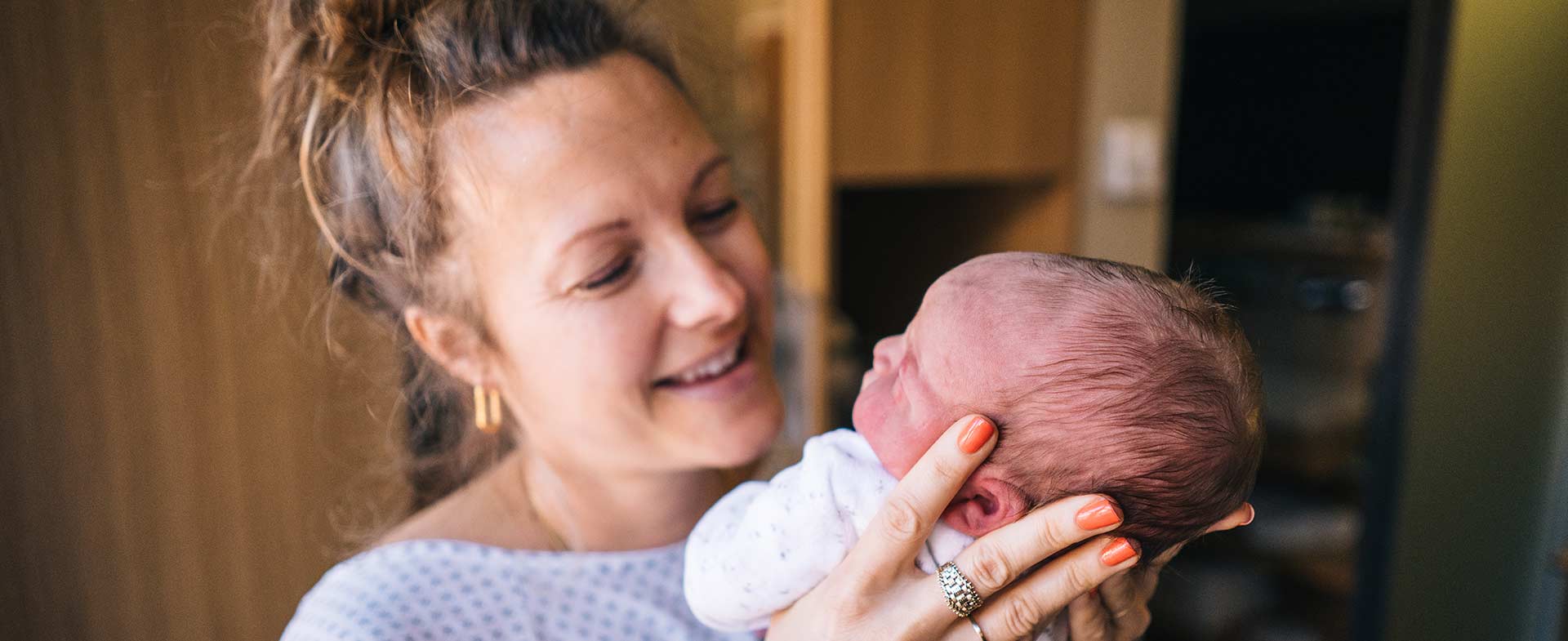

Having a baby is an exciting time. Those nine months of pregnancy give you lots of time to make plans and purchase items you know the baby will need once it arrives. And you’ve probably got your bag packed with everything you need to bring to the hospital waiting by the door.
But often, something very important gets lost in all that new-baby excitement: the birthing parent. They have just performed the Herculean task of pregnancy and childbirth. And yet, their own recovery needs typically take a backseat to the needs of their newborn.
“We need to be more real about the challenges people face during that postpartum period,” says Julie Fuller, CNM, a certified nurse-midwife at Henry Ford Health. “We need to make sure they have the tools and support they need to recover while also caring for their newborns.”
Healing After Delivery
Whether you deliver vaginally or by C-section, the physical recovery from childbirth is no joke. Despite what you may see from celebrities on social media, most women’s bodies do not just bounce back within weeks.
“Healing takes time,” says Fuller. “And for women who had a C-section—which is major abdominal surgery—the recovery is even more extensive.”
Prepare for recovery by having a few things on hand to help support your physical healing. Fuller suggests stocking up on things such as:
- Absorbent undergarments (easier and less bulky than wearing thick pads) or disposable underwear
- Hot and cold packs
- Over-the-counter medications, including pain relievers and stool softener
- Peri-bottle
- Witch hazel pads
Healing also requires good nutrition, so plan ahead by stocking your kitchen with easy, healthy foods. Before the baby is born, try to fill the freezer with meals your family can heat and eat (or ask friends to pitch in). Also have a stash of nutritious snacks on hand to eat throughout the day and during those middle-of-the-night feedings.
Building a New Mom Support System for the Fourth Trimester

Prenatal And Postnatal Care At Henry Ford
The “fourth trimester” is a relatively new term used to describe the 12 weeks after you give birth. It is a challenging time, both physically and emotionally, for new parents. Focusing on self-care and building a support network during the fourth trimester is key.
“The single most important thing you can do to set yourself up for an easier postpartum recovery is to line up several people you can call on for help,” says Fuller. “Then, after the baby is born, you need to allow those people to come in and help.”
Sleep deprivation is one of the most common—and most debilitating—issues most new parents face. But don’t just try to tough it out and function on days, weeks or even months of not enough sleep.
“We know that there’s a direct link between sleep deprivation and increased risk of postpartum depression,” says Fuller. “Getting even a few hours of uninterrupted sleep can change everything for a new parent.”
So when well-meaning friends and family come to visit and see the baby, give them one or two tasks that will help you. Guests can hold the baby, go for a walk with the baby or even bathe the baby while you lie down. “Even if you don’t sleep, that hour of solo rest can make a difference in your ability to cope later in the day,” says Fuller.
Your visitors can also take care of practical chores such as shopping, cooking and doing laundry. “People really do want to help, but they don’t always know what you really need,” she says. “It’s okay to stop trying to be supermom and accept their help.”
When to Reach Out to Your Doctor After Delivery
“During pregnancy, you see your healthcare provider at least once a month, and then at least once a week leading up to childbirth,” says Fuller. “Then, as soon as the baby’s born, they say, ‘See you in six weeks.’”
The implication seems to be that you shouldn’t need care while healing and caring for a newborn. But for many new parents, that’s simply not the case. The American College of Obstetricians and Gynecologists recommends that “postpartum care should be an ongoing process, rather than a single encounter, with services and support tailored to each woman’s individual needs.”
New parents shouldn’t be shy about letting their doctor or midwife know if they need extra help or support. If you are worried about your physical healing, they can double-check your progress and provide treatment if needed.
Your healthcare providers can also connect you with breastfeeding support. And, if your emotional health feels like more than passing baby blues, they can refer you to mental health counseling and support.
“Reaching out for support isn’t a sign of weakness or failure as a parent,” says Fuller. “No one should have to do this alone.”
Reviewed by Julie Fuller, CNM, a nurse-midwife who sees patients at Henry Ford Medical Center - Cascade Ridge in Jackson.