
If you’ve ever felt an intensely painful twinge in your knee, accompanied by an audible “pop,” you’ve likely experienced an ACL injury. And you’re far from alone. An estimated 1 in 3,500 people in the U.S. tear this essential knee ligament every year.
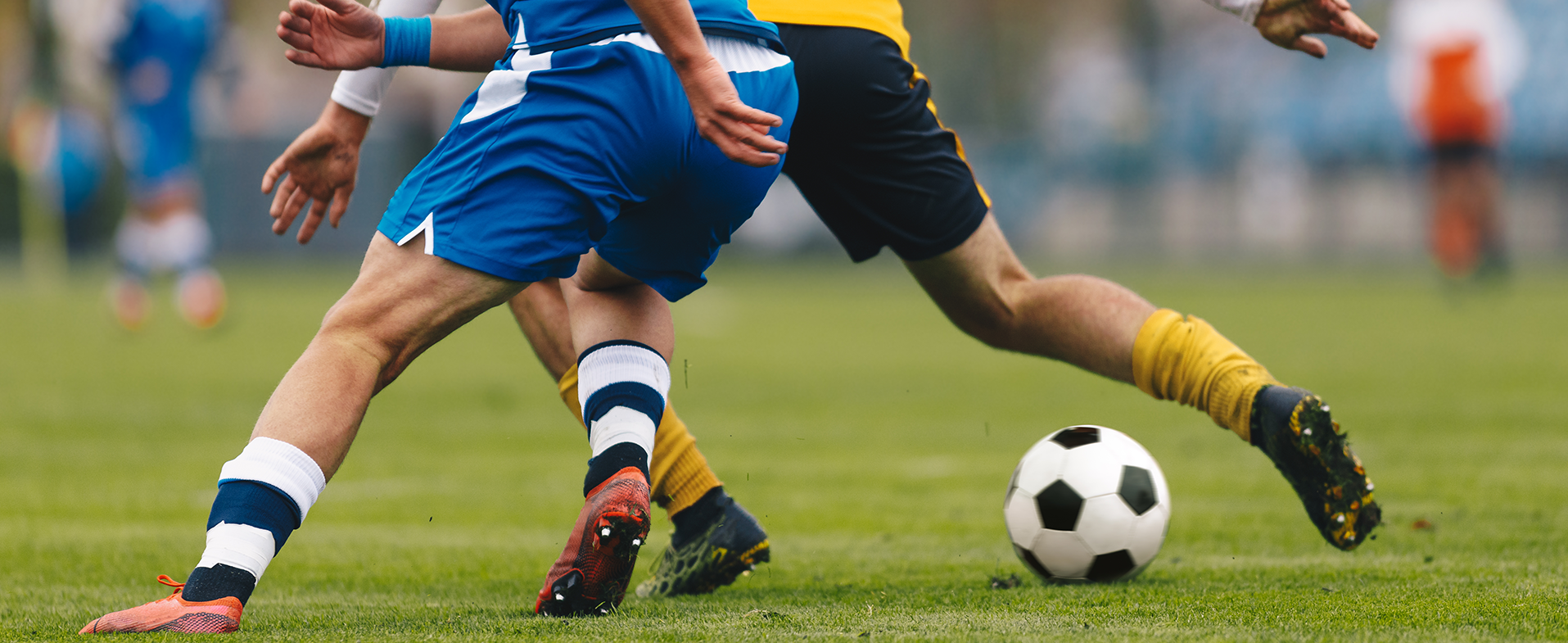
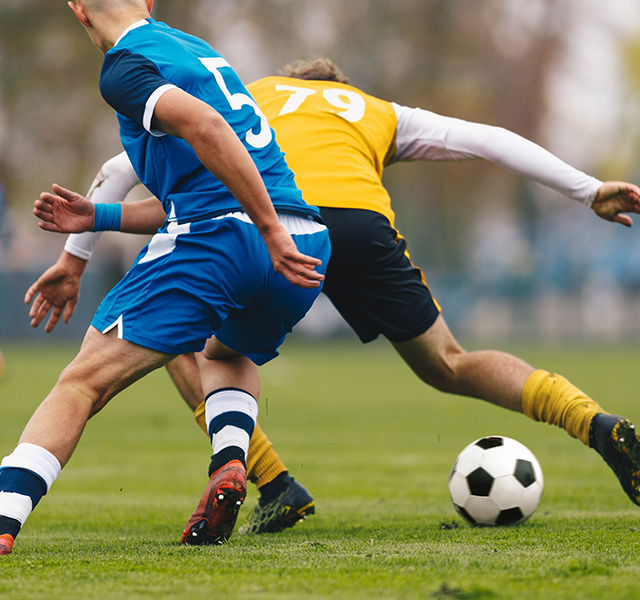
And while an ACL injury can affect anyone from elite athletes to casual exercisers, some activities increase the risk. “It’s much more common in activities that involve cutting and pivoting movements—like basketball, football and soccer,” says Lafi Khalil, M.D., a sports medicine orthopedic surgeon at Henry Ford Health. “And because soccer involves making a lot of those moves, often at high speed, soccer players may be at even higher risk of ACL injury.”
What is an ACL Injury?
The anterior cruciate ligament (ACL) is a strong band of connective tissue that helps stabilize the knee. Injuries to the ACL account for nearly half of all knee injuries.
An ACL injury typically involves a tear in the ligament. A more severe injury could result in a full rupture of the ACL. Signs that indicate you may have injured your ACL include:
- A “pop” in the knee that you hear
- Intense knee pain and swelling that sets in within minutes to hours
- Reduced range of motion or locking in the knee
- An unstable feeling in your knee
Most ACL injuries need surgery to reconstruct the ligament. You’ll also need time off your sport to recover, plus ongoing physical therapy.
How Soccer Movements Cause ACL Injuries
For soccer players, cutting and pivoting while changing direction is a huge part of the game. While playing soccer, you’re not only making those movements, you’re making them with a lot of force behind each move.
“Your ACL is most at risk when you’re changing directions under extreme acceleration and deceleration,” says Dr. Khalil. “The high velocity of the movements is what increases the risk.”
In a sport like tennis, for example, you’re also performing side-to-side direction changes, but not while running forward at full speed. That’s why ACL injuries are less common in tennis players.
Having your weight mostly on one foot as you’re pivoting and changing directions also increases the risk of injury. “For soccer players, it’s common to accelerate in one direction then decelerate quickly to change direction,” says Dr. Khalil. For a crucial, vulnerable moment, that leaves you in a single leg stance.
Those moves can rotate the knee and cause it to collapse inward. “That can produce enough force on the ACL that the ligament fails,” says Dr. Khalil.
Landing from a jump (such as when heading a soccer ball) can produce a similar force. If you land slightly off-balance or with your leg too straight, the knee can buckle inward, tearing the ACL.

Go Where The Pros Go
Who’s at Highest Risk of ACL Injuries While Playing Soccer?
Anyone who plays the sport can be at risk of an ACL injury, but certain populations of players are more vulnerable. ACL injuries in women and girls occur at twice the rate as the same injuries in men and boys.
Although the exact mechanisms for this aren’t completely understood, experts have some theories. Women have several anatomical differences that may account for their increased risk of ACL injury. These include some differences in the structure of the pelvis that create greater angles at the knee, muscle imbalances, and more laxity (“give”) in the ligaments. It’s also possible that monthly hormonal fluctuations may play a role.
For both males and females, playing soccer at a high level of intensity and competition can also make you more vulnerable to injury. “The more you play, the higher the chance an ACL injury will happen at some point,” says Dr. Khalil.
This is especially true when playing defense. “Research has shown that the highest rates of ACL injuries occur during defensive maneuvers,” Dr. Khalil says. “Reacting to a motion or maneuver by an offensive player may result in a loss of balance or footing, and ultimately, an injury.”
And while ACL injuries are common among elite and even professional athletes, weekend warriors have their own set of risks. “When you’re not conditioned for specific movements and try to jump right into a high-intensity, competitive game, you’re much more likely to get injured,” says Dr. Khalil.
How Can Soccer Players Prevent ACL Injuries?
“I would never recommend someone not be active for fear of injury,” says Dr. Khalil. “It’s important to keep doing the recreational sports you enjoy. You just need to prepare and train your body to do them safely.”
Many more youth soccer programs are incorporating ACL injury-prevention programs to help build stronger athletes. They focus on drills that help improve muscle strength to prevent imbalances. They also teach better ways to land, move and pivot that allow the knees to absorb force without injury.
If you don’t have access to one of these programs, working with a physical therapist or athletic trainer can help. “Learning how to prepare your body with drills and cardio training can go a long way toward preventing injuries on the field,” says Dr. Khalil.
Reviewed by Lafi Khalil, M.D., a sports medicine orthopedic surgeon who sees patients at Henry Ford Orthopedics – Chesterfield and Washington Twp.

