
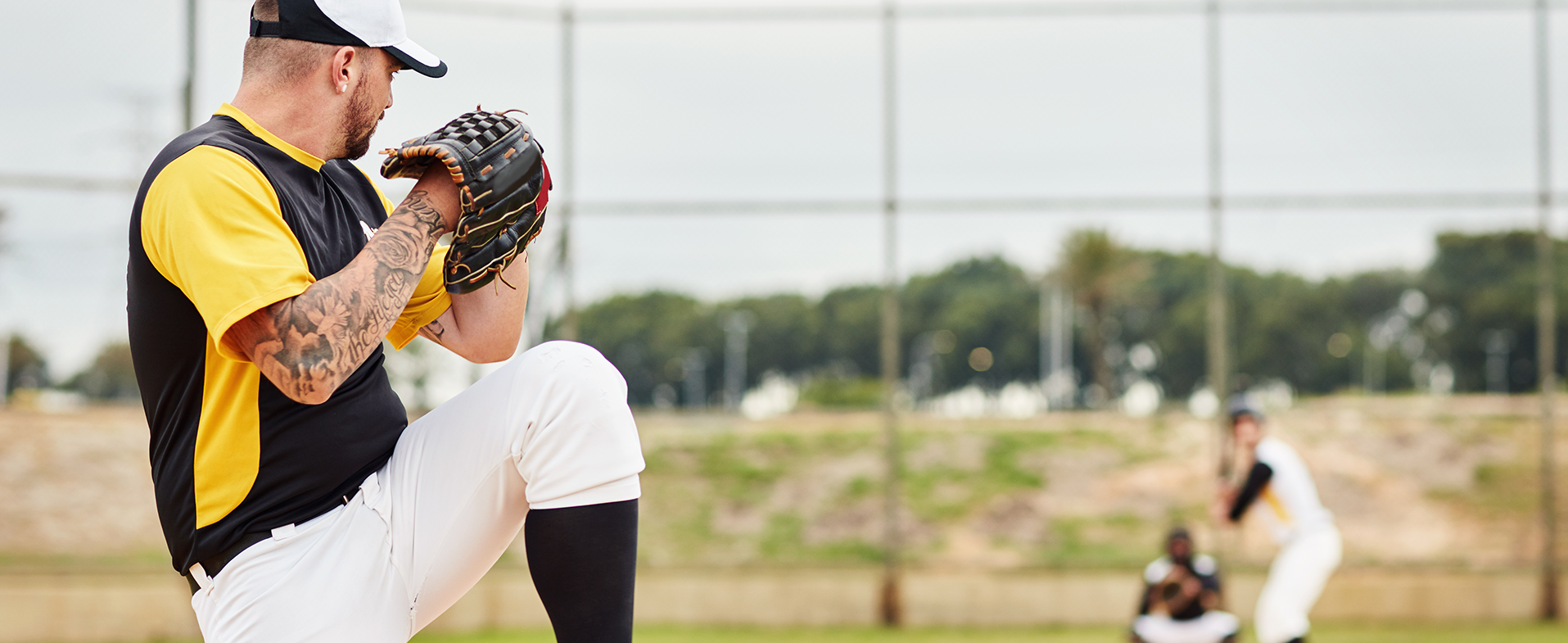
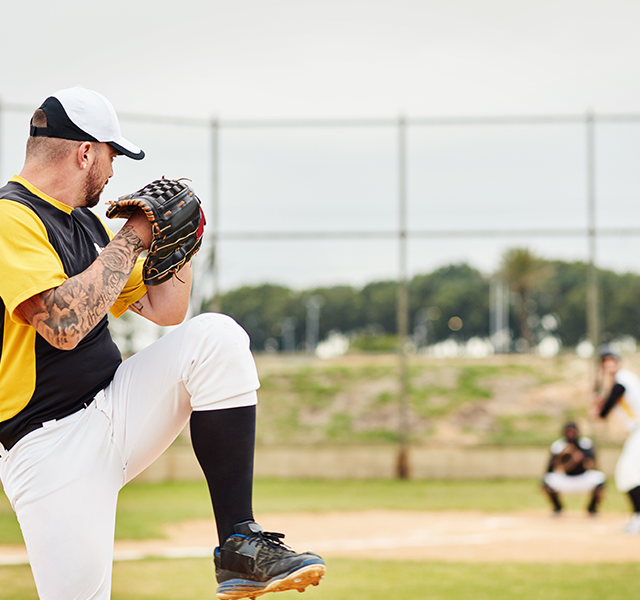
Baseball and softball pitchers are often thought of as most prone to overhead throwing injuries, but they can affect anyone who plays a sport that put stress on their shoulders – from javelin throwers and wrestlers to tennis players, recreational pickleball players, volleyball and water polo players.
“There are two main types of shoulder injuries that are common in overhead throwing athletes,” says Lafi Khalil, M.D., an orthopedic surgeon at Henry Ford Health. “Over time, they can develop non-acute injuries from making the same movements. This causes repetitive microtrauma and eventual injury. And sometimes, they can have an acute injury while throwing a single pitch, for example, and sustain a sprain or a tear.”
Here, Dr. Khalil shares some of the most common injuries he sees in overhead throwing athletes – and how to help prevent them in the first place.
Non-Acute Overhead Throwing Injuries: Symptoms and Treatments
- Internal shoulder impingement occurs when the posterior capsule in the shoulder (the back part of the shoulder) becomes too tight, causing the shoulder joint to lose overall range of motion. Eventually, continued motion leads to repetitive impingement of the rotator cuff and labrum (the cartilage that cushions the socket), causing pain at the back of the shoulder when throwing a pitch (or serving a volleyball, etc.).
- Biceps tendonitis happens when the tendon that runs from your bicep to your shoulder becomes inflamed, causing pain at the front of the shoulder.
For these injuries, Dr. Khalil says pain is especially common with extreme ranges of motion. You might not feel anything when making small movements, but instead when you elevate your arm or rotate it completely. Symptoms can also show themselves in performance. Specifically for baseball pitchers, certain injuries have been correlated with a lack of accuracy and reduced pitch speed.
Non-acute injuries can usually be resolved with conservative, non-surgical treatment methods. If left untreated, however, they can progress to more serious injuries that require surgery. Main treatment options include:
- Activity modification, or taking time off from your sport to rest
- Icing the area to reduce inflammation
- Taking over-the-counter anti-inflammatories like ibuprofen
- Physical therapy, which often includes exercises like sleeper stretches to ease tightness and restore the range of motion in your shoulder
- Appropriate throwing or rehabilitation programs to ensure adequate mobility and rest periods between extreme activities
Acute Overhead Throwing Injuries: Symptoms and Treatments
- A SLAP tear is short for superior labrum anterior to posterior tear. It occurs when the top of the labrum (cartilage) tears, causing pain and instability. You may feel like your shoulder might give out, experience a dull ache or hear a popping sound when you raise your hands above your head.
- A partial or full rotator cuff tear occurs when your shoulder tendon partially or completely tears away from the bone. Your rotator cuff helps keep your shoulder in place and provides strength when moving your shoulder, so when it tears, it can cause pain, weakness, an inability to move your arm and difficulty performing overhead activities.
- An ulnar collateral ligament tear is otherwise known as a UCL tear, and occurs when the ligament located on the inside of the elbow tears. “For overhead throwing athletes, the front of their shoulder often gets loose and the back of their shoulder often gets tight, which reduces their range of motion,” says Dr. Khalil. “Extra stress is then transferred to their elbow and can cause a UCL tear.”
- An elbow sprain happens when you stretch – but not tear – your elbow ligaments. It can cause pain, swelling, tenderness and redness around the elbow, along with restricted movement. Like UCL tears, elbow sprains can occur due to range of motion abnormalities in the shoulder.
Unlike chronic injuries, acute injuries more commonly require surgery. UCL tears, for example, require a specific grafting procedure known as “Tommy John” surgery. (The procedure is named after a pitcher who was the first to receive this surgery in 1974.)
However, Dr. Khalil says new research suggests that in patients who have a sprain or partial tear, biologic injections like platelet-rich plasma may stimulate healing, as they help your body repair itself.

Go Where The Pros Go
Injury Prevention for Overhead Throwing Issues
Whether you are a professional or recreational athlete, there are steps you can take to reduce your risk of injury:
- Warm up and cool down. Mobility exercises like sleeper stretches are especially important, says Dr. Khalil, as they’ll increase or maintain the range of motion in your shoulders.
- Take breaks. “You shouldn’t be training 12 months a year,” says Dr. Khalil. “There should be periods where you’re having appropriate rest and rehabilitation.”
- Continually evaluate your strength and balance. “For baseball pitchers, throwing starts from the ground up,” says Dr. Khalil. “That means you need to strengthen your legs, quads, glutes, hips, core – not just your arms. Whether it’s tennis, volleyball – whatever sport you’re playing – all of your movements have to be balanced so you don’t place too much stress on one area of the body.”
- Get enough sleep. “It’s been shown that if you’re not sleeping enough, you’re at an increased risk of injury,” says Dr. Khalil. “It’s important to get quality sleep, which so many tend to neglect because we’re over overstimulated and pulled in many directions.”
- Ensure proper nutrition and hydration. “We’re relying on our bodies to repair the tissues we’ve damaged after we do any exercise or sport,” says Dr. Khalil. “We need appropriate nutrition so our bodies can sustain those reparative processes. That means appropriate amounts of carbs, fats, proteins and enough calories.”
- Get adequate vitamin D. “Vitamin D is not just implicated in bone health but also tendon and cartilage health,” says Dr. Khalil. “It’s involved in a lot of the reparative processes that occur in the body and is also intricately related to our immune system.” Many people – especially those who live in Michigan – are vitamin D deficient, as we get vitamin D from the sun. Vitamin D is also found in foods like salmon and egg yolk. If needed, talk to your doctor about taking a supplement.
Reviewed by Lafi Khalil, M.D., an orthopedic surgeon who sees patients at Henry Ford Orthopedics in Chesterfield and Washington Twp.

