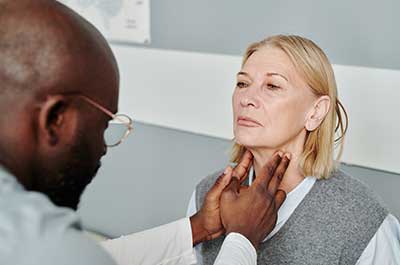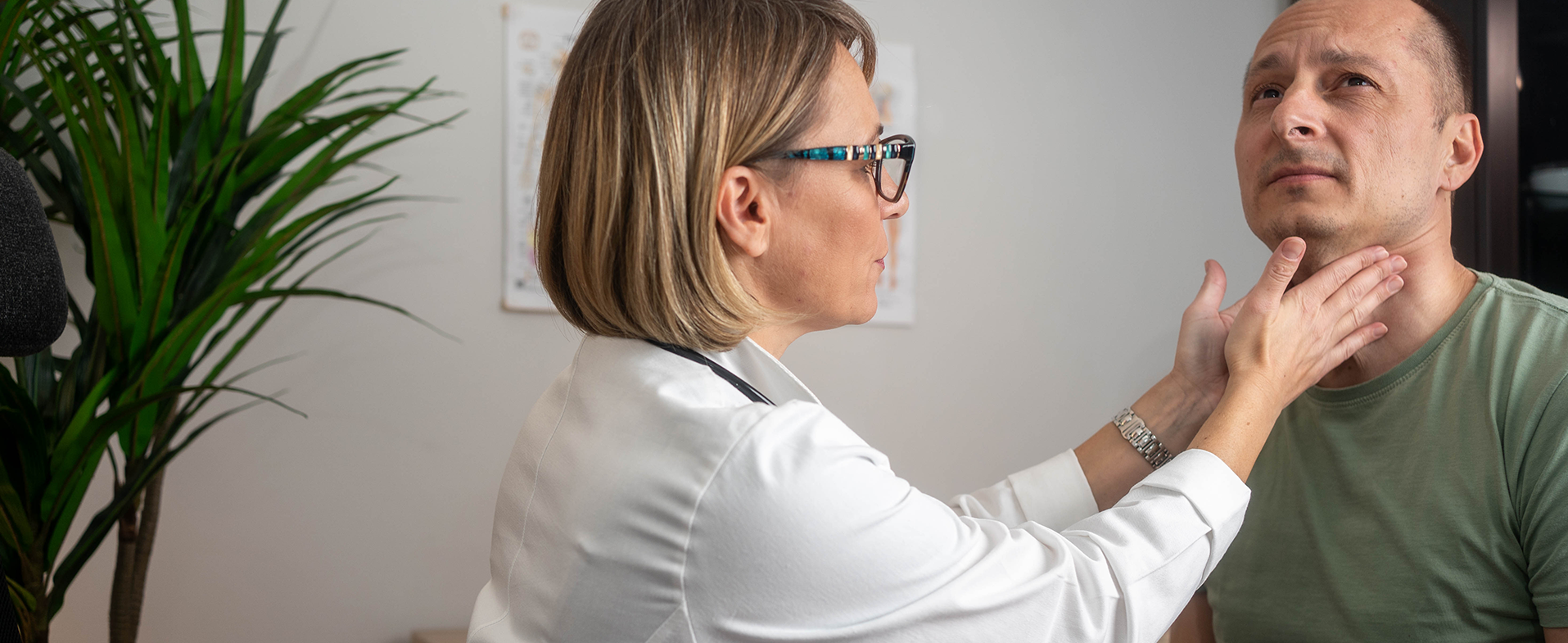
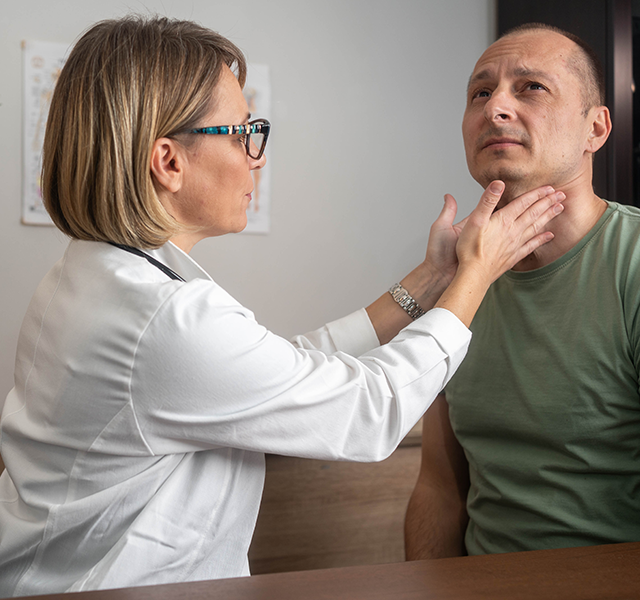
Thyroid cancer usually presents as a nodule in the thyroid gland, which is located in the front part of your neck, just below the Adam’s apple. It produces hormones that regulate your metabolism, body temperature, cholesterol, menstrual cycle, heart rate and blood pressure.
“Often, thyroid cancer does not cause symptoms," says Michael Singer, M.D., an otolaryngologist at Henry Ford Health. "But as it progresses it can eventually lead to swelling in your neck. You may feel a lump in that area. You might also feel swollen lymph nodes, have problems swallowing and develop a hoarse voice. There are many types of thyroid cancer. Some are very slow growing while others are more aggressive. But most can be fully treated with proper management.”
In general, the five-year survival rate for those diagnosed with thyroid cancer is 98%, although this depends upon the stage and type of thyroid cancer. Here, Dr. Singer answers common questions about thyroid cancer.
The number of thyroid cancer cases is growing in the U.S. and around the world. Why?
Dr. Singer: This is partly due to the increased rate of detection. We now use more sensitive diagnostic procedures, such as CT or MRI scans, to evaluate unrelated medical conditions. This allows us to detect small thyroid nodules that might not have otherwise come to light.
Aside from this increased rate of detection, there does seem to be a true increase in rates of thyroid cancer. It’s not entirely clear why, but exposure to certain environmental elements (like radiation and flame-retardant chemicals) may be a culprit.

Thyroid Cancer Care at Henry Ford Health
If rates of thyroid cancer are higher, does this mean more people are dying from it?
Dr. Singer: Fortunately, the risk of dying from the more common varieties of thyroid cancer is quite low and the vast majority of people do very well. Despite a rise in the incidence of thyroid cancer, the mortality rate has remained stable. However, the social and economic impact of the growing rate of thyroid cancer is not trivial.
There is some debate that thyroid cancer is over diagnosed and some tumors do not warrant treatment. Is this true?
Dr. Singer: It is correct to say that some thyroid cancers are quite low risk and treatment can actually cause more harm (such as complications associated with surgery to remove the thyroid) than the actual disease.
There is a push from national societies (like the American Thyroid Association) to try to not find many of these tiny cancers that don’t have clinical significance. There has also been a big move toward treating thyroid cancer less aggressively. The American Thyroid Association has new guidelines that help physicians decide when to perform less invasive surgery, and when to carefully use radioactive iodine therapy, which uses radioactive iodine to kill thyroid cells.
Ultimately, we are trying to be better at finding those cancers that really do need treatment and in those patients being thoughtful about how much treatment they need.
What is new in the diagnosis and treatment of thyroid cancer?
Dr. Singer: These are exciting times in the thyroid cancer realm. When a thyroid nodule is diagnosed, a fine needle biopsy is recommended. This is now enhanced with molecular testing, which helps to predict the tumor’s behavior and prevents unnecessary surgery. Also, newer drugs are being used for aggressive thyroid cancers that have become resistant to radioactive iodine, which is the mainstay treatment after surgery.
Reviewed by Michael Singer, M.D., an otolaryngologist who specializes in minimally invasive thyroid and parathyroid surgeries. He sees patients at Henry Ford Cancer - Detroit, Henry Ford West Bloomfield Hospital and Henry Ford Otolaryngology - Fairlane.