.svg?iar=0&hash=F6049510E33E4E6D8196C26CCC0A64A4)
/hfh-logo-main--white.svg?iar=0&hash=ED491CBFADFB7670FAE94559C98D7798)
100 Years of Innovation
Urological care shapes the future of healthcare.
Dear prospective residents:
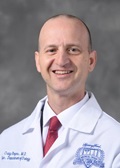 As the Department Chair for Urology at Henry Ford Health in Detroit, it is my pleasure to introduce you to our Urology Residency Program. Our program is designed to train the next generation of urologists with the knowledge, skills, and expertise they need to provide exceptional care to their patients.
Our residency program provides a comprehensive education to our residents, covering all aspects of urologic care, including urologic oncology, stone disease, female urology, pediatric urology, and male infertility. Our program also emphasizes the importance of research and innovation in the field of urology, with opportunities for residents to engage in scholarly activities and research projects.
At Henry Ford Health, we are committed to providing our residents with the best possible training, supported by our experienced and dedicated faculty. Our faculty members are recognized experts in their respective fields and are committed to providing our residents with exceptional mentorship, guidance, and support throughout their training. We have a rich history of innovation in our department as well as a strong culture of a family atmosphere in which we take care of one another.
We also offer a unique training experience with our diverse patient population, which includes patients from urban, suburban, and rural areas, and a wide range of socioeconomic backgrounds. Our residents have the opportunity to work in state-of-the-art facilities and use the latest technology and techniques to provide the best possible care to their patients.
If you are interested in learning more about our Urology Residency Program, I encourage you to explore our website or contact us directly. We are always happy to answer any questions you may have and provide you with additional information about our program.
Thank you for your interest in our program, and we look forward to hearing from you soon.
Sincerely,
Craig Rogers, M.D.
 Dear Prospective Residents,
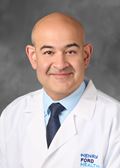
Welcome to the Urology Residency Program at Henry Ford Hospital. On behalf of our faculty, staff, and residents, thank you for taking the time to learn about who we are and how we train the next generation of urologic surgeons. I don't say this lightly: there are very few programs in the country where a resident can train at the birthplace of an entire surgical field. This is one of them.
Our mission is to train urologists of exceptional clinical skill and character — physicians who lead with technical excellence, scientific curiosity, and genuine care for every patient who trusts us with their health. Our goal is to develop leaders in urology, constantly striving for changing the future of our field.
Our program has a rich history, sitting inside a health system that has spent more than a century caring for Detroit — a city whose patients are as diverse as any in the country, and whose scale gives residents an unmatched breadth of clinical exposure from their first year onward. Training here means operating early, operating often, and doing so alongside genuinely dedicated faculty who are recognized nationally for robotic and minimally invasive surgery, urologic oncology, endourology, reconstruction, pediatric urology, and mens health and infertility care.
Robotic surgery was pioneered in this very department and our state-of-the-art facilities and simulation center enables all our residents to gain proficiency in minimally invasive techniques and robotic surgery. Innovation runs through our people, not just our technological advancement. Our faculty have been recognized with the AUA's national resident teaching award, sit on the Society of Academic Urologists' task force shaping the next decade of urology training, and serve on the ACGME's own milestone committee — meaning the people writing national training standards are the same people who will be training you. That combination of national leadership and hands-on supportive mentorship is, in my experience, rare, and it's the thing our graduates consistently point back to when they talk about their time here.
Our program is built around three commitments. First, that every resident receives individualized mentorship, not a one-size-fits-all curriculum — whether your goal is fellowship, academic practice, or community urology. Second, that research and scholarship are woven into training, not bolted on, through our outcomes and analytics collaborative and a faculty that publishes and teaches nationally. Third, that we remain, above all, a department that takes care of its own: a small, close-knit faculty and resident community that shows up for one another in the operating room and outside of it.
We are committed to providing the best training for our residents. I encourage you to explore our program, and I hope it gives you a genuine sense of what makes this program home for the residents who train here and our outstanding alumni. Thank you for your interest in our program and we look forward to hearing from you,
Sincerely.
Naveen Kachroo, M.D., Ph.D.
Program Director, Department of Urology, Henry Ford Hospital
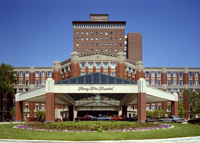
Henry Ford Hospital, the flagship hospital of the Henry Ford Health, is a 903-bed academic medical center, including 162 intensive care unit beds, the largest ICU bed complex in Michigan. Henry Ford Hospital is a nationally renowned specialty care, teaching and research institution that is affiliated with Wayne State University School of Medicine.
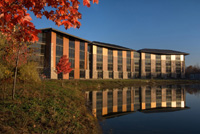
In March 2009 Henry Ford Health opened Henry Ford West Bloomfield Hospital in the heart of Oakland County. More than 500 primary care and specialty physicians on staff provide world-class health care in an all private room facility featuring numerous amenities and the most advanced technology available in health care today. Nearly all of the pediatric robotic, as well as many of the robotic prostate and kidney cases are performed here. In addition, many female, pediatric, and general urological procedures are performed at this site. Currently there is not a dedicated resident rotation at Henry Ford West Bloomfield, but appropriate level residents are assigned on a day-by-day basis to this institution. For more information regarding this hospital, visit Henry Ford West Bloomfield Hospital.
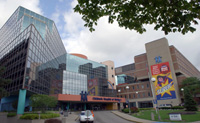
Children's Hospital of Michigan is a nationally-recognized free-standing children's hospital on the campus of the Detroit Medical Center (DMC), approximately 10 minutes from Henry Ford Hospital. The pediatric urology department has been recognized as one of the top programs by U.S. News & World Report. Pediatric urological procedures are performed by three full-time pediatric urologists, Dr. Kristina Suson, and Dr. Yegappan Lakshmanan, Dr. Janae Preece, who was recruited from Johns Hopkins to serve as Department Chief. The Department also employs a pediatric nephrologist, Dr. Larissa Kovacevic, who directs the voiding dysfunction program and the pediatric stone clinic.
The Department of Pediatric Urology is extremely busy with regards to clinically, and academically with many multiple presentations during the past AUA national meeting and other national and international meetings. Henry Ford Hospital residents work with a junior resident from the DMC osteopathic program on this rotation. The facility just underwent major renovations and expansion with an additional tower.
Henry Ford Vattikuti Urology strengths include a large ambulatory practice, a broad mix of minimally invasive and open surgery, oncology, pediatric urology and basic research, including a full-time biostatistician. With a full access and collaboration with Vattikuti Center for Outcomes Research, analytics, and Evaluation (VCORE) that focus on clinical outcome, and the state wide initiative Michigan Urological Surgery Improvement Collaborative (MUSIC).
Residency teaching is a top priority of all our Senior Staff, and our staff are recognized and are involved nationally in developing resident’s training curriculum . Dr. James Peabody, former Fellowship Director, was awarded the 2013 AUA Resident’s teaching award, Dr. Atiemo serve on the SAU task force committee for “Urology Training 2030” and Dr. Dabaja is a committee member on the ACGME Milestone 2.0 task force, and RC.
Our residents benefit from being exposed to a large number and wide variety of patients, as Henry Ford Hospital serves the metropolitan population of Detroit as well as the surrounding suburbs. Henry Ford Vattikuti Urology provides an exceptional environment for learning because of the multiple populations we serve, the state-of-the-art technology we possess and the breadth of experience of our 15 senior staff members.
Henr Ford Vattikuti Urology designed the first augmented reality operating room with 3-dimensional technology that takes minimally invasive surgery to new levels. There are multiple da Vinci robots at Henry Ford Hospital and multiple da Vinci robots at Henry Ford West Bloomfield Hospital. Henry Ford Vattikuti Urology also sponsored a $5,000,000 state-of-the-art surgical simulation center that opened in 2007 at Henry Ford Hospital. With available robots for training and practice. The simulation center also allows residents to practice many surgical techniques including laparoscopic, suturing, and microsurgery.
We currently have full time researchers on the Basic Science and Clinical staff. We have a dedicated GU pathologist, Dr. Nilesh Gupta, as well as a dedicated GU medical oncologist, Dr. Clara Hwang, and the department is instrumental and actively developing clinical programs with the newly built Henry Ford Cancer Institute (HFCI).
We use cookies to improve your website experience. By using this site, you agree to our Terms of Use. Read our Internet Privacy Statement to learn what information we collect and how we use it.