.svg?iar=0&hash=F6049510E33E4E6D8196C26CCC0A64A4)
/hfh-logo-main--white.svg?iar=0&hash=ED491CBFADFB7670FAE94559C98D7798)
History of the Department
More than 110 years ago, automobile pioneer Henry Ford founded what would become Henry Ford Health, establishing Henry Ford Hospital to meet the healthcare needs of a rapidly growing Detroit community. Between 1900 and 1920, Detroit’s population nearly tripled to approximately one million, placing tremendous demands on the city’s social infrastructure. At the time, Detroit had fewer than half the hospital beds of comparable American cities.
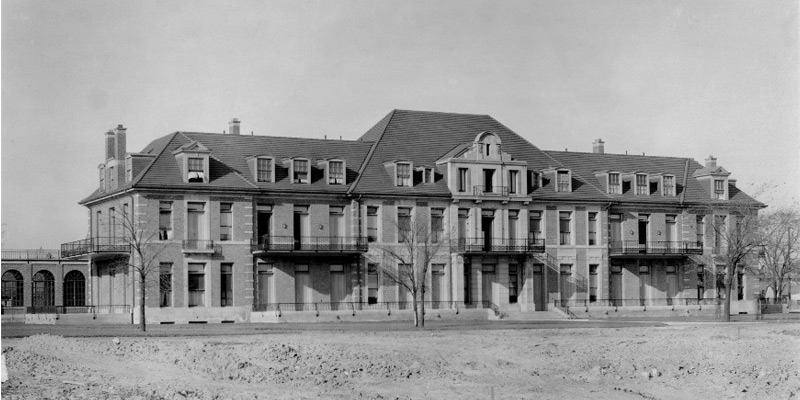
From its inception, Henry Ford envisioned a different kind of hospital. Drawing inspiration from the Mayo Clinic and the newly established Johns Hopkins Hospital, he created a closed-staff model in which physicians were employed by the hospital. The institution also introduced a number of innovative policies for its era, including a uniform fee schedule, private patient rooms with attached bathrooms, and a strict prohibition on smoking.
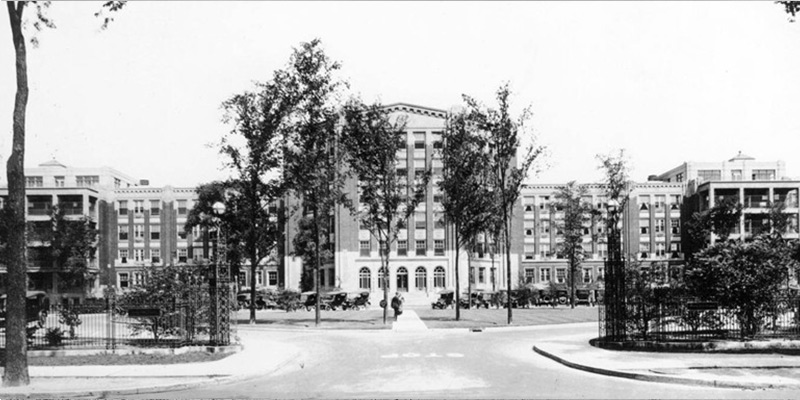
The first Surgeon-in-Chief was Dr. Roy D. McClure, who came to Henry Ford directly from Johns Hopkins after serving as the sixth “Resident Surgeon” under the legendary surgeon William Halsted. Dr. McClure brought with him the Halstedian tradition of surgery, emphasizing rigorous scientific investigation, innovation, disciplined technical training, and progressive responsibility for surgical trainees. This approach helped establish a model of surgical education that would ultimately become foundational to residency training throughout the United States.
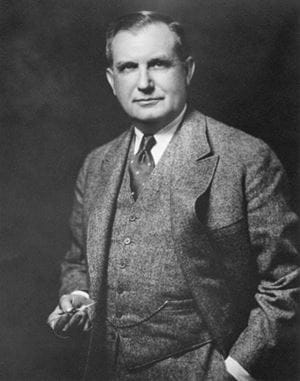
McClure also recognized the importance of dedicated leadership for surgical education. In appointing Dr. Clyde Allen as “Physician in Charge of Intern Training,” he established what is considered one of the earliest examples of a dedicated surgical program leadership role. Henry Ford Hospital was also among the earliest institutions to pay its house officers—$5 per day, equivalent to the wages of Henry Ford’s automotive workers—and among the first to employ married house officers. Both innovations were championed by Henry Ford’s wife, Clara.
Together with Dr. Frank J. Sladen, Henry Ford’s first Physician-in-Chief and another Johns Hopkins-trained physician, McClure oversaw the remarkable growth of the young institution. Over the ensuing decades, Henry Ford became a center of innovation in American medicine. Among the many advances associated with the institution were development of the oxyhemograph, an important precursor to modern pulse oximetry; the oxygen tent, patented in 1942; the enteral food pump; and important advances in burn care.
In 1927, Henry Ford Hospital and the University of Michigan co-hosted the annual meeting of the American College of Surgeons, welcoming approximately 1,600 visitors for five days of clinics, demonstrations, and exhibits. In the late 1930s, physicians at Henry Ford were among the early adopters of heparin for the treatment of deep venous thrombosis. During World War II, Henry Ford was also one of five hospitals selected to participate in clinical trials of penicillin.
A Legacy of Surgical Innovation
McClure’s trainees carried his tradition of scientific inquiry and surgical excellence forward. Dr. D. Emerick Szilagyi, the department’s third chair, became one of the founding leaders of vascular surgery. He performed one of the earliest successful repairs of an abdominal aortic aneurysm, established one of the first computerized surgical registries, and used data from that registry to produce seminal studies that helped establish the scientific foundations of modern vascular surgery and evidence-based surgical decision-making. He also co-invented the first commercially available Dacron aortic graft.
Other distinguished members and graduates of the department made lasting contributions to surgery. Dr. Joseph Ponka was a prolific contributor to the surgical literature and authored what was, at the time, one of the leading texts on hernia surgery. Henry Ford-trained surgeons also included Dr. William Altemeier, recognized as a pioneer in surgical infectious disease, and Dr. Conrad Lam, one of the early leaders in cardiothoracic surgery.
Through these individuals and many others, Henry Ford Surgery developed a longstanding reputation for combining clinical excellence, scientific investigation, innovation, and surgical education.
From a Detroit Hospital to a Regional Health System
As Detroit underwent profound social, demographic, and economic changes during the late 1960s and 1970s, the delivery of healthcare also began to evolve. Henry Ford recognized the need to make routine and ambulatory care more accessible to communities throughout Southeast Michigan while allowing its central Detroit hospital to increasingly focus on patients requiring specialized and complex care.
In 1975, the construction of two suburban medical centers marked the beginning of what became Henry Ford’s highly successful satellite system. Patients could receive routine and outpatient care closer to home, while the main hospital on West Grand Boulevard increasingly evolved into a regional referral center for patients with more complex medical and surgical conditions.
This “hub-and-spoke” model became an important part of Henry Ford’s growth and was subsequently emulated by health systems across the country. Over the next several decades, Henry Ford expanded its network of outpatient centers and community hospitals. The creation of a healthcare business unit, the development of an affiliated health insurance organization that became Health Alliance Plan, and the affiliation with and acquisition of community hospitals transformed Henry Ford Hospital into an integrated health system by the 1990s.
Henry Ford Surgery Today
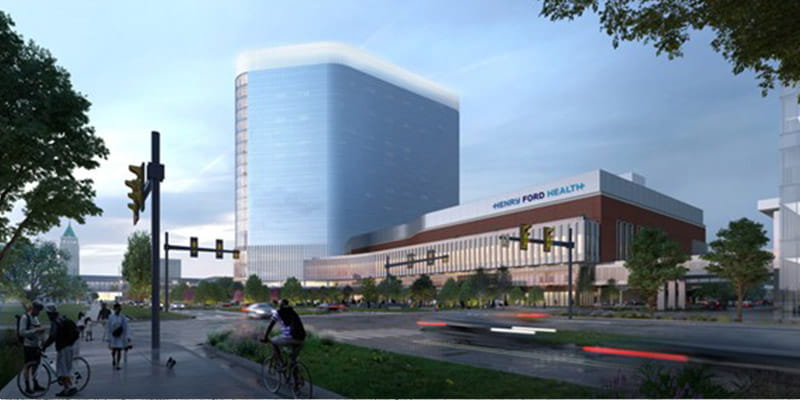
Today, Henry Ford Health has grown into one of the largest and most comprehensive integrated health systems in Southeast Michigan. At the center of this system remains the Henry Ford Medical Group, which traces its origins to the employed-physician model established by Henry Ford more than a century ago.
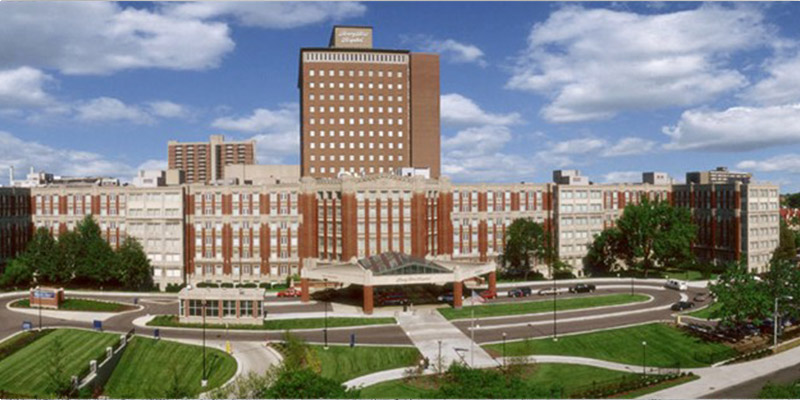
The legacy of that original vision continues to shape Henry Ford Surgery today. The department remains committed to the three fundamental missions that have defined the institution since its earliest days: clinical care, education, and research.
Our history is one of innovation—from the earliest days of structured surgical training and scientific investigation to the development of new technologies, surgical techniques, and models of healthcare delivery. Today, that tradition continues through the training of the next generation of surgeons, the advancement of surgical science, and the care of patients with increasingly complex surgical disease.
Innovation, integrity, teamwork, and a commitment to putting patients first remain the hallmarks of Henry Ford Surgery.