.svg?iar=0&hash=F6049510E33E4E6D8196C26CCC0A64A4)

/hfh-logo-main--white.svg?iar=0&hash=ED491CBFADFB7670FAE94559C98D7798)
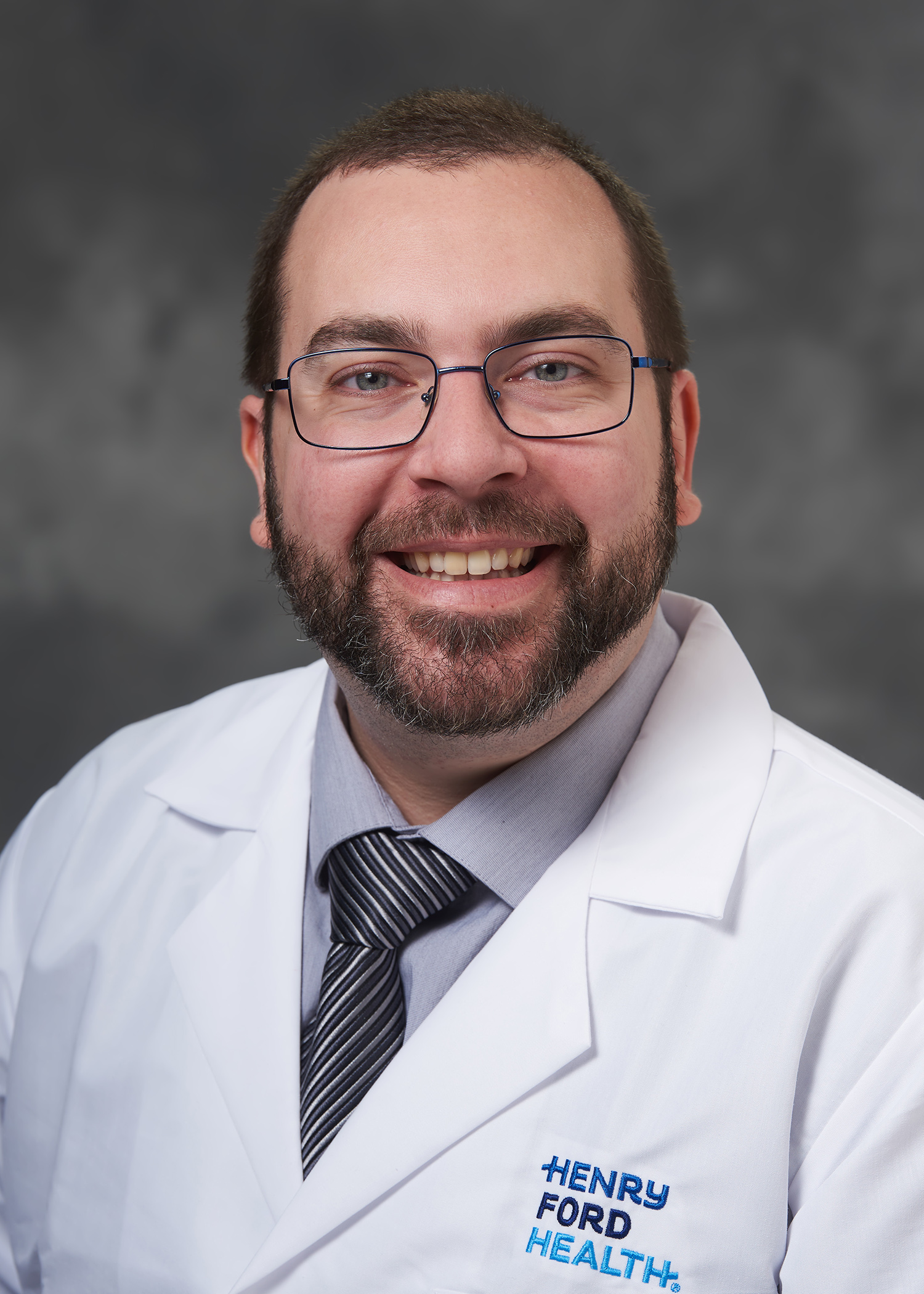
Ralph Francescone, PhD

Specialties: Research
/hfh-logo-main--white.svg?iar=0&w=300&hash=6384A2E70E92039C36CA5CCBA53F8964)
Board Certification and Education
- University of Massachusetts at Amherst, Cellular and Molecular Biology, MA, 2013
About Me
Biographical Statement
Dr. Francescone is an assistant scientist at the Henry Ford Pancreatic Cancer Center. His background includes the study of how mitochondria influence tumor cell function, the mechanisms of tumor vasculature in relation to brain cancer progression and stemness and how inflammation driven by cancer cells affects tumorigenesis. During his post-doc, Dr. Francescone explored the roles of fibroblasts in pancreatic cancer, and discovered a synaptic protein that controlled their pro-tumor functions. In 2021, he was awarded a grant from the prestigious Pancreatic Cancer Action Network (PanCAN) to continue his work in advancing pancreatic cancer therapies. In January 2023, Dr. Francescone, together with his wife, Dr. Barbosa Vendramini Costa, joined the Pancreatic Cancer team at Henry Ford and opened the Vendramini-Francescone Lab.
Research Interests
The Vendramini-Francescone Lab focuses on understanding the tumor microenvironment, the collection of cancerous and non-cancerous cell types and their secreted material, and how they interact at the cellular and molecular levels within a particular tumor. The lab is dedicated to dissecting how this complex tumor microenvironment in pancreatic cancer is established and evolves, supporting pancreatic tumor progression. The goal is to uncover targets that can normalize this microenvironment and promote the effectiveness of therapies. The lab also focuses on finding biomarkers for the early detection of pancreatic cancer.
Pancreatic cancer features a highly fibrotic and immunosuppressive stroma, representing a challenge for chemotherapies and immunotherapies. The team is specifically interested in how fibroblasts get activated and expand, and how these cells, and their extracellular matrix, suppress antitumor immune responses in the tumor, while promoting pro-tumoral immune cell functions. Major projects in the lab focus on how neuronal programs and stress response pathways regulate pro-tumor functions in fibroblasts in pancreatic cancer, as well as translational studies characterizing the tumor interstitial fluid isolated directly from patient surgical samples as atool for the discovery of new biomarkers for early detection.
The lab strongly believes that by modulating the stroma, therapeutic responses will be improved, resulting in better outcomes for pancreatic cancer patients.
The lab uses several methods, including:
- 3D multicellular culturing system
- CRISPR/CRISPRi based methods to modulate protein expression
- Immune cell functional assays
- Single cell and spatial technologies
- Genetic and orthotopic mouse models of pancreatic cancer
- Patient-derived tissue, cells and tumor interstitial fluid for translational studies.
These integrated in vitro, in vivo, and translational approaches allow the team to probe basic biology questions in pancreatic cancer, with the hope of translating these novel findings to the clinic in the future.
Email: rfrance3@hfhs.org
Videos and Articles
-
Videos
-
Blog Posts
Locations

Hospital Privileges
- Henry Ford Hospital