


Denise Returns to Skiing After Two Knee Replacements
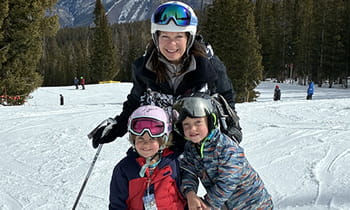
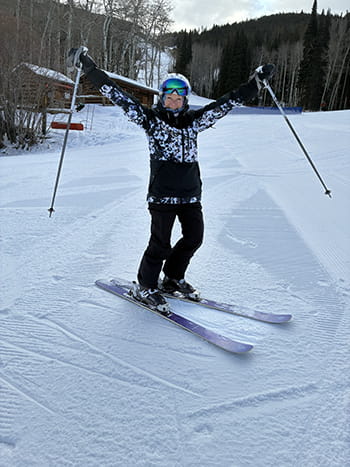 On winter mornings in Colorado, Denise Erhart and her husband are often on the slopes by 8 a.m. Denise skis an average of 70 days a year – all in the Colorado mountains. They ski before the crowds arrive, enjoying the fresh air and the friends they have made there. Best of all, skiing gives Denise time with her son and grandchildren.
“It’s just a real free feeling,” says Denise, 71, who lives in Petoskey, Michigan, and spends her winters in Colorado. “We get to ski with our grandkids and that’s so much fun too.”
For years, though, every trip down the mountain came with pain. Denise continued skiing, even as worsening arthritis made it harder to walk and sometimes caused severe pain while she was sitting at the dinner table.
“Every time I made a turn, it was painful,” she recalls. “I still got out there and did it as much as I could.”
Years of pain and a difficult decision
Denise spent 40 years working as a hospital nurse, much of it on her feet. Her knees began hurting when she was in her 30s . Over time, injuries and arthritis affected both knees. She tried meniscus surgery, gel and cortisone injections, and stem-cell injections, but the relief was brief or did not come at all.
Then, in 2019, another skier collided with Denise while she was working as a mountain host at Beaver Creek. She tore two ligaments in her left knee, adding to problems that had been building for years.
A friend in northern Michigan recommended orthopedic surgeon at Henry Ford Rochester Hospital, Jeffrey H. DeClaire, M.D. Denise traveled from Petoskey to Rochester to see him in 2020. She appreciated the time he took to explain her options and answer her questions.
“As a nurse, I tend to ask a lot of questions,” she says. “I really appreciate how easy he is to talk to.”
Two replacements and a supported recovery
In May 2021, Dr. DeClaire operated on Denise’s right knee. They had planned a partial replacement, but during surgery, he found that arthritis was too extensive. The procedure became a total knee replacement. In August 2025, he performed a total replacement of her left knee with robotic assistance.
Recovery took work. After the first surgery, Denise experienced more pain than she had expected, even with her nursing background. For the second, she paid closer attention to pain management and used a cold therapy machine that she found more helpful than ice bags and wraps. She also valued follow-up from her care team, which included physician assistant Meredith Wood.
“They’re all very responsive,” Denise says. “If you have questions, they get right back to you.”
Back on the slopes with family
 Denise scheduled her first replacement in May so she would have time to recover for ski season. She was skiing again the following January. After the second surgery in August 2025, she returned to skiing that December, sooner than she had expected. She remembers the excitement of getting back on skis and has a photograph of herself with her arms raised on the mountain.
Now Denise can share the sport she loves with the next generation. Her son was a ski racer, and her two older grandchildren have taken up skiing, too. She also enjoys hiking, biking, cross-country skiing and snowshoeing.
Her advice to people whose knee pain is limiting the activities they love is personal: “Don’t wait too long. I really went through a lot of pain the last couple of years skiing and really wish I hadn’t.”
Denise knows the timing of surgery is a decision to make with a care team. For her, planning around the ski season and getting the support she needed during recovery helped her return to the mountains and the people she loves sharing them with.