


Related News








More Parkinson’s Patients Can Now Benefit From Incisionless Brain Treatment
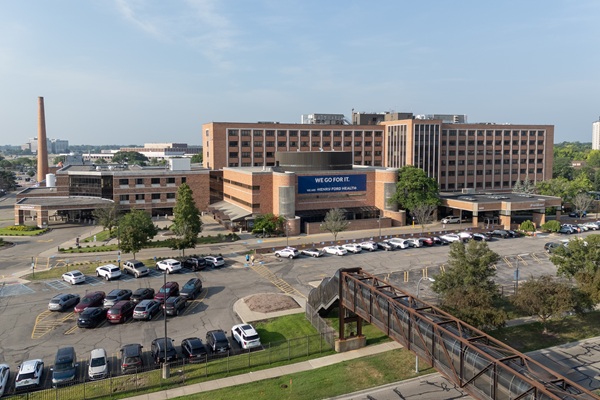
DETROIT — One year after launching southeast Michigan's first high-intensity focused ultrasound (HIFU) program for tremor, Henry Ford Health is expanding access to the procedure to a broader group of people living with Parkinson's disease.
Initially available for patients with essential tremor and tremor-dominant Parkinson's disease, HIFU can now be offered to qualified patients with Parkinson's disease who experience symptoms beyond tremor, including muscle stiffness, slowed movement and dyskinesia, the involuntary movements that can develop as a side effect of Parkinson's medication.
"Many people associate Parkinson's disease with tremor because it’s often the most visible symptom, but patients frequently experience other symptoms that can have just as much impact on their daily lives," said Dr. Danika Paulo, a neurosurgeon at Henry Ford Health who specializes in HIFU. "HIFU gives patients another option for managing their symptoms and staying engaged in the activities that matter most to them."
Parkinson's disease is a progressive neurological disorder that is expected to affect more than 1.2 million Americans by 2030. Medications are often the first line of treatment, and some patients elect to undergo advanced treatment options such as deep brain stimulation (DBS), a surgical procedure that uses implanted electrodes to help manage symptoms.
How HIFU works
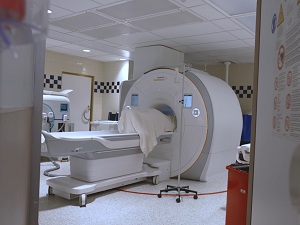
HIFU provides a nonsurgical approach that requires no incisions, implanted hardware or general anesthesia. Patients remain awake throughout the procedure, which takes place inside the MRI suite at Henry Ford Hospital in Detroit.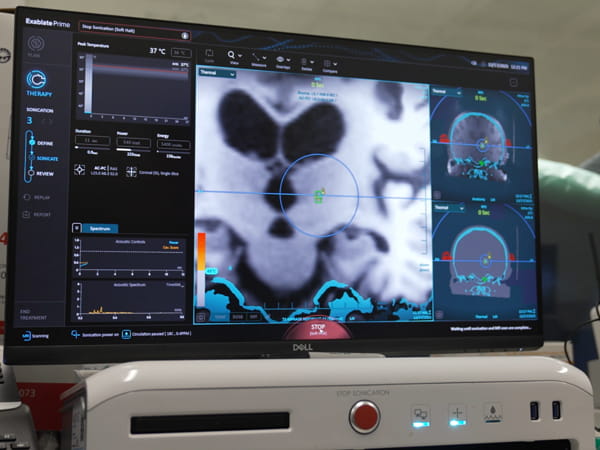
Using MRI guidance, neurosurgeons direct focused ultrasound energy to precise targets deep within the brain that are responsible for specific motor symptoms. Patients are assessed between applications to monitor their response. Most procedures take about 2.5 hours, and patients typically return home the same day.
Studies have demonstrated significant long-term reductions in tremor following HIFU for patients with essential tremor and Parkinson's disease. Research has also shown benefits for patients with Parkinson's disease experiencing symptoms beyond tremor. In a clinical study sponsored by the technology’s manufacturer, patients who underwent treatment on both sides of the brain experienced an average 68% improvement in medication-related motor fluctuations and dyskinesia.
Growing the HIFU program
The expanded use of HIFU comes as Henry Ford Health's program continues to grow. Since launching in October 2025, the neurosurgery team has completed over 100 procedures and is beginning to see some of its earliest patients return for treatment on the opposite side of the brain. Because HIFU is performed on one side of the brain at a time, patients must wait at least six to nine months, depending on the condition being treated, before undergoing treatment on the other side.
Among the patients who recently completed a second-side treatment is Jim Jones, 80, of Leonard, Michigan. The retired electrical engineer and lifelong woodworker underwent a procedure to quell his right-side tremor in December 2025 after living with essential tremor for nearly 20 years. He returned in September 2026 for treatment on the left side.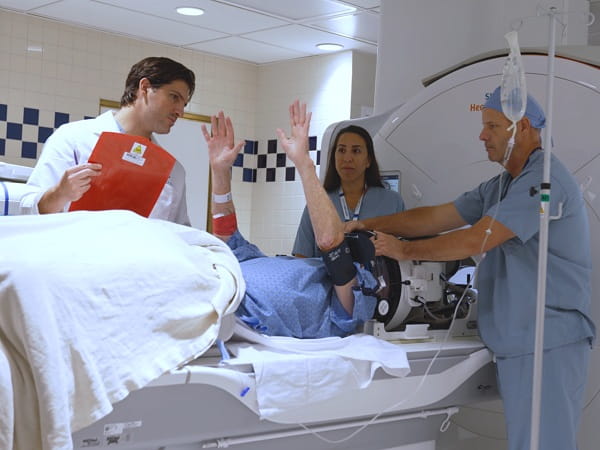
About a week after the procedure, Jones said he was "very happy" to have two steady hands for the first time in decades. He estimated that his tremor was about 90% gone and said he had already returned to activities he enjoys, including gardening and refinishing furniture.
"Tremor runs in my family, and I thought I would have to live with it for the rest of my life and watch it get worse," Jones said. "But it worked. It really, really worked. It's been a vast difference, and I'm quickly getting used to it."
Henry Ford Health neurosurgeon Dr. Efstathios Kondylis, who performed both of Jones' procedures, said the program's growth over the past year has underscored the impact HIFU can have on patients and their families.
"One of the most rewarding parts of building this program has been seeing patients regain abilities that many of us take for granted and return to the everyday activities that are important to them," Dr. Kondylis said. "We look forward to helping even more patients experience that in the years ahead."
Patients interested in HIFU must undergo a comprehensive evaluation to determine whether they are candidates for treatment. Learn more at henryford.com/HIFUforTremor.
###
MEDIA INQUIRIES: mediarelations@hfhs.org