.svg?iar=0&hash=F6049510E33E4E6D8196C26CCC0A64A4)

/hfh-logo-main--white.svg?iar=0&hash=ED491CBFADFB7670FAE94559C98D7798)
Back From the Redline
For most of his life, Dale Ralston has built things that move fast.
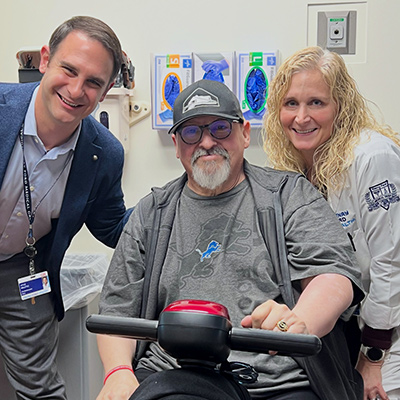 The 68-year-old Washington Township resident has spent 40 years working as a mechanic in Michigan, building and restoring race cars, hot rods and street machines.
“I’ve been working on anything with wheels since I was a kid,” Dale says. “I love bringing engines and cars back to life.”
Through it all, 14-hour days in his shop never slowed Dale down, and his heart always kept up with his relentless pace.
Until one day, it didn’t.
The first warning sign
Dale’s first serious health scare came in 2015 while he and his wife Donna were vacationing in Florida. What began as shortness of breath escalated into a medical emergency that landed him in a local hospital.
“They told me a virus had affected my heart,” Dale says. “My lungs were filling up with fluid, and they had to get rid of it.”
Dale spent seven days in the intensive care unit as doctors worked to keep him alive. Fortunately, he was able to be stabilized and return home to Michigan.
Knowing his heart needed further ongoing care, Dale followed up with several cardiologists. While doctors considered replacing one of his heart valves, his symptoms improved and the procedure was never scheduled.
For nearly a decade after that frightening week in Florida, life returned to normal. Then, in August 2024, everything changed again.
A terrifying ordeal
Late one night, Dale woke up suddenly, struggling to breathe.
“I couldn’t breathe a straw full of air,” he says. “It was the scariest thing I’ve ever felt. Ten times worse than what I felt in Florida.”
Donna immediately called 911 and followed the ambulance in her car to the Henry Ford Macomb Hospital emergency department.
“I started waving out the back window at her, and she started crying, thinking I was saying goodbye,” Dale says.
Once at the hospital, doctors determined he was in cardiogenic shock, a life-threatening condition where the heart cannot pump enough blood to support the body. To stabilize him, the medical team implanted an Impella CP heart pump, a small device designed to temporarily assist the heart’s pumping ability and allow it time to rest.
But Dale’s condition required even more advanced care. Soon after the Impella was placed, he was transferred to Henry Ford Hospital in Detroit.
Fighting for recovery
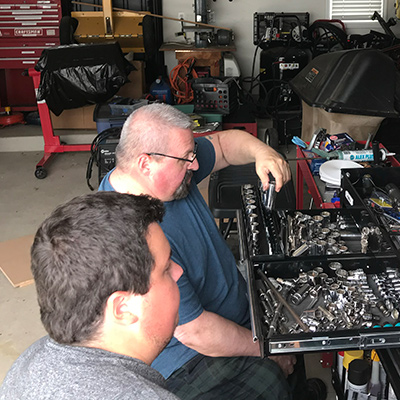 “It was on a Friday,” Dale says. “They had to jumpstart me twice with the paddles. After that, I don’t remember much for about the next week and a half.”
Because his heart and lungs were failing, Gillian Grafton, D.O., advanced heart failure specialist at Henry Ford Health, determined that Dale needed additional support to keep his organs functioning. They pumped his lungs clear of fluid, implanted a larger Impella 5.5 heart pump and placed him on extracorporeal membrane oxygenation (ECMO), an advanced life-support system that temporarily takes over the work of the heart and lungs.
“When I woke up, I had about fifteen machines hooked up to me,” Dale says.
As his lungs cleared and his circulation improved, Kyle Miletic, M.D., cardiothoracic surgeon at Henry Ford Health, implanted a left ventricular assist device, or LVAD. This mechanical circulatory support device helps pump blood from the heart to the rest of the body when the heart can no longer do so effectively on its own.
For Dale, the procedure marked an incredible turning point.
“When I woke up after the LVAD surgery, I didn’t even feel the incision,” he says. “Everything went smoothly and I had no pain.”
In the weeks that followed, his kidneys – once dangerously close to failure – began recovering as well. His care team initially feared he might need a kidney transplant, but the organs gradually regained function.
One goal kept Dale focused throughout his long hospital stay: his son’s upcoming wedding. His doctors weren’t sure he’d be ready to be released by that point, but Dale was determined. He was discharged just one week before the big day.
Back to his passions
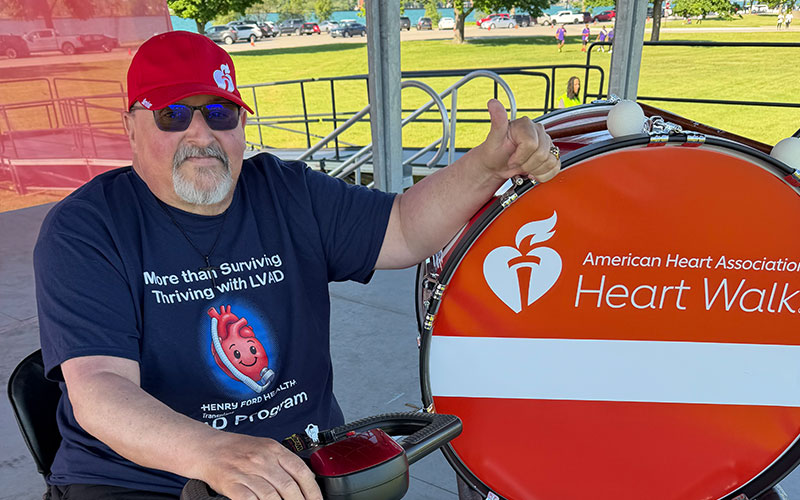
Today, Dale continues adjusting to life with an LVAD.
At first, managing the device and its battery system required patience and practice. Over time, it has simply become part of his daily routine.
“It took a little getting used to,” he says. “But I know it’s keeping me alive.”
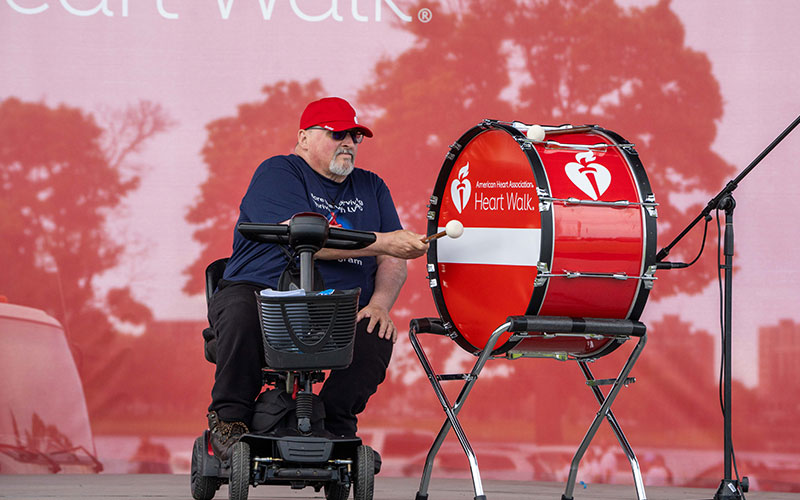
More importantly, he has returned to the things he loves most – spending time with his wife, kids and grandkids. Together, he and his son work on race cars and remote-control cars and spend time racing at a local track.
“I feel like I’m 40 years old again,” Dale says.
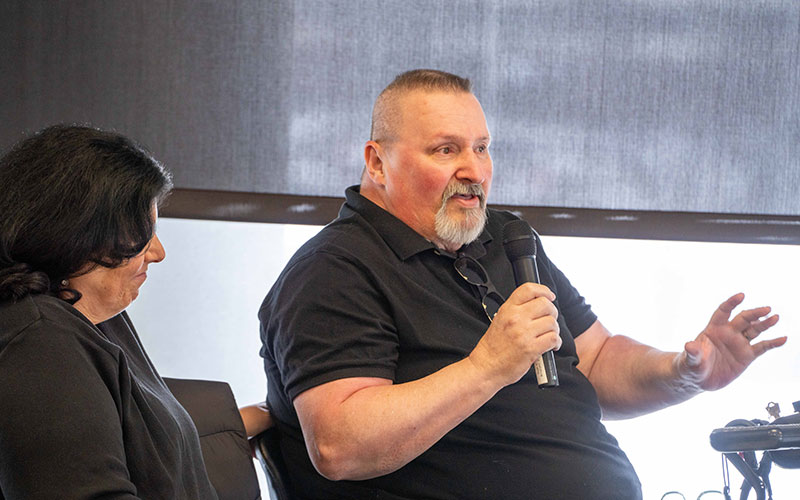
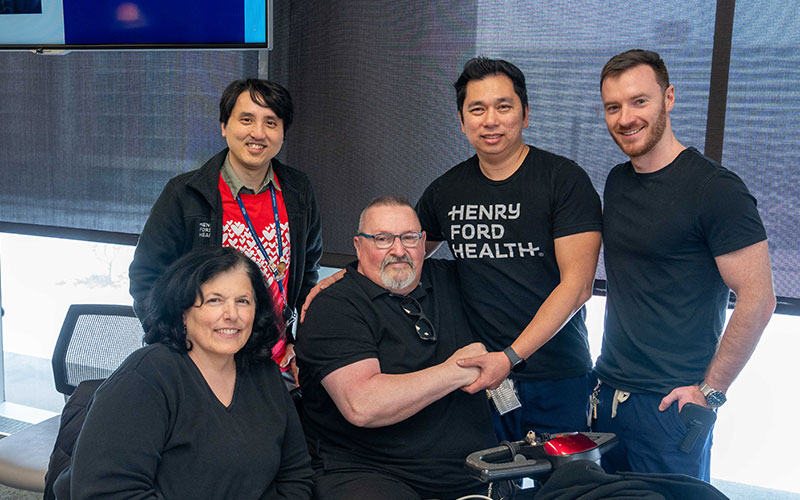
Dale also carries deep gratitude for the team that helped guide him through the most dangerous chapter of his life.
“I couldn’t have asked for better care,” Dale says. “Everyone had a smile on their face. The nurses were incredible. I felt like I was staying at a bed-and-breakfast instead of a hospital. They made me feel like I knew them for years. They will always be a part of my life.”