.svg?iar=0&hash=F6049510E33E4E6D8196C26CCC0A64A4)

/hfh-logo-main--white.svg?iar=0&hash=ED491CBFADFB7670FAE94559C98D7798)
Related News








50 Years on the Front Lines: Henry Ford Hospital Emergency Medicine Residency Program Marks Milestone
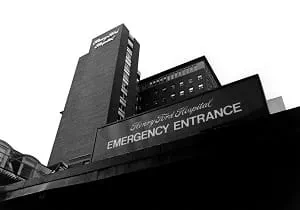
- Established in 1976 as just the 11th emergency medicine residency program in the U.S., Henry Ford Hospital's program has trained more than 660 emergency physicians over the past 50 years.
- Research led by Henry Ford Health emergency medicine physicians helped advance cardiac arrest care, sepsis treatment and acute stroke management, influencing emergency and critical care practices worldwide.
- Looking ahead, Destination: Grand — the $2.2 billion expansion of Henry Ford Hospital in Detroit — will include a new emergency department that is nearly double the size of the current facility.
DETROIT — When Henry Ford Hospital launched its emergency medicine residency program in 1976, the field of emergency medicine itself was still in its infancy. In fact, it wouldn't be until three years after Henry Ford Hospital's program was established that emergency medicine was officially recognized as a medical specialty in the U.S.
Over the next five decades, the hospital's program — only the 11th emergency medicine residency in the country — would grow alongside the specialty, training hundreds of emergency physicians and contributing research and medical advances that transformed patient care across the globe.
"Our program was one of the nation's earliest emergency medicine residency programs and, in many ways, helped define what the field would become," said Dr. John Deledda, chair of the Department of Emergency Medicine at Henry Ford Health. "What makes me most proud is that the values that shaped the program then — a pioneering spirit, a commitment to academic excellence and a deep belief that every patient deserves exceptional care — still guide us today."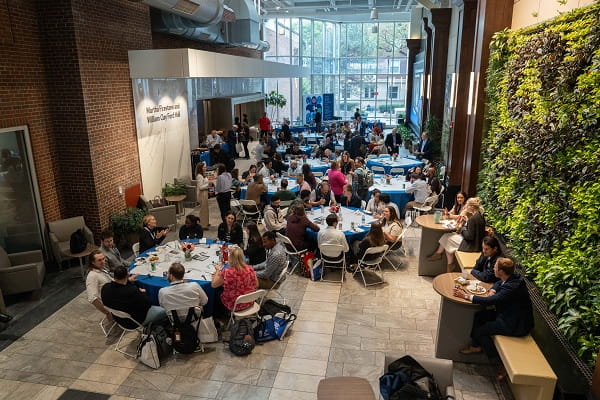
More than 660 emergency physicians have completed residency at Henry Ford Health since 1976, taking the lessons learned in Detroit to communities around the world. About 200 of those alumni returned to their former training grounds on Sept. 16-17 to mark the residency program's 50th anniversary and reflect on its history and future.
In the 1960s and 1970s, emergency departments were often staffed by a rotating mix of physicians from other specialties. With many of the technologies and treatment protocols now considered standard in emergency medicine still years away, physicians often relied on ingenuity and quick thinking to care for critically ill patients.
"Emergency medicine has changed dramatically over the last half-century, but the heart of this program has stayed the same," said Dr. Jason Folt, the program's current residency director. "We've always been committed to training physicians who put patients first and serve the needs of their communities."
The program's influence extends beyond physician training. Over the years, research from Henry Ford Health emergency physicians has led to advances that changed how emergency and critical care is delivered around the world.
Research conducted at Henry Ford Hospital laid the foundation for modern cardiac arrest care by identifying more effective CPR techniques and medication strategies, while its pioneering sepsis research established standardized treatment protocols and demonstrated the lifesaving benefits of early, aggressive intervention. Henry Ford Hospital also played an instrumental role in a landmark national stroke trial that showed rapid treatment with a clot-busting medication could reverse stroke symptoms, an advance that fundamentally changed stroke care.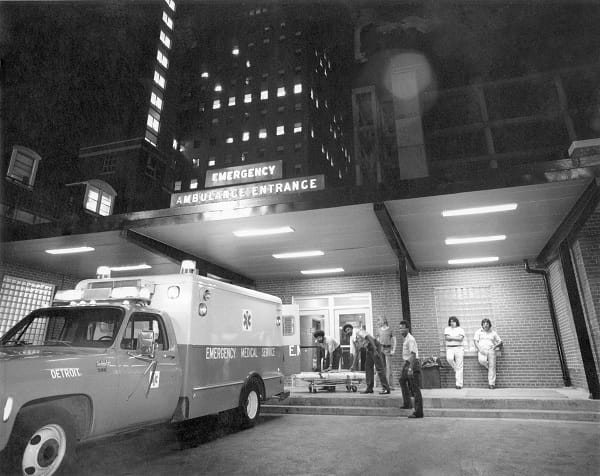
"One thing that has always set this program apart is that our physicians weren't afraid to challenge conventional thinking if it meant improving patient care," said Dr. Christopher Lewandowski, executive vice chair emeritus of the Department of Emergency Medicine and a longtime former residency program director. "We trained leaders who asked difficult questions and tested new ideas that changed the way we care for patients both in the U.S. and abroad."
That same commitment to innovation and patient-focused care is helping guide the next chapter of emergency medicine at Henry Ford Health.
As part of a $2.2 billion Henry Ford Hospital campus expansion project known as Destination: Grand, Henry Ford Health is investing in a new emergency department designed to serve the Detroit community for generations to come. The 75,000-square-foot facility will be roughly twice the size of the current emergency department and will include 100 private treatment spaces, fast-track services and a dedicated behavioral health treatment area.
"The challenges facing emergency medicine today are different than they were 50 years ago, but our mission has remained the same," Deledda said. "For more than a century, Henry Ford Hospital has served as a beacon of hope and healing for the Detroit community, and our emergency medicine physicians have been a vital part of that story, providing outstanding care, advancing the specialty and training the next generation of leaders. That's what has defined us for the last 50 years, and that's what will continue to guide us moving forward."
##
MEDIA INQUIRIES: mediarelations@hfhs.org