.svg?iar=0&hash=F6049510E33E4E6D8196C26CCC0A64A4)

/hfh-logo-main--white.svg?iar=0&hash=ED491CBFADFB7670FAE94559C98D7798)
Back to His Calling
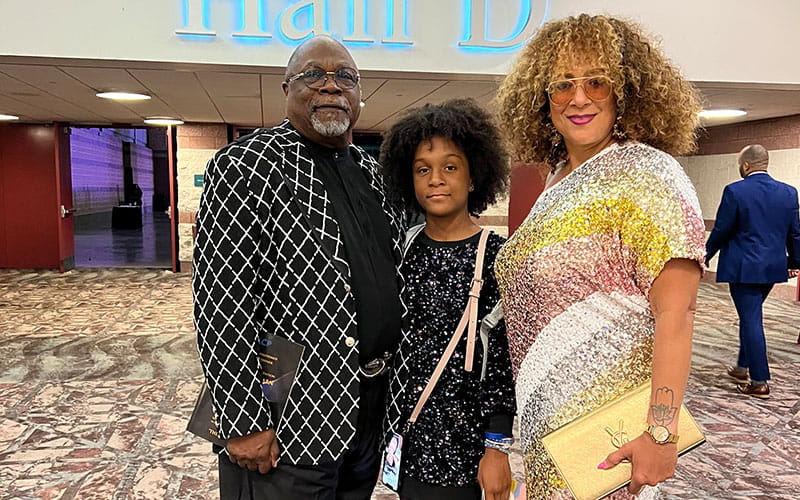
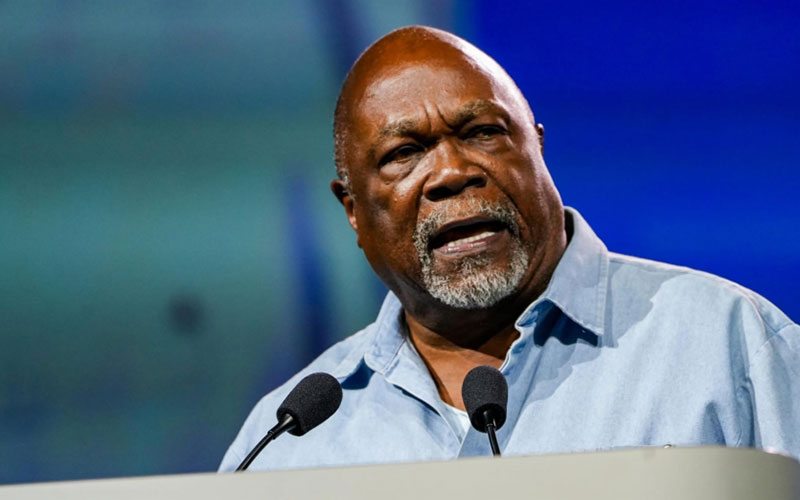
Rev. Dr. Wendell Anthony has spent a lifetime on the move.
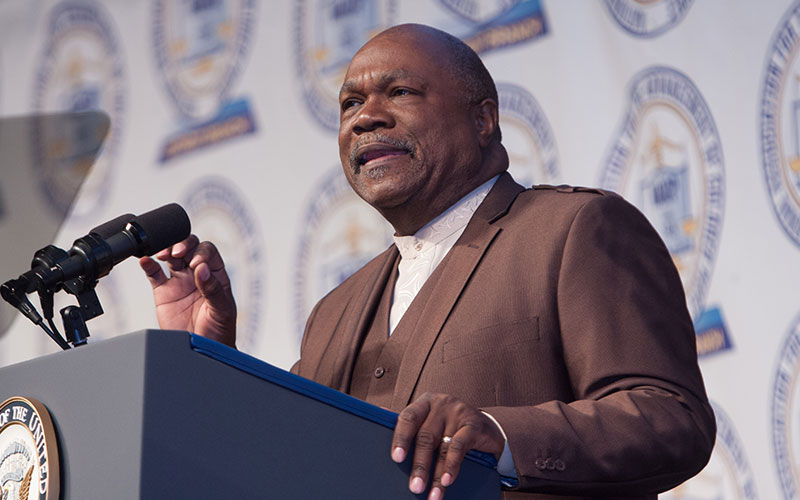
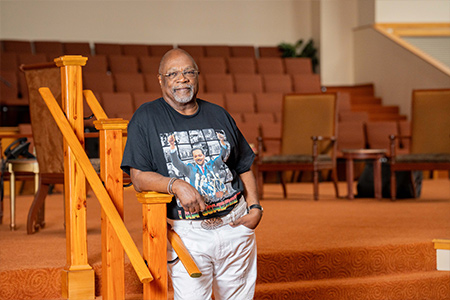 Whether preaching, leading the Detroit Branch of the NAACP and serving on its National Board of Directors, or founding and running organizations devoted to the causes he believes in, slowing down was never part of the plan.
“I’ve always had a pretty active life,” says Rev. Anthony, 76.
So, two years ago, when simple things like walking through an airport suddenly became exhausting, he knew something had changed.
“I used to run through airports to catch flights,” he remembers. “Then I found myself having to stop and sit down just to catch my breath.”
It also affected his life in the church.
“I could still preach on Sunday, and I would still preach hard,” he says. “But people noticed that my energy level wasn’t what they were accustomed to seeing. My wife noticed it, my children talked about it and I noticed it.”
More than fatigue
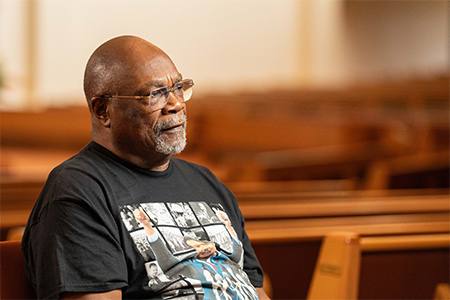 Concerned, Rev. Anthony visited his primary care physician. An examination, blood work and an electrocardiogram revealed an abnormal heart rhythm, or arrhythmia.
“That got my attention,” he says.
He consulted with a cardiologist at another health system, who diagnosed him with atrial fibrillation, or AFib, a heart rhythm disorder that affects the upper chambers of the heart.
Before entering treatment, Rev. Anthony decided he wanted another opinion.
“I wanted the best possible analysis,” he says. “The other cardiologist also wanted me to wear a heart monitor, which didn’t work with my busy lifestyle. I wanted to know all my options.”
Friends encouraged him to visit Henry Ford Health, where he met Henry Kim, M.D., System Chief of Cardiovascular Medicine and Division Head of Cardiology, at Henry Ford Hospital in Detroit. Dr. Kim ran additional tests, then referred Rev. Anthony to Henry Ford Health Cardiac Electrophysiologist Arfaat Khan, M.D., who specializes in treating abnormal heart rhythms such as AFib.
Rev. Anthony’s tests also showed he had developed cardiomyopathy. This condition is sometimes referred to as an enlarged heart, given that in the most common type, heart chamber increases in size. However, in some types, the heart muscle may be affected in other ways, such as getting thinner, weaker and getting replaced with abnormal tissue. This weakening of the heart muscle can occur when AFib causes the heart to work too hard for too long.
The diagnosis came as a complete surprise.
“I never thought something like this would happen to me,” Rev. Anthony says. “I didn’t have a family history of it, and I didn’t know anyone else around me who had anything like this.”
What Rev. Anthony did know was that he was a fighter. And he wasn’t about to quit.
Getting in rhythm
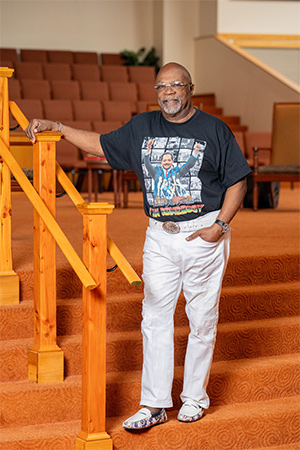 Dr. Khan developed a treatment plan that began with medications to help control Rev. Anthony’s heart rhythm. He also recommended a cardioversion procedure, which delivers an electrical shock to the heart. This disrupts the arrhythmia and resets the heart to a natural rhythm.
Although Rev. Anthony trusted his care team, he still had concerns.
“I asked Dr. Khan if I would wake up after the cardioversion,” Rev. Anthony says. He reassured me, and I just had a good feeling about him.”
Following his cardioversion treatment, Dr. Khan recommended a procedure known as cardiac ablation. This offered the best opportunity to restore a normal heart rhythm and help Rev. Anthony’s heart recover.
This minimally invasive procedure uses a new technology called pulse field ablation, which delivers electrical pulses via a catheter to intentionally and safely destroy specific heart cells. These cells are responsible for the initiation and sustainment of an atrial fibrillation.
Before the procedure, Rev. Anthony remembers the same calm, reassuring atmosphere that had stood out since his very first appointment.
“Everybody took their time,” he says. “They explained everything very clearly. My wife probably asked more questions than I did, and nobody ever made us feel rushed.”
Rev. Anthony successfully underwent cardiac ablation in the early morning, and he was discharged and home by that evening.
A noticeable difference
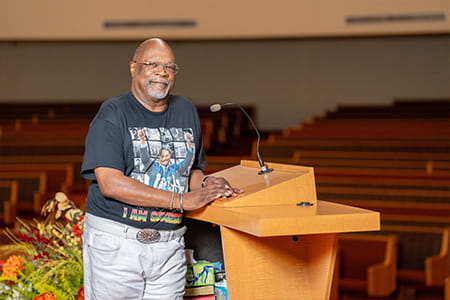 Once home, his breathing became easier, and he could preach with his normal energy and intensity. His heart rate and blood pressure also returned to healthier ranges, and he was sleeping better and felt stronger overall.
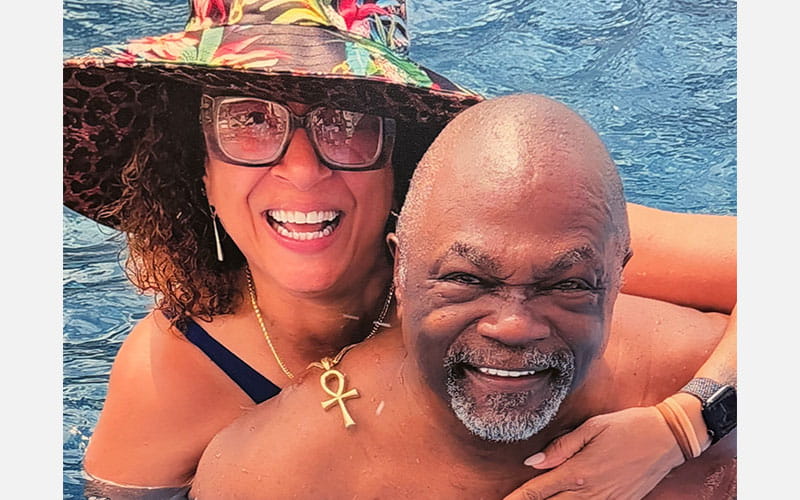
Today, Rev. Anthony continues to see Dr. Khan for routine follow-up appointments and has been able to reduce some of the medications he once needed. He’s also returned to the demanding schedule that means so much to him, getting together with friends and traveling with his family.
“The things I’ve loved doing, I can enjoy again,” he says. “Before getting treatment for my AFib, I had to scale back.”
Looking back, Rev. Anthony says what stands out most isn’t the treatment itself, but the people who guided him through it.
“The concern and the personalization were great,” Rev. Anthony says. “Everyone was attentive and it felt like we developed a friendship. My doctors even gave me their cell phone numbers in case I needed to contact them.”
That experience left a lasting impression.
“I’m grateful to Dr. Kim, Dr. Khan and everyone who cared for me,” Rev. Anthony says. “If someone asked me where to go, I would recommend this team without hesitation.”
Most of all, he’s grateful for something many people take for granted: Being alive.
“There are still a lot of things I want to do,” he says.