.svg?iar=0&hash=F6049510E33E4E6D8196C26CCC0A64A4)

/hfh-logo-main--white.svg?iar=0&hash=ED491CBFADFB7670FAE94559C98D7798)

Understanding The Link Between Breast Cancer And Heart Disease
Some cancer treatments may cause heart damage in certain individuals. A medical oncologist and cardio-oncologist share what you need to know.
HIPEC is an innovative cancer treatment combining surgery and chemotherapy in one procedure to treat cancers that have spread to the lining of the abdomen.
Here you can learn about the procedure, who can benefit from this treatment, our advanced program and the impact it has made.
Henry Ford Health was the first in Michigan to treat patients with HIPEC and has the largest nationally recognized HIPEC program in our state.
This treatment is more than a procedure — here you can find a program that provides:
Find information below about how this treatment targets cancer and why it may be a good option for you.
HIPEC enhances the heated chemotherapy’s absorption in the abdominal area, providing the following advantages:
HIPEC is an effective treatment option for certain cancers that spread to the lining the abdomen, including, but not limited to:
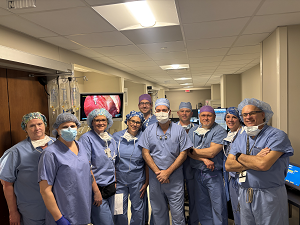
We have a specialized team of nationally recognized and board-certified cancer surgeons, medical oncologists, radiation oncologists, radiologists, geneticists, pathologists and anesthesiologists
Our HIPEC program is an example of our commitment to innovation and creating the best, most effective care for our cancer patients. Each patient’s journey is unique, and we are grateful for those who allow us to share their stories.
Explore our collection of stories sharing our patients’ experiences.
Some cancer treatments may cause heart damage in certain individuals. A medical oncologist and cardio-oncologist share what you need to know.

Learn about the technology that's proving to be effective against high-risk prostate cancer 20 years after initial treatment.

While more young people are being diagnosed with thyroid cancer, fortunately the prognosis is usually very good. Here's what to know.

Brain fog is common in people undergoing cancer treatment. Learn how acupuncture and other integrative medicine treatments might improve memory and focus.


DETROIT — Newly published research conducted in Wayne County, Mich. found that non-smokers, particularly women, who lived near textile and...

We use cookies to improve your website experience. By using this site, you agree to our Terms of Use. Read our Internet Privacy Statement to learn what information we collect and how we use it.