.svg?iar=0&hash=F6049510E33E4E6D8196C26CCC0A64A4)

/hfh-logo-main--white.svg?iar=0&hash=ED491CBFADFB7670FAE94559C98D7798)
Life Restored
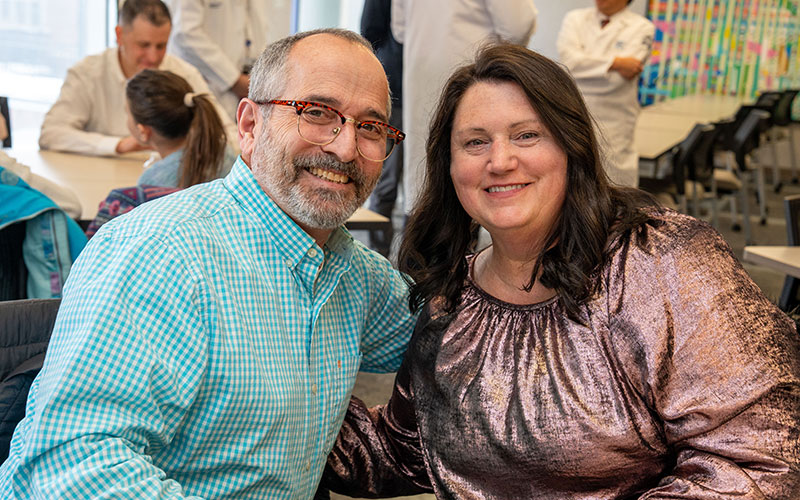 At 61, Dennis James knows the meaning of “health scare” better than anyone.
The Richmond resident and System Supervisor at DTE Energy has lived through more cardiovascular events over the last decade than many people encounter in a lifetime.
In the past, and given his family history of cardiovascular issues, Dennis had undergone an echocardiogram, or heart ultrasound. This revealed aortic stenosis, a narrowing of the aortic heart valve that controls blood flow from the heart to the body. At that point it was minor, and he didn’t need immediate treatment.
Then, in 2019, while he was living in Michigan’s Upper Peninsula, things suddenly got worse.
“Our dog woke me up in the middle of the night,” Dennis says. “I thought she had to go outside, but when I tried, she wouldn’t go and just laid on my feet. We went back upstairs, and something felt wrong.”
Dennis was having a STEMI (ST-elevation myocardial infarction), a life-threatening type of heart attack that features a total blockage in one of the coronary arteries. He received emergency treatment at his local hospital, and after recovery he had heart valve replacement surgery. By 2023, Dennis and his wife Clara had moved downstate to Richmond, and he didn’t experience any additional issues.
A hidden danger
Until one night in late 2024, when he woke up in the middle of the night drenched in sweat.
Dennis initially brushed it off as a one-time occurrence. But after several weeks of sweating episodes, and when he started to lose his appetite, Dennis turned to his Henry Ford Health primary care physician, Dhairya Kiri, D.O., at Henry Ford Medical Center – Richmond.
During a physical exam, Dr. Kiri heard something concerning: a heart murmur.
“He told me I needed to go to the ER right away,” Dennis says.
His wife Clara drove him to Henry Ford Macomb Hospital’s emergency department, where they ran several tests, including an echocardiogram and CT scan. They didn’t reveal anything, and his health continued to decline.
“I hadn’t eaten in days,” he says. “I couldn’t remember things. I looked gray. My body felt like it was dying.”
Ultimately, he was rushed to the ER at Henry Ford Hospital in Detroit. After several additional tests, including a transesophageal echocardiogram, Dennis learned he had endocarditis.
This dangerous condition causes inflammation in the inner lining of the heart. In Dennis’s case, it was caused by a Streptococcus mitis infection, a common mouth bacteria. Dennis had recently undergone a dental cleaning while sick, and this infection had entered his blood, then traveled to his heart.
Racing against time
Once doctors understood the extent of the infection in his heart, there was only one option for Dennis. Surgery.
His Henry Ford Health care team, including cardiothoracic surgeons Daizo Tanaka, M.D. and Adam Daly, M.D., explained that Dennis would need a major operation to replace not only his aortic valve in his heart, but also part of the aortic root, the section of the heart where the aorta begins.
As the largest artery in the body, the aorta runs from the heart down to the abdomen and supplies blood to the body. An infection in that area can quickly become life-threatening.
Despite the heavy news, Dennis remembers feeling an unexpected sense of relief when surgery was scheduled.
“I was actually glad to go,” he says. “I had already had two strokes from the infection traveling through my body, and my kidneys were shutting down.”
As a devout Catholic, he also trusted his faith, and he and Clara prayed before his procedure. With his spirit intact, Dennis underwent a 12-hour surgery.
However, the battle was far from over.
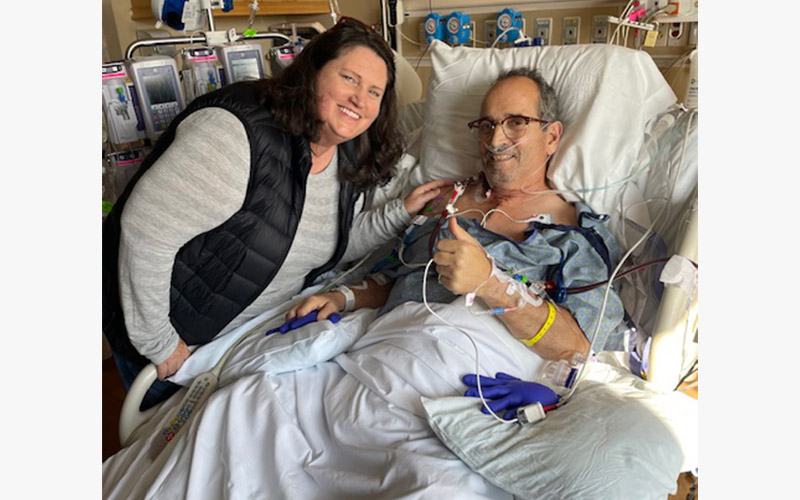
Shortly after, he suffered yet another major complication: a heart attack, followed by cardiogenic shock, a sudden, life-threatening condition where the heart cannot pump enough blood to sustain the body. His care team, including interventional cardiologist Brittany Fuller, M.D., implanted an Impella mechanical heart pump, a temporary device that’s designed to assist the heart’s pumping ability and allow it time to rest and recover. They also placed two permanent stents, small mesh tubes used to help keep arteries open.
For the next seven days, Dennis remained unconscious while his care team worked to stabilize him, including removing the Impella pump three days later once his heart regained enough strength. It was only later that he learned the extent of his post-surgical ordeal.
“I died a few times and slept through all the scary stuff,” Dennis says.
Fearless living
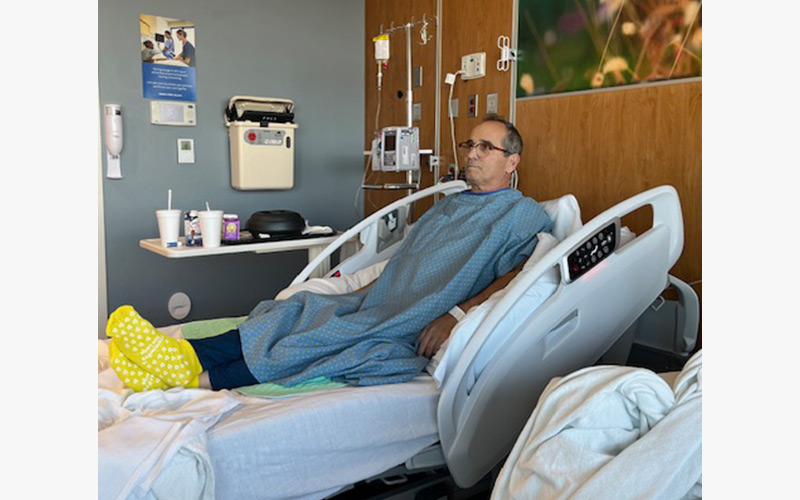
Dennis spent more than a month in the hospital, then began recovering at home, before going through the Henry Ford Cardiac Rehabilitation program at Henry Ford Medical Center – Richmond.
Today, he still has periodic follow-ups with his Henry Ford Health care team, including specialists in cardiology, hematology for a case of hemochromatosis – a condition where the body absorbs too much iron – and infectious disease.
“I have to take prophylactic antibiotics for the rest of my life,” Dennis says. “There’s a microfilm on the graft in my heart, so the antibiotics help protect this from infection.”
He also sees a neurologist, but fortunately his two strokes didn’t cause any permanent damage.
His care team can’t believe how well he’s doing after everything he’s gone through.
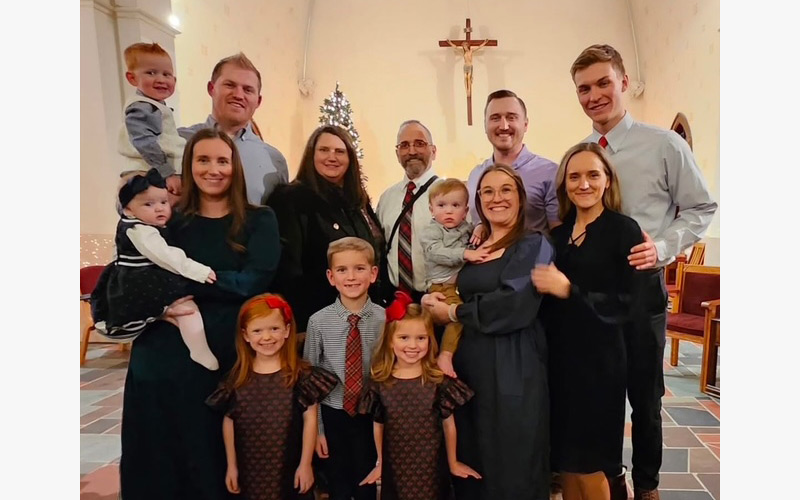
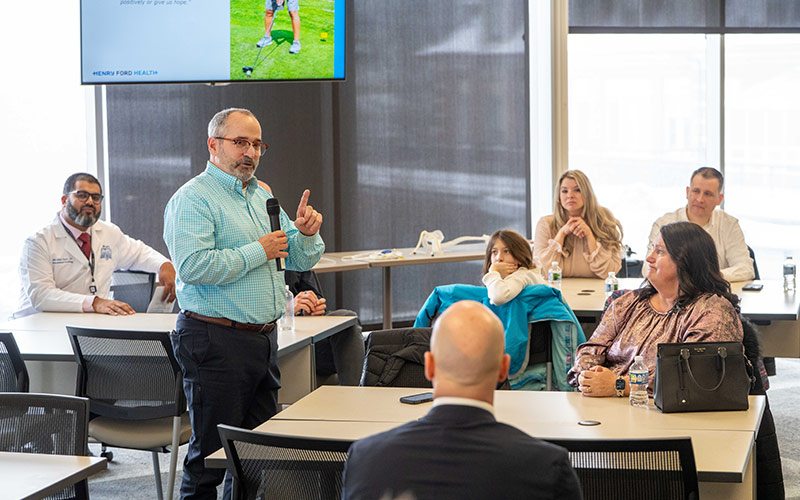
“I’m living without fear now,” Dennis says. “I have my strength back, and I’m back working and spending time with my family. Clara is everything. And we love spending time with our kids and seven grandkids, with an eighth on the way. I couldn’t have gotten through this without my family, and my faith.”
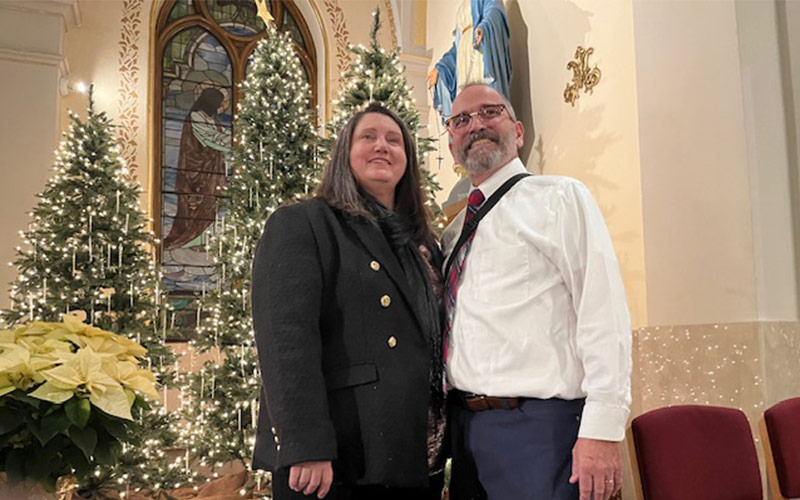
Dennis and Clara are back to golfing regularly, and they’re making plans to travel to Ireland this summer.
As he looks back on his healthcare journey, Dennis is also grateful for his Henry Ford Health team.
“I was in the hospital a long time, and I received attention from a number of people,” he says. “From the doctors and nurses to nurses’ aides, everyone that rotated in knew me and knew what I needed. The way they coordinated my care was like nothing I’d ever seen before. If I still lived in the Upper Peninsula when this happened, I probably wouldn’t be here now.”