.svg?iar=0&hash=F6049510E33E4E6D8196C26CCC0A64A4)

/hfh-logo-main--white.svg?iar=0&hash=ED491CBFADFB7670FAE94559C98D7798)
Against All Odds
For most of her life, Amber Jalal has lived with heart challenges.
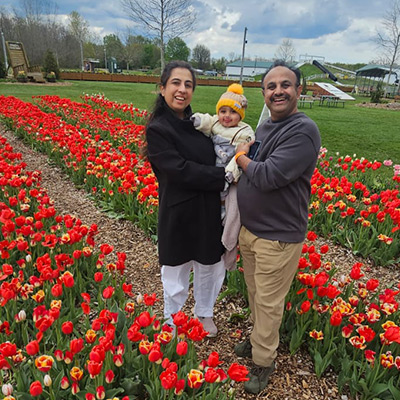
The 47-year-old Warren resident was first diagnosed with heart failure nearly two decades ago while living in the Middle East.
“My doctors at the time thought it may have started when I got really sick as a child,” Amber says.
By adulthood, her ejection fraction, a measurement used to determine how well the heart pumps blood, dropped to just 14 percent, a number dramatically lower than the 55 to 70% produced by a healthy heart.
“It was very hard to breathe,” Amber says. “Even simple things were difficult.”
Still, Amber kept moving forward. She took medication and had regular doctor visits, and she worked hard to remain active whenever she could to try to maintain a normal life.
And through it all, there was one dream that stayed with her … she wanted to become a mother.
Hope, then heartbreak
In 2016, after immigrating with her husband to the United States, she met with different doctors to help determine her best cardiac treatment options. Unfortunately, her heart condition made pregnancy extremely complicated.
The medications that helped stabilize her heart were often not safe during pregnancy, and worse, when her doctors stopped those medications, her heart function declined quickly.
“It was always a balance to find the right medicine,” Amber says.
Then in 2020, it happened: Amber became pregnant for the first time.
But before she could enjoy the possibility of future motherhood, she miscarried. Then it happened again in 2021. And in 2022.
“I lost hope,” Amber says.
She gave up the dream, returned to her heart medications and focused on managing her health. Later that year, she met with Yelena Selektor, M.D., a cardiologist at Henry Ford Health who specializes in advanced heart failure and transplant cardiology. Dr. Selektor evaluated Amber for a potential heart transplant and worked closely with her to manage her complex condition.
Then, in early 2025, something unexpected happened. Amber became pregnant again.
“I knew my pregnancy would be risky,” she says.
Dr. Selektor worked with Amber to build a plan, starting with a referral to Ryhm Radjef, M.D., a cardiologist and director of the Henry Ford Health Women’s Cardiovascular Center who specializes in high-risk maternal care. Together, the two physicians coordinated to monitor both Amber’s heart health and her pregnancy. They also collaborated with specialists from Henry Ford Health’s OB/GYN and high-risk Maternal Fetal Medicine teams.
A high-risk journey
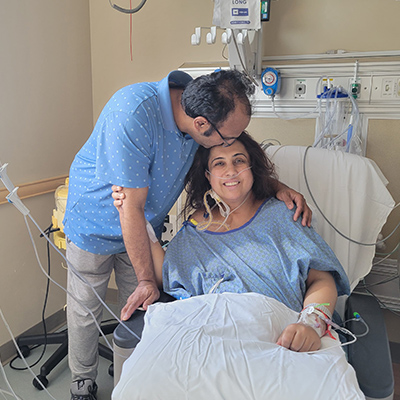 Throughout her pregnancy, Amber’s heart function remained unstable, making even simple activities feel frightening.
“I was afraid to do anything,” Amber says. “But my doctors told me to stay active and keep moving.”
Her care team also performed extensive testing, including a cardiac catheterization to better understand how her heart was functioning. Amber was in and out of the hospital frequently as her medical team adjusted medications.
Despite the challenges, she persevered until 32 weeks into her pregnancy, when she couldn’t wait any longer, and her care team told her they would need to deliver her baby early. In July 2025, Amber gave birth to her son, Rohaan Ahmed, by C-section.
But a moment that should have been joyful became anything but. Amber began having severe breathing problems and required emergency medical support. Because her heart function was still questionable, her care team placed her on a ventilator to minimize any further complications.
When she woke up the next day, she was confused and afraid, and experiencing some complications from the anesthesia.
“I had tubes everywhere, I was in pain and I kept throwing up,” she says.
Still, Amber held onto one thought: her baby had arrived, and she wanted to meet him. Six days after giving birth, her care team was able to remove enough equipment so Amber could visit Rohaan in the neonatal intensive care unit for the first time.
“I cannot explain how it felt,” Amber says. “Holding my son made everything I had gone through worth it.”
A heart fulfilled, but still in crisis
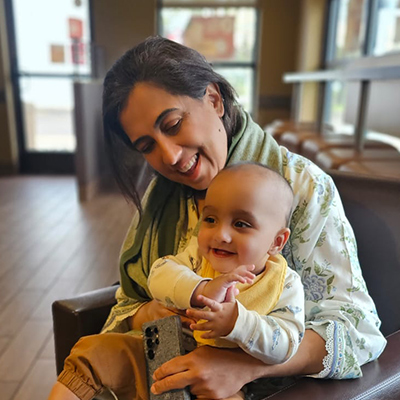 After returning home, Amber tried to focus on caring for her newborn, but her health continued to decline.
“I struggled to breathe, had difficulty eating and often felt too weak to walk,” Amber says.
During one follow-up visit, Dr. Selektor knew something was wrong. Amber’s blood pressure was far too low. She was in cardiogenic shock, a life-threatening condition where the heart cannot pump enough blood to support the body. She was admitted to the hospital immediately.
Her team implanted an Impella mechanical heart pump, a temporary device that’s designed to assist the heart’s pumping ability and allow it time to rest and recover. But even with that support, it became clear that her heart could no longer recover on its own. Soon after, she was placed on the heart transplant waiting list.
“I was told I couldn’t go home without a new heart,” Amber says. “It was scary not knowing how long I would have to be in the hospital.”
Fortunately, a new heart became available just two weeks later. And a couple of weeks later, Amber was standing and walking – and ready to return home and see her son.
Finding strength again
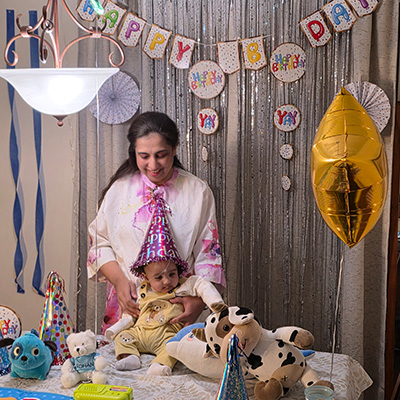 Today, Amber is still weak from years of heart failure, but she’s hopeful for the future.
“It’s been a roller coaster, but I am doing good,” she says.
She has regular follow-ups, cardiac rehabilitation and ongoing testing. And while some days are harder than others, every morning brings the same motivation. Her son.
“Each year I’m alive and every time I hold my son, I tell myself, I won this year,” she says.
Amber is quick to add the care she received at Henry Ford Health has made all the difference.
“Everyone there is amazing. They are all angels to me,” Amber says.