.svg?iar=0&hash=F6049510E33E4E6D8196C26CCC0A64A4)

/hfh-logo-main--white.svg?iar=0&hash=ED491CBFADFB7670FAE94559C98D7798)
Pushing Through
By the time Ken Jordan, now 71, was referred to Henry Ford Health, he was looking for answers.
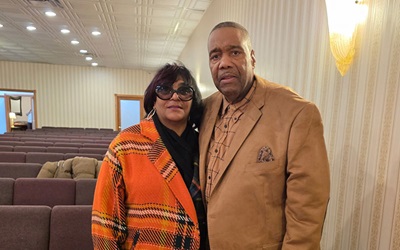
“I was diagnosed with blood clots about 15 years ago at another health system,” Ken says. “I was having trouble breathing, and when I went to my primary care doc’s office, he had me rushed to the ER, because he thought I was having a heart attack."
He wasn’t, but this visit kicked off a long healthcare journey for Ken, a Romulus resident and government defense worker who was nearing retirement at the time.
Over the years at the other health system, Ken was put on blood thinners and supplemental oxygen, and he had to wear compression boots to control the fluid buildup he was experiencing. His care team also referred him to an ear, nose and throat doctor, who said it was allergies and started him on allergy shots. But no treatments helped alleviate his symptoms. He also couldn’t get a routine colonoscopy due to the fluid buildup.
A chance referral
By 2023, Ken was looking for other options when he had a fortunate meeting one day.
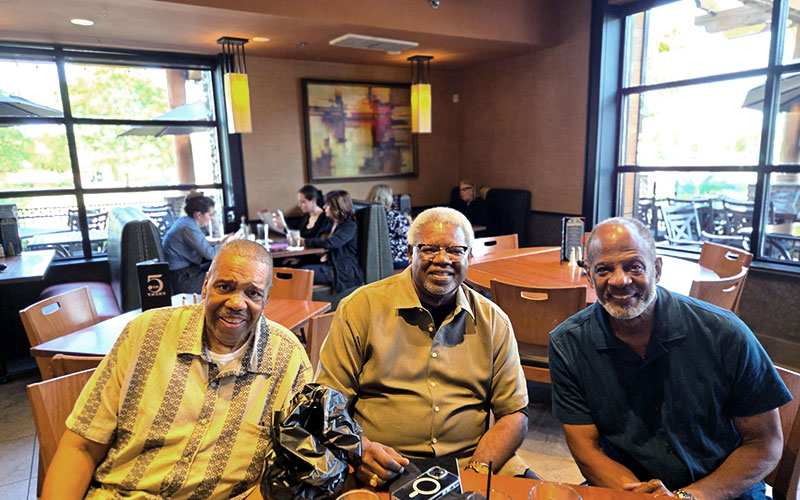
“I was out to lunch with one of my friends, Dr. Jerry Johnson, who used to work at Henry Ford,” Ken says. “I told him about my ongoing breathing issues and swollen legs, and he recommended I see Henry Ford’s team.”
Ken met with several specialists at Henry Ford Health, including Gillian Grafton, D.O., a pulmonary hypertension specialist, who advised him to start pulmonary rehabilitation.
“My breathing was so bad, I couldn’t last 3 minutes without oxygen,” Ken says. “Even the sit-down stuff.”
Throughout his initial pulmonary rehabilitation, Ken had extensive testing, from an ultrasound, lung perfusion and CT scan to a heart catheterization. He was impressed with how the Henry Ford Health team coordinated his care.
“It was a team effort, and they communicated with each other,” Ken says. “My records were always available to every specialist. I didn’t have this experience at the other system, where they had to get printed copies and manually deliver them to the other doctors. They were separate islands among themselves.”
Ken’s test results finally gave him the answers he had been searching for and a new diagnosis: While his blood clots had started in his legs (deep vein thrombosis), they had traveled to his lungs (pulmonary embolism).
Without the proper treatment over the years, these clots had developed into two related conditions, chronic thromboembolic pulmonary hypertension (CTEPH), an advanced form of high blood pressure in the lungs, and right ventricular dysfunction, a form of advanced heart failure. Collectively, these put extra strain on his heart, forcing it to work harder and enlarging it. Ken had also developed coronary artery disease, where the heart’s arteries become narrow and clogged when cholesterol and other fatty deposits build up inside artery walls.
He would need open heart surgery and was referred to Kyle Miletic, M.D., a cardiac surgeon at Henry Ford Health.
“Dr. Miletic told me that if I didn’t have the surgery, I would have maybe 1-2 years to live,” Ken says. “I put my faith in him and decided to do it.”
A major surgery and recovery
Given the extent of the damage from his cardiovascular conditions, Ken would need a multi-part surgery, including a pulmonary thromboendarterectomy (PTE) procedure to remove clots from his lungs and a coronary artery bypass graft (CABG) procedure to treat the heart blockages.
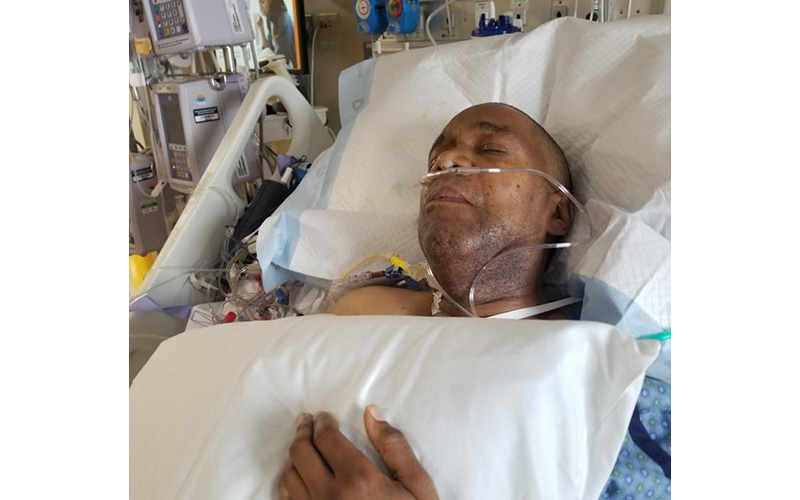
Ken had the surgery in March 2024 at Henry Ford Hospital in Detroit. When Dr. Miletic met with Ken after the surgery, he told him that they had removed about 90% of his clots. Ken also had atrial flutter, a type of arrhythmia (irregular heartbeat) that affects the heart’s top chambers, so his surgical team performed an ablation procedure.
“I was pretty weak during my initial recovery in the hospital,” Ken says. “I was on a ventilator for a few days, and I met with occupational and physical therapists every day and used a walker to build up my strength.”
As part of his recovery, Ken also resumed his pulmonary rehabilitation treatment. But at three months post-surgery, his team performed a reassessment, which revealed that he was still experiencing residual CTEPH and right ventricular dilation. Initially, his team managed this with medication, water pills and blood thinners.
More procedures, and relief
However, it wasn’t enough. His care team reviewed his case and Ken’s desire to improve his symptoms and get a higher quality of life.
“I was still having shortness of breath,” Ken says. “I still couldn’t do much, only about five minutes on the treadmill. I wanted to not struggle so much. Where I go to church, it’s a long walk from the parking lot to the building, and I wanted it to be easier. I wanted to be able to walk, to breathe, and not rely on an oxygen machine.”
Ken met with Vikas Aggarwal, M.D., an interventional cardiologist at Henry Ford Health, to discuss balloon pulmonary angioplasty (BPA). This minimally invasive procedure is performed in the cardiac catheterization lab and focuses on removing lung clots.
BPA uses a thin catheter that is threaded through an artery in the groin, up into the lungs. There, a balloon is inflated in the blocked pulmonary arteries to push these blockages out of the way, break up any scar tissue and restore blood flow. This decreases the pressure that’s building up in the body’s circulation and allows for more oxygen to get into the blood. Each BPA procedure takes approximately two to four hours, and to adequately treat CTEPH most patients require several sessions.
“Dr. Aggarwal told me that in my case, I had blood clots all over the place,” Ken says. “This was different than some people, who only have a clot in one spot. Through BPA, they could attack each one and treat the last 10% of the clots I had in my lungs.”
From January to June 2025, Ken had several BPA sessions.
After the third one, he started to notice improvement in his symptoms, which got better as he completed the remaining sessions.
Not backing down
Ken is no stranger to working hard and pushing through, from doing double duty in college as a co-op student while working his first full-time government job, to building several side businesses during his career – including adult foster care homes, rental properties and a construction business, some of which he ran until he retired.
“I have always had a driven mindset and have never given up on anything in my life,” Ken says. “So, when it came to my health, I believed I just had to do my part. If my part means getting on that treadmill and stepping every day, then that’s what I’ll do.”
But Ken’s dedication went beyond this. He bought new home exercise equipment and used them multiple times throughout the day to boost his activity. He also bought the same professional oxygen and heart rate meter that his care team used, and he created a spreadsheet to track his vitals, exercise progress and weight loss efforts. At his latest follow-up appointment, he shocked his care team when he presented six months of carefully curated health data.
His commitment has paid off with a massive improvement in the function on the right side of his heart. He has also significantly improved his exercise tolerance and symptoms.
“I’m up to 20 minutes on the treadmill every day, and I’ve been able to increase my speed,” he says. “I’m also off the supplemental oxygen. Recently we decided to do some cleaning and purging at home, and I got our Explorer, loaded up about 15 bags of stuff to throw out and took them to a commercial dumpster. I started throwing in these heavy bags nonstop. I couldn’t do this before.”
Ken also has more energy to devote to family, including his two grandkids. He’s very thankful for the second chance he’s been given, and for his care team.
“I’m grateful to be here, and to be able to tell my story,” he says. “And grateful to God for leading me to Henry Ford. I mean, at the other health system I was getting allergy shots to try to treat problems in my lungs and heart. They weren’t even close.”