

Henry Ford Health Advances Transplant Care and Restores Hope


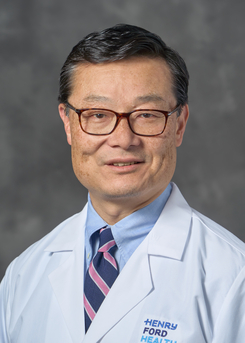
Physician-to-Physician offers a platform for clinical thought leaders across Henry Ford Health on a variety of topics, including clinical trials and clinical research, and features the perspectives of physicians and researchers.
If you are a patient seeking information on Transplant Services at Henry Ford Health, please visit Transplant Services | Henry Ford Health - Detroit, MI.
For patients with intestinal failure, progress in medicine is measured not only by what can be done technically, but by whether we are willing and able to bring the full weight of innovation and teamwork to the moments that matter most.
That is why this achievement is so meaningful to us. In January 2026, our teams performed Michigan’s first combined intestinal and kidney transplant for a patient whose journey had already included years of severe illness, a prior intestinal transplant, rejection and kidney failure.
As you can read in this press release, our patient, Briana Dery, now has a newfound hope for the road ahead. She shared with the media that “anything is possible.” We are so delighted to be a part of Briana’s inspiring journey. As background, only 56 combined intestinal-kidney transplants have ever been performed in the U.S., including just three last year. Those numbers underscore how rare and demanding this operation remains. The intestine was once considered the “forbidden organ” in transplantation because of its high rejection risk and surgical complexity. Today, cases like this demonstrate how far the field has advanced when experienced teams are supported in pursuing what is possible for high-acuity patients.
What made this case especially important was that a combined transplant was not simply feasible, it was the safest and most thoughtful path forward. As Briana received her first intestine transplant at Henry Ford Hospital in 2017, this most-recent procedure was intestine “re-transplantation.” Because prior surgeries and scar tissue would have made a future kidney transplant far more difficult after an intestinal retransplant, we made the decision to pursue one carefully coordinated operation, rather than expose the patient to two separate high-risk procedures.
That approach required extensive evaluation and seamless collaboration across the entire intestine rehabilitation and transplant team, including kidney transplant surgery, nephrology, anesthesiology, critical care, infectious disease, nutrition, vascular expertise and transplant immunology. It also required something that is just as essential as surgical skill — an institution willing to invest in leading-edge medicine.
Breakthrough care does not happen in isolation. It depends on a health system that supports advanced programs, builds multidisciplinary teams, commits resources to highly complex patients and believes that rare procedures still matter because the patients who need them matter. Henry Ford Health has created that kind of environment. Its support makes it possible for us to bring together the people, infrastructure and clinical expertise needed to care for patients whose needs extend beyond conventional pathways.
We believe that is one of the most important lessons of this achievement. Leading-edge medicine is not only about performing a rare operation; it is about building a culture where innovation is matched by responsibility, where difficult cases are approached with rigor and compassion, and where patients can find a pathway to hope they may not be able to find elsewhere.
To schedule Dr. Nagai and/or Dr. Kim as a presenter or keynote for your upcoming conference, please email snagai1@hfhs.org and/or dkim3@hfhs.org.